How do you tell whether a succulent has settled in? Only with proper care can it easily fill its pot
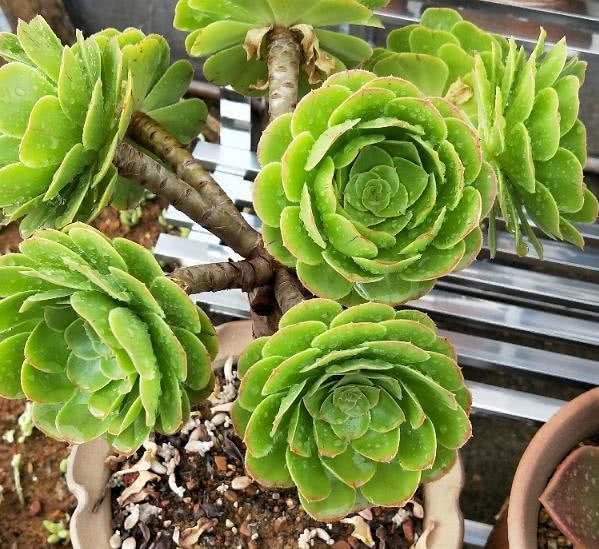
Although the process of settling in is something the plants handle on their own, if we cannot correctly judge the point at which a plant has settled in, then we cannot carry out normal follow-up care, and likewise the succulent cannot develop healthily, so we must learn to judge when a succulent has already settled in. Only after a succulent has settled in will it slowly grow beautiful.
How do you judge whether a succulent has settled in? The succulent as a whole may become soft; as it slowly settles in and its life activities recover, the leaves will become firm and upright. One more small detail: if the upper part of the succulent is already firm and upright and the lower old leaves begin to be consumed, that also means it has settled in. Note here: do not water frequently just because you see the lower leaves are soft; this is where many flower lovers run into problems. Since during the settling-in period it is basically kept in a water-controlled state, the succulent will consume the nutrients of the lower leaves, and this is a sign of settling in.
Why do succulents that have already settled in still die? The answer is because your succulent actually has not settled in yet, and even if your succulent has settled in, that does not mean it can immediately be cared for normally like other succulents. Settling in is only a relative concept. Someone may tell you that two or three weeks after planting it has basically settled in, because roots have usually already grown. Or that when the succulent is no longer wilted and soft and has grown new leaves, it has settled in. These are all correct. But it does not mean that once it has settled in it can be cared for normally and receive full sun; doing this in summer or autumn is suicidal behavior.
Can succulents be watered during the settling-in period? Succulents can be watered during the settling-in period, but absolutely avoid frequent watering that causes the potting soil to stay wet for a long time, as this is even less conducive to the succulent settling in. Especially in summer, excessively moist potting soil may cause the succulent to turn black and rot to mush during the settling-in period. It is enough for the potting soil to have a slight moisture; imagine the humidity of a wrung-out towel. Being too wet does not mean that a succulent in the seedling-recovery period can absorb water better; on the contrary, it easily breeds pathogens.
A succulent settling in only means that the succulent now has the ability to survive, but at this point it is still delicate and weak, so you should slowly increase light and watering rather than suddenly giving full light and soaking the soil. If after increasing light you feel the succulent shows signs of wilting and softening, you still need to appropriately reduce the light. In winter and spring you can do as you like, but in summer you must be very cautious about increasing light. How long until normal care? Generally speaking it should be about one or two months, and during this period there should be a process of gradually increasing light.
This is a gathering place for succulent lovers, sharing succulent care tips; you are welcome to follow and exchange ideas.