How to care for succulents on a balcony in summer? Do these few steps well and they will thrive and fill the pot
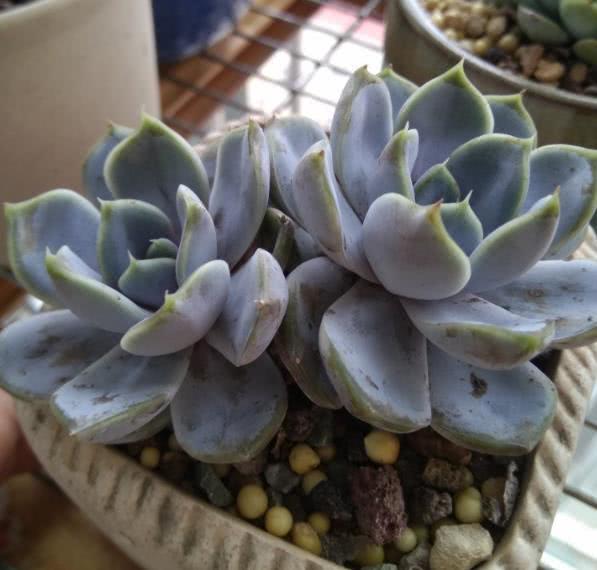
Most friends who love succulents grow them on a balcony, because other spots indoors generally do not get as good light as the balcony, and the balcony is also a spare, airy place, so growing succulents on the balcony both beautifies the balcony and benefits their growth. Below we explain how to grow succulents on an enclosed balcony. At the very least, set up a shade net on the balcony so the light can be reduced appropriately. In the rainy summer, if the environment is not well ventilated, succulents very easily fall prey to fungal infections, and both the leaves and the plant easily rot, ultimately causing them to die, and fungal infections also easily trigger pest problems.
In summer, apply fungicide on a regular schedule to prevent pests and diseases; of course, after spraying the fungicide, succulents should be shaded appropriately to avoid sunburn. If you notice that the leaves of some succulents suddenly turn black and are covered with a layer of black mold, that is definitely "sooty mold"; because it can cause the entire plant to turn black and rot, if you discover it, remove the diseased leaves promptly, and improving ventilation is key. At the same time, do a good job of pest prevention and spray some fungicide.
During the growing season, succulents should be given plenty of light. If they are too shaded, the plant shape will become loose and not compact, and the leaves will be thin and elongated; if the light is too strong, the leaves will grow poorly and take on a light reddish-brown color. Sometimes strong direct sunlight can even scorch the leaves, leaving ugly marks. Plants grown in half shade have thick, plump leaves with high transparency. During the growing season, water by the rule of "do not water until dry, and when you water, water thoroughly"; avoid waterlogging, and even more so avoid rain, especially prolonged rain, all of which is to prevent root rot. But they should not be kept dry for a long time either, otherwise although the plant will not die, the leaves will shrivel, the leaf color will be dull, and they will lack vitality.
The main reason succulents do not grow well indoors is simply that the light is inadequate. Compared with the rooftop crowd who get light from all four sides, the balcony crowd definitely has light, while the indoor crowd struggles to get light and then it may be filtered by glass, which blocks some ultraviolet rays; those who can should put some effort into the glass. Among the indoor crowd, the ones who can grow succulents relatively well are the bay window group and the glass house that ordinary people find hard to build; the bay window group is not really much weaker than the balcony crowd in terms of light, so it is no wonder they can grow them well. The main reason succulents do not grow well indoors is the quality of the light; by comparison, things like temperature difference, ventilation and watering are minor details. Although they do not grow well, they can still grow very fast and produce a whole patch of pale, vegetable-like color... If they cannot even grow, then reflect on whether there is a problem with your watering and whether there is disease; in an unventilated environment it is relatively easy for pathogens to multiply.
This should generally be done during the recovery period just after the plant's dormancy ends. Before planting, trim the roots. After trimming the roots, let them dry for a few days, then plant them in moist potting soil; after planting, shade them appropriately and do not rush to water, and do not fertilize within one month. Cacti and succulents generally like warmth and a large day-night temperature difference. Except for epiphytic cacti and species of the genus Haworthia, the light should be plentiful but soft. For this reason, apart from a few flattened stem-jointed and tall columnar species and certain Agave species, they should generally be grown in a greenhouse year-round.
For succulents kept on a balcony in summer, I personally think due south is the best orientation for growing them, because due south gets almost full sun in winter, while in summer it only gets a small amount of sun in the morning and evening, and in summer there are many southerly winds, so ventilation is better; all these factors are favorable for succulents' survival. As for shade nets, actually tough succulents on a south balcony can do without one, but if you are a doting plant parent who cannot bear to let your succulents suffer, or if you have quite a few expensive ones, putting up a net is also fine.
This is a gathering place for succulent lovers, sharing succulent care tips; you are welcome to follow and exchange ideas.