How do you care for a Guzmania (Vriesea) potted plant? It has a beautiful and auspicious meaning
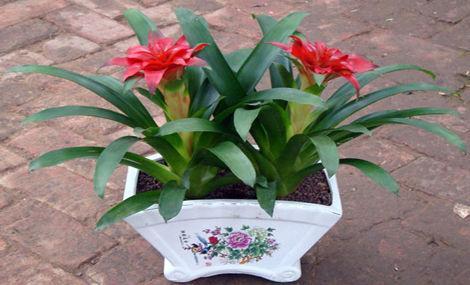
The Guzmania is undoubtedly one of the most beloved plants, not only because it carries the beautiful meaning of prosperity and bringing in wealth, but also because it has a very prominent red flower spike in the center of its form; since ancient times, Chinese people have always had a special fondness for the color red, and as a potted plant placed in the home it also has a festive and elegant quality. So today we will explain how to grow the Guzmania as a potted plant so that it looks even more beautiful.
1. Light
Suitable and sufficient light is the key factor in keeping the Guzmania evergreen all year round. Although there are quite a few varieties, their light requirements are without exception the same. Sufficient light can make the leaves glossier and brighter, the color more emerald green, and can also ensure that it blooms on time. If it is summer, when the light is more intense, unlike spring and autumn when it can grow under direct sunlight, the plant needs appropriate shading, or the pot should be placed in a spot with diffused light, receiving 8-10 hours of light per day as suitable. The winter sun is relatively warm, so it can grow under full light, and the time can be kept at around 6-8 hours.
2. Soil
The soil used for potted Guzmania needs to be good in fertility, water retention and looseness. Fertile soil can allow the potted seedling to grow faster without the need for too much fertilizer. The soil can be mixed yourself or purchased. If mixing it yourself, it should be based mainly on leaf mold soil, with a small amount of garden soil and river sand soil added. After thorough mixing, it can be put into the container, and finally an appropriate amount of water should be poured on.
3. Temperature
The Guzmania is a tropical plant, and the temperature of its growing environment is best between 18-25°C. If the temperature is above 35°C, the pot must be moved to a cooler place to grow, to avoid the plant being scorched by the sun; because of its poor cold tolerance, the Guzmania must spend the autumn and winter indoors, especially in northern regions, where the temperature often drops below 0°C. If exposed outdoors for a long time, the plant's leaves will gradually turn yellow, and then it is very likely to die.
4. Watering
The Guzmania prefers to grow in a moist environment, so keeping the soil in a moist state is very important. It has no fixed watering schedule; just water whenever the potting soil is relatively dry. If there is a period with more rain, when the air humidity is relatively high, the amount of watering should be appropriately reduced. In addition, in summer, the plant's leaves should be rinsed regularly to keep them suitably moist; in winter, watering should be as little as possible, just enough to ensure the plant safely overwinters under suitable conditions.
5. Fertilizing
There are two periods when the Guzmania needs a larger amount of fertilizer: one is its seedling stage, and the other is its flowering stage. The reason for topdressing the Guzmania during the seedling stage is that at this time it has a relatively high demand for nutrients, and another reason is that at this time its disease resistance is relatively weak. A compound fertilizer can make it grow more robustly and increase its resistance. Adding more fertilizer during the flowering period is to ensure that its flowers bloom more beautifully and fully. If nutrients are lacking, the plant's flowering will become slow, and the flowers will be short and small, the buds will not open completely, and so on.