Macadamia nuts are rich and creamy, and have long been known as the "queen of dried fruits" and the "king of the world's nuts."
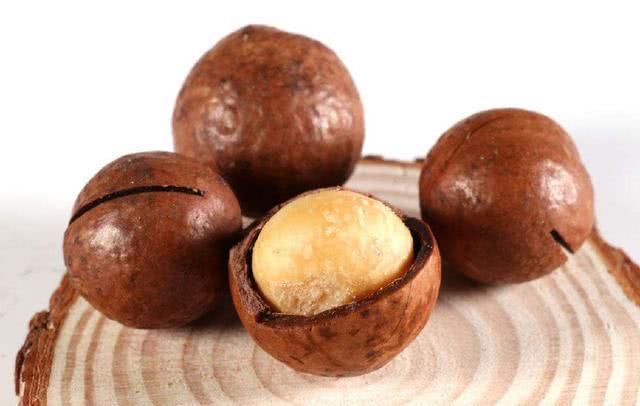
Macadamia nut
Hawaiian nut generally refers to the macadamia nut
Macadamia nut (Latin scientific name: Macadamia ternifolia F. Muell.), also known as: Queensland nut, Australian walnut, Hawaiian nut, Queensland nut, is a tree nut native to Australia. The macadamia is an evergreen tree and a dicotyledonous plant. The crown is tall and large; the leaves are borne in whorls of 3 to 4, lanceolate, leathery, smooth, with spiny serrations along the margins. The racemes are axillary, the flowers are cream-yellow, the fruit is spherical, the pericarp is leathery, the endocarp is hard, and the kernel is cream-yellow to light brown. It is suited to growing in mild, humid areas with little wind.
Among the many dried nuts of the world, plants of the family Proteaceae and the genus Macadamia have the highest economic value, and the macadamia has long enjoyed the reputation of being the "king of dried fruits." Distribution range: eastern Australia, New Caledonia, and Sulawesi Island in Indonesia. In addition, macadamia nuts also have high nutritional value and medicinal value.
Morphological characteristics
Tree, 5-15 m tall. Leaves leathery, usually in whorls of 3 or nearly opposite, oblong to oblanceolate, 5-15 cm long, 2-3 (-4.5) cm wide, apex acute to rounded-obtuse, sometimes slightly concave, base attenuate; lateral veins 7-12 pairs; each margin with about 10 sparse teeth, leaves of mature trees nearly entire; petiole 4-15 mm long.
Racemes axillary or nearly terminal, 8-15 (-20) cm long, sparsely covered with short pubescence; flowers pale yellow or white; pedicels 3-4 mm long; bracts nearly ovate, small; perianth tube 8-11 mm long, upright, covered with short pubescence; filaments short, anthers about 1.5 mm long, connective slightly protruding, short and blunt; ovary and base of style covered with yellow-brown long pubescence; disc annular, with tooth-like gaps. Fruit spherical, about 2.5 cm in diameter, apex with a short point, pericarp 2-3 mm thick, dehiscing; seeds usually spherical, seed coat bony, smooth, 2-4 (-5) mm thick. Flowering period April-May (Guangzhou), fruiting period July-August.
Growth habits
The macadamia is native to Australia and belongs to the family Proteaceae, genus Macadamia. It is an evergreen tree and has long been known as the "king of dried fruits." Its root system is shallow and its wind resistance is weak. The suitable air temperature is 10-30°C, and the most suitable air temperature is 15-30°C; below 10°C or above 30°C is unfavorable for nut growth. When planted in areas with annual rainfall of 1000-2000 mm, it grows and fruits relatively well; when planted in areas with annual rainfall below 1000 mm or in arid areas, it grows slowly, the fruit becomes smaller, development is poor, and fruit drop is severe.
Place of origin and distribution
Cultivated in Yunnan (Xishuangbanna, Lincang), Guangdong, and Taiwan, China. Mostly seen in botanical gardens or farms. Native to the tropical rainforests of southeastern Australia, it is now planted in tropical regions around the world.
Cultivation techniques
Site selection
The macadamia is a premium tropical and subtropical economic crop with relatively strong adaptability. It is suitable for planting on hills or flat land below 1200 m above sea level. The maximum summer temperature is generally required not to exceed 35°C, the maximum winter temperature not to be lower than 15°C, and the minimum temperature not to be lower than 0°C, with no frost all year round or only occasional light frost. The soil layer should be deep and rich in organic matter, with a pH of 5.0 to 6.0, good drainage, and irrigation available when water is scarce in the dry season. Because the tree has a dense crown, a shallow root system, and is not wind-resistant, the orchard should be chosen in places where strong local winds are rare throughout the year. In areas prone to typhoon effects, windbreak belts must be established, and during the young tree stage bamboo or branches must be used as supports to resist wind damage.
Seed selection
Excellent varieties are characterized by vigorous plant growth, wind resistance, drought tolerance, high yield, high quality, a well-proportioned crown, upright growth, and sturdy branches. The average yield per plant at peak production is more than 25 kg to 50 kg, the kernel size is medium, the kernel rate is 30% to 50%, and first-grade kernels account for about 98%. Generally, clonal bud-grafted seedlings are used for planting. Using seedlings as rootstock, after 1 to 2 years of cultivation, budding is carried out in November to December or March to April. The budsticks used for budding are ring-barked at the base 1 to 2 months before budding to facilitate the accumulation of carbohydrates and increase the survival rate of budding, so that the shoots grow vigorously.
Field planting
Field planting should avoid drought, rainy, and high-temperature seasons, and should be carried out in the early or late rainy season to help the plants recover their growth. Planting density varies with soil conditions and variety types. In Guangxi, the general spacing is 4 m x 5 m, with 33 plants per mu, and more than 25 plants per mu entering production; in Yunnan, it is recommended to vary by variety, using spacings of 4 m x 7 m, 4 m x 8 m, and 4 m x 9 m, with 18 to 24 plants per mu. The hole size is 0.8 x 0.8 x 0.6 (m). Most macadamia nuts have a high degree of self-incompatibility, so varieties to be planted must be interplanted in combination (different varieties interplanted alternately in rows), and at least two varieties must be combined in one field.
Young tree management
After planting, the seedlings should be watered frequently to keep the soil moist; after 2 months, fertilizer should be applied according to the growth of the seedlings, with the principle of frequent light applications, mainly with liquid fertilizer; after the first new shoots of the seedlings have flushed and matured, fertilizer management can be carried out. In the first 3 years after planting, except for topping when the terminal bud grows particularly vigorously and pruning low-hanging branches, the trees are left to take shape naturally without pruning.
Management of trees in production
Macadamia nuts enter the production period at 4-5 years, and the tree body consumes a large amount of nutrients. Every year, combined with winter orchard cleaning, green manure is turned in, and each tree is applied with 20-30 kg of decomposed farmyard manure, 0.5 kg of phosphate fertilizer, and 0.5 kg of lime. In May, each tree is applied with 0.5-1.2 of compound fertilizer, and as the tree age continues to increase, the fertilizer amount also increases accordingly. In terms of pruning, the main practices are retrenching water sprouts and cutting off low-hanging branches, while also thinning overly dense branches and diseased and pest-infested branches to keep the tree body well ventilated and exposed to light.
Precautions
When managing macadamia nuts, they are extremely sensitive to water and should not lack water from flowering to maturity. Especially if water is lacking during the oil accumulation period of the fruit, the quality and yield of the nuts will be severely reduced. When young leaves wilt and the tips of mature leaves lose their luster, these are signs of water shortage, and timely irrigation is needed.
Main value
Nutritional value
Macadamia nuts are considered one of the best table nuts in the world. They contain a high amount of oil, so they are very fattening.
Macadamia nuts are rich in nutrients, with an oil content of 70%-79%, especially characterized by being rich in unsaturated fatty acids, mainly oleic acid and palmitic acid. The ratio of unsaturated fatty acids to saturated fatty acids in the kernels of smooth-shelled macadamia nuts is 6.2, and that of rough-shelled ones is 4.8; protein is 9%, and they also contain abundant calcium, phosphorus, iron, vitamin B1, B2, and the 8 essential amino acids for the human body.
Macadamia kernels are fragrant, crisp, smooth, tender, and delicious, with a unique creamy aroma. They are among the better-quality edible nuts in the world and have long been known as the "queen of dried fruits" and the "king of the world's nuts." Their flavor and texture are far better than cashews.
Medicinal value
Atherosclerosis and cardiovascular disease:
Atherosclerosis is one of the most common diseases in industrialized countries, and the occurrence of atherosclerosis is closely related to eating habits. Macadamia oil, a natural vegetable oil with an extremely high content of monounsaturated fatty acids, not only contains no cholesterol itself, but can also lower the level of LDL cholesterol (bad cholesterol) in the blood while maintaining or even increasing the level of HDL cholesterol (good cholesterol). This two-way regulatory effect of killing two birds with one stone is something other fats do not possess. This is also the reason why macadamia oil can prevent heart disease.
Medical evidence has shown that macadamia oil can effectively lower blood pressure. In a study conducted abroad in 1996, 16 women with high blood pressure agreed to switch to macadamia oil for one month. As a result, their blood pressure dropped on average from 161/94 to 151/85, with both diastolic and systolic pressure decreasing by nearly 10 mmHg.
Long-term consumption of macadamia oil keeps human blood lipids under control in a healthy state. Due to the dual regulatory effect of macadamia oil on blood lipids, it can effectively reduce blood viscosity, thereby preventing atherosclerosis and effectively protecting the cardiovascular and cerebrovascular systems. The latest research suggests that macadamia oil has the effect of preventing thrombosis and controlling blood pressure.
Diabetes:
The monounsaturated fatty acids abundant in macadamia nuts can lower blood pressure, regulate and control blood sugar levels, and improve lipid metabolism in diabetic patients, making them the best source of fat supplementation for diabetic patients; in addition, the antioxidants abundant in macadamia nuts can limit the peroxidation process in the bodies of diabetic patients. The famous American medical doctor Jean Carper said: "Oleic acid can lower blood pressure, balance blood lipids and blood sugar, and make them normal." For diabetic patients who have difficulty seeing a doctor regularly, adhering to dietary therapy is a relatively easy thing to do.
Tumors and cancer:
Among people who regularly consume Hawaiian nut oil, the incidence of various cancers is very low, especially the incidence of breast cancer and cancers of the gastrointestinal system, which is significantly lower than in other populations. In the Mediterranean region, due to the consumption of Hawaiian nut oil, the incidence of lung cancer is 50% lower than in the United States. Research has found that macadamia oil can reduce the rate at which ketone derivatives of carcinogens form tumors in the intestinal tract. The protective effect of macadamia oil is related to its abundance of monounsaturated fatty acids, antioxidants, and other trace elements. They act synergistically with one another, enhancing the protective effect. Among anti-tumor foods, the intake of macadamia oil (accompanied by vegetables and fruits) is particularly important.
Research reports related to breast cancer state that if women eat macadamia nuts in one meal each day, they can reduce cancer risk by 25%, and if they use macadamia oil instead of other cooking oils, they can reduce cancer by 50%. Research shows that women who consume more monounsaturated fatty acids have a greatly reduced rate of breast cancer. Researchers suggest that people should replace polyunsaturated fatty acids with monounsaturated fatty acids, that is, replace other cooking oils with macadamia oil, thereby reducing the risk of breast cancer.
Intestinal cancer. In another study, researchers confirmed that B-sitosterol is a plant fat present in macadamia oil that can stop the growth of prostate cancer cells. A recent study showed that macadamia oil can prevent intestinal cancer, and that after reacting with stomach acid, macadamia oil can prevent attacks from intestinal cancer and rectal cancer.
Rheumatoid arthritis:
Rheumatoid arthritis is a chronic infectious chronic inflammation of the joints. The probability of developing rheumatoid arthritis among people who do not consume macadamia oil is 2.5 times higher than among people who consume macadamia oil over the long term. It has also been found that the vitamin E abundant in macadamia oil can play a "beneficial inhibitor-like role." After the human body ingests saturated fatty acids, they break down to produce hormones that promote inflammation; when the human body ingests the unsaturated fatty acids in macadamia nuts, they break down to produce hormones that inhibit inflammation. Therefore, long-term consumption of Hawaiian nut oil can prevent rheumatoid arthritis.
Skin:
Among the many components of macadamia oil, carotene and chlorophyll give macadamia oil its unique golden-green color, while chlorophyll plays a metabolic role, promoting cell growth, accelerating wound healing, and also helping to nourish and beautify the skin and reduce the formation of wrinkles. Macadamia oil is also an excellent natural medicine for treating skin diseases. According to the principles of topical drug treatment in dermatology, 3 dosage forms made from macadamia oil have significant therapeutic effects on 5 categories and 15 kinds of exudative dermatitis and ulcers. Because macadamia oil contains polyphenols and lipopolysaccharides, macadamia oil also has an anti-radiation function, so macadamia nuts are often used to make food for astronauts. People who frequently use computers regard it even more as an excellent product for health care and skin care.
Anti-aging:
Aging is closely related to peroxidation reactions in the human body. Human life is like a burning candle; the more intense the oxidative burning, the shorter the lifespan.
Macadamia oil contains a large amount of antioxidants, has a low content of saturated fatty acids, is rich in a large amount of monounsaturated fatty acids, and has sufficient but not excessive polyunsaturated fatty acids.
At the same time, the ratio of the essential fatty acids omega-3 and omega-6 in the human body is very ideal. When the ratio of the essential fatty acids omega-3 and omega-6 in the human body is 1:4, it is very difficult for various diseases to invade the human body.
Osteoporosis is another serious problem commonly found among the elderly.
Macadamia oil has a very positive effect in preventing this disease.
The more macadamia oil is ingested, the better the bone mineralization.
The abundant oleic acid contained in macadamia oil can promote the body's absorption of calcium, phosphorus, zinc, and other minerals and increase bone density.
Macadamia oil is essential to the human body during all periods from growth and development to adulthood, and it can prevent calcium loss.
In old age, people's digestive and absorptive capacity declines, and the absorption of nutrients, especially vitamins and minerals, becomes very poor.
Macadamia oil also has excellent characteristics in digestion and absorption, and has the effect of a mild laxative (which can relieve constipation).
Economic value
The market prospects for macadamia nuts are promising, with both good ecological benefits and economic benefits. They are an edible nut with high oil content, rich nutrition, and a unique flavor.
Global market demand for macadamia nuts is more than 400,000 tons, but because their growth is extremely selective regarding natural conditions such as light, heat, water, and wind, and the investment cycle is long, the global planting area is only 40,000 hectares. The planting areas are mainly in Hawaii, USA, and Australia, with annual output of less than 30,000 tons. Therefore, developing macadamia nut cultivation has relatively large market potential and broad market prospects.