No need to worry when succulents get skinny - just cover them with an empty cup and in a few days they'll be plump and green enough to drip water
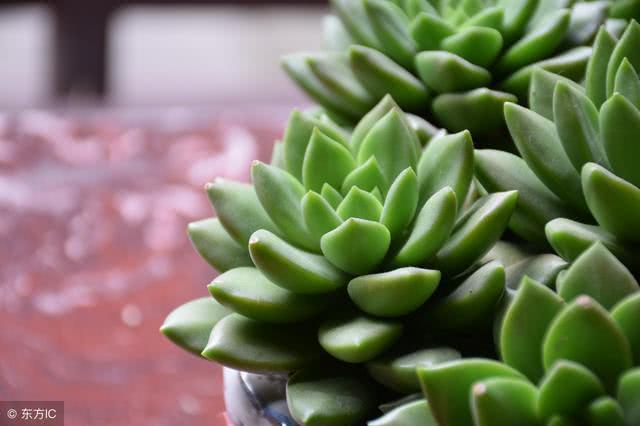
When it comes to the closed cultivation of succulents, many plant lovers have different attitudes, so let's talk about it below.
Why do succulents need closed cultivation?
Anyone who has seen a greenhouse knows that the succulents there are delightfully dewy, with glossy, fresh and plump leaf surfaces (actually I haven't visited a greenhouse myself, I just watch all you masters keep showing off and I'm endlessly envious), but once they're brought home, even if you give these little guys special care, they instead become less dewy, the leaves lose their luster, the leaf tips wither, and the plants' ornamental value drops greatly?
Although succulents can withstand drought for longer periods than other plants, that absolutely does not mean these plants dislike being watered. You should combine the plant's growth and development with the conditions of its place of origin, and supplement water reasonably. Take Haworthia cooperi as an example - this type of plant mainly comes from the South Africa region, and because the climate there is changeable, there are usually two rainy seasons, summer and winter, which are exactly the growing seasons for Haworthia cooperi. Therefore, for Haworthia cooperi, you should reasonably supplement water according to the plant's growth conditions, rather than mechanically watering every few days or whenever the soil looks dry.
Now everyone who grows succulents at home puts them on windowsills with good light or enclosed balconies, but in such an environment, the relative humidity is somewhat poorer than in a greenhouse. For example, today it's lightly raining in Changsha, the outdoor temperature is 16 degrees, and the air humidity is 75%, but after placing a thermometer-hygrometer indoors for two hours, the temperature hasn't changed, yet the humidity has dropped to 60%. It's clearly visible that indoor humidity is lower, so succulents naturally can't drink their fill of water.
How do you do closed cultivation of succulents?
So, since the care environment can't be changed, and we want to raise the relative air humidity, the only way is to make a small greenhouse for the succulents.
So for this method of improving the local environment, I basically adopt the closed cultivation approach with plastic cups, and the effect is quite good. The specific method is as follows, for plant lovers' reference:
1. Remember: plants under closed cultivation must not be placed in direct sunlight, otherwise because the smaller the greenhouse space, the local temperature will rise too high and it becomes "braising the succulent." Safety first - haste makes waste.
2. Timing for closed cultivation: spring, autumn and winter are all fine. Shading plus cooling can extend the duration of closed cultivation.
Closed cultivation in spring and autumn is to accelerate their growth process, generally suitable on cloudy and rainy days of 5-50 degrees. On clear days, it's recommended to remove the closed cultivation setup and let them get more sun, but be careful not to have water droplets on the succulents, otherwise they easily get sunburned.
Succulents that have just been watered are also not suitable for immediate closed cultivation; generally it's better to let them sit for a night or a full day until the water is slightly reduced.
Closed cultivation in winter is to create a small greenhouse effect for the succulents. You should observe the situation promptly to prevent mold from developing. The frequency of watering should not be too often or too much; it's best to just slightly soak the pot.
3. If you like the color variation in succulents caused by large temperature differences, use closed cultivation with caution. Because succulents are generally closed-cultivated in spring and autumn, which is exactly when the temperature difference is large, and closed cultivation creates a small greenhouse for the succulents, preventing them from producing their colorful appearance under large temperature differences.
4. Plants under closed cultivation often develop cracked leaf windows because of excessive humidity, so when the temperature rises, you should increase the time the cover is lifted, letting the plants go through a gradual adaptation process.
Actually, I've always wanted to see the scene of Haworthia cooperi bursting its windows, but it has never happened for me - though I've heard others say it has happened for them.
5. Watering during closed cultivation must be well controlled; in a high-temperature, high-humidity environment it's very easy to cause root rot or leggy growth.
6. Long-term closed cultivation will cause the plants' resistance to decline, so the duration of closed cultivation should start from the beginning of winter and be promptly removed after the temperature rises again the following spring.
7. Closed cultivation makes the air humidity in the local space too high, easily breeding diseases and scale insects, so you should moderately adjust the local environment according to the plant's condition
and the effects brought by other management measures.
Finally, one thing to remind everyone: for growing local plants and plants that already grow relatively quickly, it's not necessarily required to use the closed cultivation method.
Closed cultivation is only a temporary measure to improve an unattractive succulent's plant shape, and doesn't necessarily apply to all succulents. Generally it's suitable for succulents with windows such as Haworthia cooperi and Haworthia retusa, followed by small seedlings and some succulents with less ideal plant shapes. As for Lithops, Mesembryanthemum and beginners, try not to use this method.