The king of fruits takes 10 years to bear fruit, and can only be harvested while soaking in water; very few people have ever tasted it
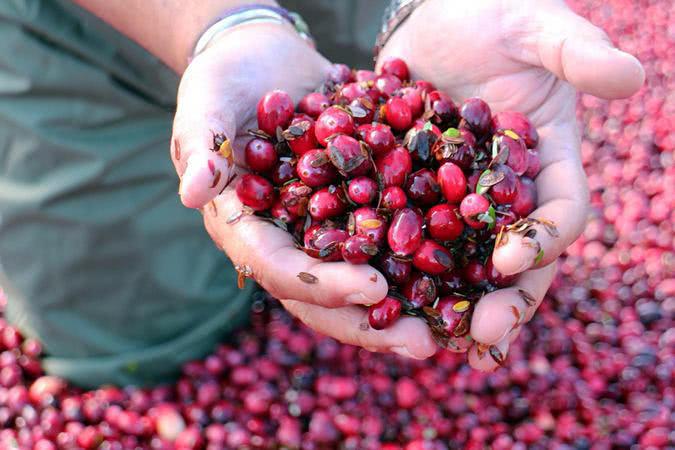
With the development of the global economy, many imported foods are commonly seen in people's daily lives. Among them are some fruits and snacks that people had never eaten before, such as durian and mango from Thailand, red-fleshed dragon fruit from Vietnam, and blueberries from Chile. There is also a "ruby" fruit from North America and Chile that is not grown in our country and is mainly imported, and in recent years it has become extremely popular. This fruit has high health value and tastes good; although its price is not low, it is still very popular among young people. However, due to its special harvesting method, fresh fruit is rarely sold, and most of it is dried fruit, so very few people have tasted it fresh.
This fruit is small in shape and looks like little red beans when ripe. It is a berry, and its name is "cranberry." It is a very interesting fruit. First, it likes to grow in cold wetlands, then it blooms in autumn and bears fruit in winter and spring, which can be said to be very unusual. Because the places where it grows are rather cold, its growth rate is very slow, and some branches must go through a 10-year growth cycle before they bear fruit. However, once it bears fruit, its yield is still quite considerable, with the high-yield period lasting at least 10 years. Second, cranberries like highly acidic sandy soil. The highly acidic soil that ordinary fruits cannot tolerate can still produce cranberries of excellent quality.
Then the harvesting method of cranberries is also remarkable, namely the "water harvest" method. Because cranberries are low-growing shrubs, before harvesting, the field where the cranberries grow is first filled with water, and after soaking overnight, the next day a specially made "water wheel" is used to churn the water back and forth in the field, and the cranberries fall off. There is air inside the cranberry's fruit cavity, so they all float to the surface of the water. Then farmers only need to enclose the field and can "catch them all in one net." This peculiar harvesting method is staged every year in its place of origin, North America, with the water surface covered entirely in red cranberries, which is very spectacular.
Because cranberries are all harvested after soaking in water, most of them are sent directly to processing plants after harvest, where, after sterilization and disinfection, they are dried with hot air and made into dried fruit. Another portion is made into jam, juice, fruit vinegar, and health products. Because cranberries have very high nutritional value, with vitamin C and flavonoid content ranking among the top among fruits, they can not only beautify the skin and nourish the face, but also help prevent urinary tract infections and cystitis in women, and have a certain regulating effect on diseases such as gastric ulcers and high blood pressure. This is because they contain a special substance, concentrated tannic acid, which can inhibit the reproduction of pathogenic bacteria in the body.
Precisely because of cranberries' extremely high nutritional value and health benefits, they are called the "king of fruits" in North America. Some people who like imported foods may have eaten dried cranberries, but for most people, it is still very distant, and very few have ever tasted it.