Ornamental vegetables can also be made into bonsai, and you will never regret growing one
Besides flowers and green plants, do you know what else can be used to make bonsai among the potted plants you keep at home? That would be the fruits and vegetables we see on the dining table every day. Many fruits and vegetables can be continuously regrown. Used to make bonsai, they are not only attractive in appearance but also edible, killing two birds with one stone. So here is the question: with so many kinds of fruits and vegetables, which ones can be used to make bonsai? It does not matter if you do not know; let us tell you, and then you will know.
1. Spinach
Spinach is one of the common nutritious vegetables in the household. It is not afraid of cold or freezing but is afraid of sunlight. If you want to grow it into a bonsai-like form, you must avoid summer. The two most suitable seasons of the year are spring and autumn. Since spinach only likes to grow under weak light, its growth will slow down without light; while if the light is too strong, it will scorch its leaves. When caring for a spinach bonsai, it is recommended to plant several pots and then stack them together. Be careful when stacking, and be sure to get the spacing right. Do not let the spinach crush each other. When the spinach grows out, it will look even more spectacular.
2. Scallion
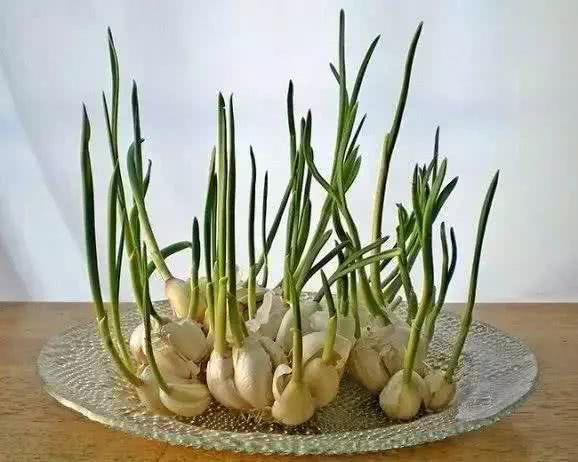
Scallions have very strong survival ability. If the garlic you bought at the market has sprouted, you can directly put the garlic into a container to grow it, using some water to cultivate it, or you can directly bury it in potting soil. Garlic itself has a fairly strong smell, but do not worry, the scallion sprouts that grow out have no smell, and it does not take long before you can harvest a big bunch of scallions. When caring for them, be sure to keep the pot away from direct sunlight. Full-of-life scallions are the best choice for a balcony bonsai.
3. Sweet potato
The stems of sweet potato are vine-like. If you grow a sweet potato into a small bonsai, is it not very cute? First find a bottle that does not leak. Place the pointed end of the sweet potato facing down, with half or one third of the sweet potato body immersed in water and half exposed above the water to breathe. If the sweet potato is relatively small, you can use some toothpicks or steel wire to fix its position. The water needs to be changed once every day, and within a week you will be able to see the sweet potato sprouting new roots and new shoots. Caring for a sweet potato potted plant is a very interesting thing. Flower lovers who are also good at drawing can draw some expressions on the skin of the sweet potato, and a sweet potato instantly comes to life.
4. Peanut
This season is the harvest period for peanuts. Peanuts can be bought everywhere, and once you start eating them you cannot stop. In fact, besides planting them in fields, they can also be planted in flower pots as bonsai for viewing. Their lush green leaves are not inferior at all to other flowers and grasses. First shell the peanut kernels and soak them in water for a week. After soaking, the outer skins of the peanut kernels will naturally fall off, and the sprouts will quickly push out. During the soaking period, be sure to remember to change the water.
Place the sprouts facing down into the soil, with even spacing between each peanut kernel, and keep spraying water to maintain moisture. Within a week you will see green sprouts breaking through the soil; then pair it with a nice-looking container, and it will be even more perfect. Casually placed in any corner of the home, it can become a decorative piece.
How interesting it is to make use of vegetables and turn them into pots of small bonsai. Do you want to give it a try at home too? I guarantee you will not regret it.