A detailed introduction to fermentation bed technology, one article takes you through a comprehensive understanding
Fermentation bed overview
The fermentation bed is an environmentally friendly, safe and effective ecological pig farming method proposed by using a brand-new natural agricultural concept combined with modern microbial fermentation treatment technology. It achieves zero discharge, no pollution and no odor in pig farming, thoroughly solving the environmental pollution problem of large-scale pig farms. It integrates pig science, nutrition, environmental hygiene, biology and soil fertilizer science, and follows the principles of low cost, high output and no pollution to establish a set of virtuous-cycle ecological pig farming systems. It is another highlight formed as factory-scale pig farming develops to a certain stage, and is a new model for the sustainable development of the pig farming industry.
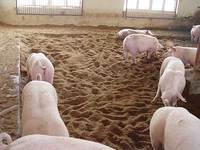
Fermentation bed pig farming
Fermentation bed principle
The principle of the fermentation bed is to use a microbial fermentation bed for natural biological fermentation (adding a nutritional partner companion to feed or using a feed fermentation agent for microbial anaerobic fermentation to promote absorption, and using a manure and straw fermentation agent for microbial aerobic fermentation decomposition treatment of manure and urine). That is, using Guangzhou Yiyuan Biotechnology ecological pig farming bacterial strain nutritional partner companion and manure and straw fermentation agent, straw, sawdust, rice husk powder and manure (or soil) are mixed in a certain proportion for microbial fermentation and reproduction to form a microecological fermentation bed factory, and this is used as the bedding material for the pig pen. Then the pig's rooting and turning habit is used as machine processing, so that pig manure, urine and bedding material are fully mixed. Through the decomposition and fermentation of the fermentation bed, the organic matter in pig manure and urine is fully decomposed and transformed, and microorganisms use undigested pig manure as food to reproduce and multiply. With the treatment of pig manure and urine, the odor also disappears. At the same time, the large number of microorganisms that reproduce and grow provide inorganic nutrients and bacterial protein to the pigs to eat, thus complementing each other and turning the pig house bedding fermentation bed into a microecological feed processing factory, achieving the goal of being odorless, tasteless and harmless. It is a new environmentally friendly ecological pig farming technology with no pollution, no discharge and no odor, and has advantages such as low cost, low feed consumption, simple operation, high benefit and no pollution.
The fermentation bed is about giving livestock a natural ecological primitive living environment during the breeding process. The fermentation bed process mainly includes two aspects: improving the living environment and feeding. The living environment is building the fermentation bed, and feeding is raising pure ecological fermented feed and improving drinking water. In these three aspects, livestock are given a natural ecological living environment during their living and feeding process.
The core concept of fermentation bed ecological breeding technology is: through participating in the synergistic fermentation of bedding material and livestock manure, quickly converting raw manure, urine and other breeding waste, eliminating stench, and inhibiting pests and pathogens. At the same time, beneficial microbial flora can synthesize bedding material and manure into sugars, proteins, organic acids, vitamins and other nutrients that livestock can eat, enhancing livestock disease resistance and promoting healthy growth of livestock.
Fermentation beds are divided into two types: underground fermentation beds and aboveground fermentation beds. Underground fermentation beds require digging 80-100 cm below the ground, filling them with prepared organic bedding material, and then putting livestock in, so they can grow freely. In places with a high groundwater level, aboveground fermentation beds can be used. Aboveground fermentation beds are built on the ground, require a certain depth, and then prepared organic bedding material is filled in.
Fermentation bed construction and management
Fermentation bed construction and management
Whether the fermentation bed works well is also related to the construction of the pig house. Generally, the pig house is required to run east-west and face north to south. Such a pen has good lighting, which is good for fermentation; moreover, the north and south sides can be open, suitable for good ventilation, with no odor and no mosquitoes or flies. If it is built as a greenhouse farming model with low investment, low cost, quick results and quick conversion, then it is both convenient and money-saving. This is because the greenhouse costs little, and the microclimate is easier to adjust. In winter, lighting is good and warmth is maintained, so pigs can safely overwinter; in summer, put a sunshade board on the roof and roll up the surrounding skirt film to ventilate and cool down. Generally, free-range households can make do with simple facilities, generally digging 80 cm below the ground, filling it with organic bedding material, and then placing the pigs