Thirty diseases that bamboo rat farming must master
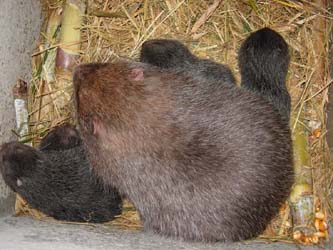 Bamboo ratDiseases" />
Bamboo rat30 common typesBamboo ratComparison of disease characteristics and manifestations, through theBamboo ratdisease comparison table to check whether the bamboo rat is sick:
1. For bamboo rats, carefully observe the amount, manner and state of feed intake. When it decreases or stops completely, it indicates digestive system diseases, infectious diseases, metabolic disorders and severe painful diseases.
Difficulty in chewing and swallowing indicates problems in the mouth, teeth, tongue, pharynx and esophagus.
2. Pica in bamboo rats indicates a deficiency of certain vitamins, trace elements and other nutrients.
3. Reduced or absent belching in bamboo rats is seen in esophageal obstruction or stomach diseases.
4. Repeated acute vomiting within a short time in bamboo rats is seen in encephalitis and meningitis; vomitus containing blood is seen in hemorrhagic gastroenteritis.
5. Excessive salivation flowing out of the mouth in bamboo rats is called drooling, commonly seen in stomatitis, parotitis, foot-and-mouth disease, pharyngitis, influenza and certain poisoning diseases.
6. Vesicles on the oral mucosa of bamboo rats are seen in foot-and-mouth disease; erosive patches in the mouth are seen in foot-and-mouth disease and vitamin A deficiency; pox-like eruptions in the mouth are seen in pox diseases;
7. Hemorrhage of the oral mucosa in bamboo rats is seen in purpura hemorrhagica; yellow staining of the mucosa is seen in hemolytic diseases and liver diseases.
8. Dry mouth in bamboo rats is seen in febrile and dehydrating diseases and atropine poisoning.
9. Inability to open the mouth, tightly clenched jaws and stiff tongue in bamboo rats are seen in tetanus; swelling or hardening of the tongue is seen in actinomycosis; a soft, paralyzed tongue hanging out of the mouth is seen in moldy corn and Clostridium botulinum poisoning; a grayish-white or grayish-yellow tongue coating is seen in gastrointestinal diseases and febrile diseases.
10. Uneven wear of the teeth in bamboo rats suggests calcium deficiency
11. Loss of gloss on the teeth, rough surface, and yellow-brown or black spots in bamboo rats are seen in chronic fluorosis.
12. Markedly increased abdominal circumference in bamboo rats is seen in abdominal wall hernia, rumen impaction, rumen tympany (obvious in the left flank), abomasal and omasal obstruction (obvious on the right side), ascites (obvious in the lower abdomen), gastric dilation, gastric tympany, large intestine constipation, gastric food stasis, etc.
13. Reduced abdominal circumference in bamboo rats is seen in chronic wasting diseases such as indigestion, paratuberculosis, chronic glanders, enzootic pneumonia, intestinal parasitic diseases, diseases of the limbs and painful diseases, etc.
14. A small number of acute diarrheal diseases in bamboo rats, such as acute gastroenteritis and cecocolitis, can also cause reduced abdominal circumference.
15. The defecation posture, frequency, amount, nature, color and foreign matter of bamboo rats, and arching of the back and straining with pain during defecation, are seen in peritonitis, traumatic reticulitis and rectal injury, etc.;
16. Continuous straining in bamboo rats, frequently assuming the defecation posture but with no feces passed, is called tenesmus, seen in proctitis, severe dysentery, etc.;
17. String-like feces and persistent diarrhea in bamboo rats are seen in many diarrheal infectious diseases such as transmissible gastroenteritis, epidemic diarrhea, viral diarrhea, hemorrhagic enteritis, paratyphoid, etc., as well as injury to the lumbosacral spinal cord;
18. Dry, small feces covered with mucus in bamboo rats is commonly seen in febrile infectious diseases, influenza, and the early stage of acute intestinal constipation, etc.
19. Polyuria in bamboo rats is seen in chronic kidney disease; frequent urination, that is, increased frequency with small urine volume, is seen in cystitis and urethritis.
20. Blood in the urine of bamboo rats is seen in nephritis, hemorrhagic inflammation of the bladder, vaginal and uterine bleeding, toxoplasmosis, leptospirosis, streptococcosis, etc.
21. Turbid urine in bamboo rats is mostly seen in kidney and urinary tract diseases. Urine with a pungent ammonia odor is seen in cystitis and urethral obstruction; a cadaverous odor is seen in ulceration, necrosis or suppuration of the bladder and urethra; an acetone odor is seen in ketonemia, parturient paralysis and dystocia, etc. Scrotal hernia in male rats, edematous inflammation, and blood accumulation after castration, etc.
22. Swelling, heat and sensitivity of the testicles in bamboo rats are seen in orchitis, brucellosis, etc.
23. Increased vaginal discharge in female bamboo rats with purulent, putrid foul matter flowing out is mostly seen in vaginitis, endometritis, pyometra, retained placenta, brucellosis, etc.
24. Heat, swelling, hardening and unevenness of the mammary glands in bamboo rats, asymmetry of the nipples, and milk containing clots, pus or blood are seen in mastitis, diseases, liver and kidney failure and various febrile diseases, etc.
25. Ataxia, unsteady swaying and a gait like wading through water in bamboo rats are seen in encephalitis, myelitis, tuberculosis, brucellosis, etc.
26. Excessive excitement in bamboo rats, such as fear and restlessness, manic agitation, etc., is seen in encephalitis, salt poisoning, organophosphate poisoning, certain organochlorine poisoning diseases, etc.;
27. Convulsions in bamboo rats are seen in encephalitis, poisoning diseases, hypocalcemia, tetanus, ketonemia;
28. Paralysis in bamboo rats is seen in encephalitis, certain parasitic diseases, and vitamin and trace element deficiencies.
29. Reduced or lost vision in bamboo rats is seen in selenium poisoning, lead poisoning, vitamin A deficiency, etc. Poisoning and ketonemia, etc.