A Detailed Explanation of Common Problems in Laying Hen Farming and Their Solutions
1. Why do laying hens peck feathers and peck vents? What factors cause this?
Feather pecking in laying hens is caused by a deficiency of certain nutrients in the body that leads to pica in the hens. Among these nutrients, the most important are niacin, pantothenic acid, folic acid, biotin and so on. The solution is to add these individual vitamins to the feed or drinking water, or to switch to a premix product with higher levels of these ingredients.
Vent pecking in laying hens is caused by hens taking too long to lay eggs and by the coop being too brightly lit, because chickens are especially sensitive to the color red. If other hens see the everted red oviduct of a hen that is laying, they will peck at it. If the light is dim enough that other hens cannot see it, the incidence of vent pecking will be reduced, but light that is too dim will affect the laying rate. The reasons for prolonged laying time include eggs that are too large, or eggs that are not large but the hen's uterus contracts weakly. Factors affecting uterine contraction include the body weight of the laying hen during rearing, the acid-base and ion balance in the feed, and the B-vitamin content of the feed, especially B1, B6 and so on. The methods for improvement are to increase the lysine content of the feed, increase the B-vitamin content or switch to a premix product of reliable quality, add sodium bicarbonate and potassium bicarbonate to the feed or drinking water, and improve the coop's rearing conditions and the management during the rearing period.
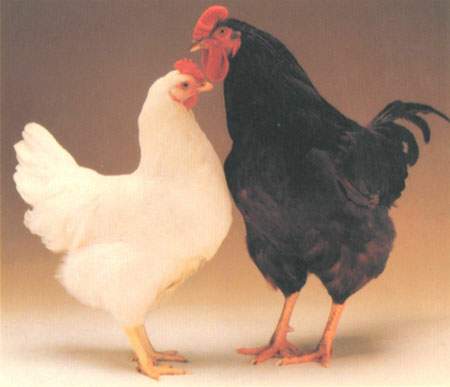
Common Problems in Laying Hen Farming
2. How to overcome the problem of laying hens pecking eggs
Because the feed lacks a certain nutrient or is not mixed evenly, individual laying hens develop pica, and to these hens deficient in a certain nutrient, the taste of eggs is the best. Once such a hen has eaten an egg, it will keep eating them. The solution is to recalculate the feed formula, fully balance all the nutritional indicators in the feed, use a premix product with confirmed ingredient levels, and adjust the slope of the chicken cage properly. Generally, hens that like to eat eggs also peck feathers.
3. Sometimes why do chickens pass green droppings?
The reason chicken droppings turn green is that the bile in the intestinal tract has not been completely absorbed. Since bile is green, the chicken droppings turn green. Factors causing poor bile absorption include: intestinal inflammation (such as Newcastle disease), excessively fast intestinal movement (such as starvation), excessively high osmotic pressure in the intestine (such as high metal ions), feed ingredients that are not easily absorbed (such as the feed switch from rearing to the start of laying), and feed ingredients that stimulate the intestine and speed up movement (such as excessively high crude fiber content in the feed, or certain types of bacterial toxins), and so on.
4. What is the reason when chickens have no laying peak, or the peak does not last long?
There are many reasons for a low laying peak and a short duration. In terms of management, there is body weight and lighting management during the rearing period; in terms of feed, there is the energy content, unsaturated fatty acid content, essential amino acid content, and various vitamin contents in the feed; in terms of disease, whether the birds have some hidden subclinical diseases such as mycoplasmosis, colibacillosis and so on. Only by carefully analyzing the causes can a solution be determined. At present, it is generally caused by improper management during the rearing period.
5. Why do chickens pass white droppings?
The nitrogen metabolism of chickens differs from that of mammals. Many amino acids are metabolized as energy carriers after their amino groups are removed. The removed amino groups are finally converted into uric acid, and uric acid combines with some metal ions in the body to form urates that are excreted through the kidneys. Because the chicken's urinary tract connects with the rectum, chicken droppings appear white.
6. How long is the appropriate lighting time for laying hens?
Under normal circumstances, a lighting time of 16.5-17 hours is more appropriate for laying hens. Too much light will not help egg production, and too little light will cause the laying rate to decline.
7. How to increase egg production and the laying rate?
There are many factors affecting egg production and the laying rate. Broadly, they can be divided into: environment, management, disease and feed. As far as feed is concerned, feed digestibility, methionine and lysine content, metabolizable energy content, various vitamin contents, and daily feed intake have the greatest influence. Only by raising these indicators can high egg production and a high laying rate be achieved.
8. How to use protein feed more effectively?
First, the digestibility of raw materials is an important indicator. Only raw materials with high digestibility can be fully utilized by animals; second, the balance of energy and amino acids in a complete feed is very important. When energy appears high relative to amino acids, animal feed intake declines and animal production performance is poor; conversely, protein utilization decreases. In addition, when the amino acid content of protein raw materials is unbalanced, the utilization rate of protein feed becomes lower. Besides the above factors, some trace nutritional elements related to protein metabolism should also be considered, such as the vitamins pantothenic acid, B6, biotin and so on. If the content of these ingredients is insufficient, the utilization rate of protein feed decreases. The way to solve the above problems is to use computer software and premix products of reliable quality.