Honeysuckle is suitable for consumption in summer; how should it be grown?
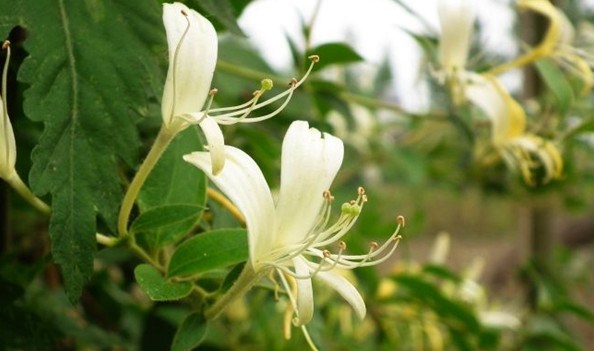
Honeysuckle is also called Japanese honeysuckle, twin flowers, honeysuckle vine, etc. Common varieties include Four Seasons Honeysuckle, Fengqiu Honeysuckle, mountain honeysuckle, red honeysuckle, Lonicera henryi, Lonicera trichosantha, and white honeysuckle. It has certain medicinal value, and many flower enthusiasts grow it at home. Below, the editor will tell you about the health benefits and care guide for honeysuckle.
1. Health benefits
Honeysuckle is cold in nature and sweet in taste, entering the lung, heart, and stomach meridians. It has the effects of clearing heat and detoxifying, fighting inflammation, and tonifying deficiency and treating wind. It mainly treats abdominal distension and diarrhea, warm disease with fever, heat toxin sores and tumors, and other conditions. It has certain therapeutic effects on symptoms such as dizziness, dry mouth, excessive sweating and restlessness, enteritis, bacillary dysentery, measles, and pneumonia.
2. Care guide
(1) Soil selection
Honeysuckle prefers loose, well-drained sandy soil. A nutrient soil can also be made from leaf mold, garden soil, river sand, and organic fertilizer.
(2) Light and temperature
Honeysuckle prefers light, warmth, and humidity, is slightly tolerant of shade, relatively tolerant of cold and heat, and its suitable growth temperature is -30 to 30°C.
(3) Watering
Honeysuckle is drought-tolerant and prefers moisture. During the growing season, it does not need to be watered every day; keeping soil moisture at 30% is sufficient. In hot seasons, prevent the soil from staying dry for long periods. In addition, note that watering should be done in the morning or evening.
(4) Fertilizing
During the growing season, fertilize mainly with nitrogen fertilizer. During the flower and leaf differentiation stage, apply phosphorus and potassium fertilizer water 1-2 times per month. During the bud stage, apply additional nitrogen fertilizer. After flowering, apply organic liquid fertilizer 1-2 times.
(5) Propagation
Honeysuckle is mostly propagated by cuttings. Take a 10-15 cm long healthy stem vine from a mature plant, insert it 5-7.5 cm into the substrate, water thoroughly, keep the substrate moderately moist during propagation, spray water once each morning and evening, and roots will form after 20 days.
(6) Pruning
Regularly shorten overgrown vines. After sprouting in early spring, cut off the tips of the branches. During the growing season, remove vigorous buds, pinch the healthy branches, and after flowering, pinch the new shoots.
(7) Placement
Honeysuckle can be placed in sunny places such as balconies, living rooms, and courtyards.