How do you care for a plant full of holes? Care tips you'll understand at a glance
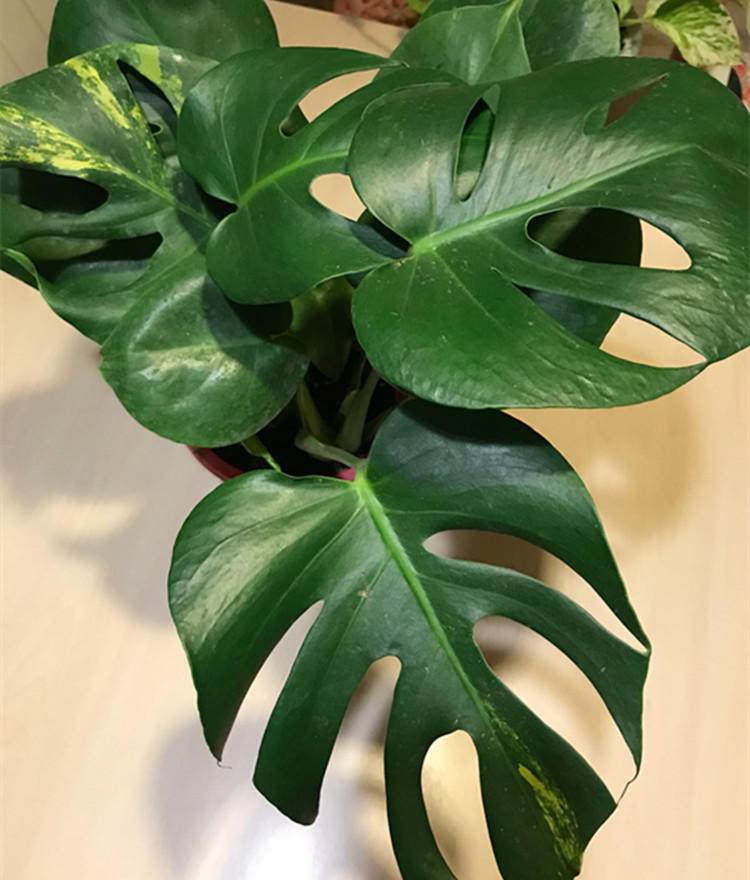
Monstera deliciosa is a famous large foliage plant. Its stems resemble bamboo nodes, it produces aerial roots, and it grows creeping along the ground. Its leaves are large and unusual, with oval-shaped "holes" in the middle, resembling a turtle's shell, which is why people jokingly call it the "plant turtle." Used to decorate a room, living room or study, it is elegant and tasteful, and the tips for growing it well are something you'll understand at a glance.
Monstera deliciosa likes warmth, fears cold, tolerates shade, and thrives in a semi-shady, humid environment. It is not demanding about soil, but loose, fertile soil is better. Its optimal growing temperature is around 30°C; at 10°C growth slows, and at 5°C growth stops and it enters dormancy. Below, flower lovers should study these easy-to-understand Monstera deliciosa care tips.
1. Planting
The best time to transplant or pot up Monstera deliciosa is between April and May. Small and medium plants should be kept with their original soil. Ordinary potting mix can be used as the potting soil, and repotting with fresh soil can be done once every 2-3 years. It can also be grown in water.
2. Placement
Monstera deliciosa is fairly shade-tolerant. Normally it can be kept for long periods indoors in a bright, well-ventilated spot near a window. Avoid harsh direct sunlight, otherwise the leaves easily turn yellow or scorched yellow. In winter, it is best placed in a bright spot indoors.
3. Fertilizer and water management
Summer and autumn are the peak growing seasons. You can apply a general-purpose organic liquid fertilizer for plants twice a month, diluted 500 times and poured at the roots. The potting soil should be on the moist side, not dry. In addition to normal watering, you also need to mist the leaves to raise the ambient humidity, so growth will be lush and pleasing. At this time, it can both be kept indoors for viewing and placed outdoors in a semi-shady or shaded spot for cultivation.
4. Winter care
In winter it needs to be kept indoors to stay warm through the winter, with a room temperature of around 5°C. The potting soil should be on the dry side rather than moist; if too moist, the leaf tips easily turn black and wither. At the same time, prevent cold drafts, otherwise the leaves easily wither, curl and drop off.
5. Propagation methods
Monstera deliciosa can be propagated by stem cutting and division, and by cuttings.
Stem cutting and division: Take a potted Monstera deliciosa with more than 3 leaves, and starting from the top leaf (with an aerial root below it), cut it section by section with scissors, and plant each in a separate pot. Place them outdoors in a semi-shady spot, pay attention to watering and fertilizing, and before long they will become new Monstera deliciosa plants. In this way, one multi-leaf Monstera deliciosa can be divided into 3-4 pots. This propagation method is relatively simple and has a fairly high survival rate, and can be done during the summer and autumn growing seasons.
Cuttings: Cut an overly long stem into sections, each 6-10 cm long, with 2-3 buds. Insert them diagonally into the potting soil, with the insertion depth being 2/3 of the stem length. Place outdoors in a semi-shady spot, pay attention to watering regularly, and keep the potting soil on the moist side. In about a month, they will take root and grow leaves. The best time for stem cuttings is from May to July.