Orchids enter their peak growth period in July and need special care
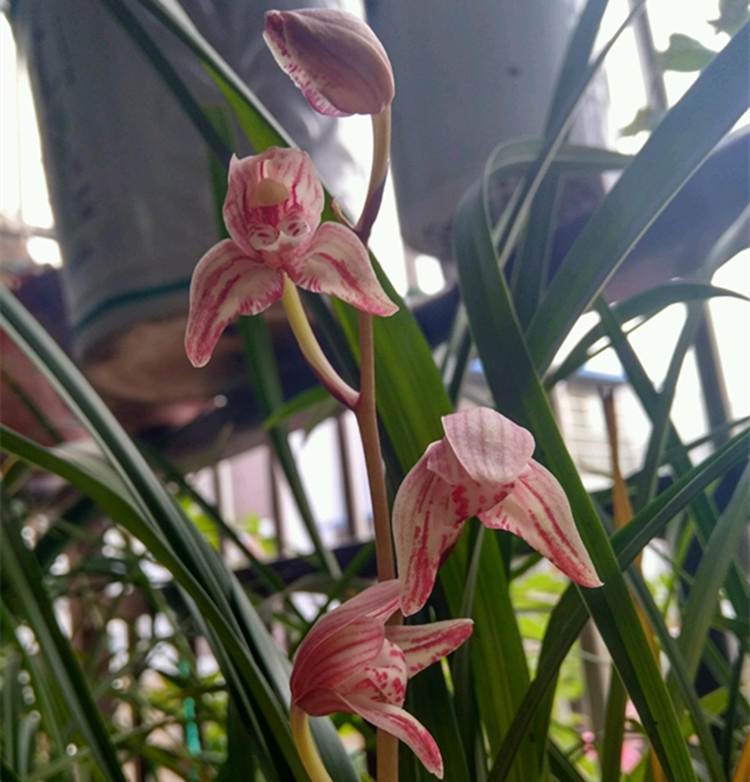
In July, although it is a high-temperature period, orchids nevertheless usher in their peak growth period. The peak growth period of orchids runs from the unfolding of leaf buds until the temperature first drops in cool autumn or early winter. Management during this period is extremely critical and requires "special" care.
1. Ensure the optimal growth temperature
Temperature is one of the important conditions for orchid growth. Its optimal growth temperature is 20-30°C, with 25-30°C being the vigorous growth period. In some regions in late spring and early summer, the natural temperature has not yet reached 25°C and often hovers around 20°C. On rainy days, it may not even reach 20°C, and the orchid plants (new shoots) develop very slowly; some leaf buds, after emerging, show no elongation or leaf unfolding for a long time.
At this time, if artificial regulation is not carried out, delayed vigorous growth will not only make it hard to get a season of autumn shoots, but even a season of new plants will not have time to fully develop and mature. This greatly affects blooming well in the current year and producing more and strong shoots the following year. Therefore, keeping warm and promoting growth is of considerable importance.
So-called warmth retention means that when the natural temperature has not reached above 25°C, the greenhouse or shed should remain closed; about 3 hours after the sun rises, when the greenhouse or shed temperature reaches 25-28°C, doors and windows may be opened in batches for ventilation. If the temperature drops below 25°C again, doors and windows should continue to be closed, or the doors and windows facing the wind direction should be closed, to ensure the greenhouse or shed temperature does not fall below 25°C. If the temperature exceeds 32°C, it must be cooled promptly.
2. Secure enough scattered light
All things grow by the sun. If it is cloudy and clear, with weak and intermittent light, the shade density should be adjusted at any time. The morning light before 9 a.m. and the red, yellow and orange light after 5 p.m., as well as shaded sunset light, are not only harmless but beneficial, and are the light most favorable for orchid plants to absorb and use; the shade net should be reduced or removed to let them bathe in the light. If it is a long spell of rainy weather, high-pressure mercury lamps, fluorescent lamps and incandescent lamps coated with red-orange color should be used as much as possible to supplement lighting for more than half a day in the morning.
3. Ensure suitable air humidity
The suitable air humidity for orchid growth should be around 80%, and for Cymbidium sinense and tropical orchids it should be even higher. If conditions allow the use of automatic misting, an appropriate misting program should be compiled and input into the controller according to the actual humidity of the orchid greenhouse or shed. If automatic misting is not available, sand or bricks should be laid in the passageways of the orchid site and under the orchid benches, watered to retain moisture, and artificial water mist should be sprayed to increase humidity.
4. Water and fertilize at the right time
For orchids grown in soil, the principle is "better dry than too wet; for soilless culture, better wet than dry for too long." For those cultivated in a mix of granular soil and stone-based media, although high humidity like soilless culture is not required, they should not be dry for too long either; watering can only be 1-2 days later than for soilless culture. For watering orchids during the peak growth period, the interval between waterings should be determined mainly according to the actual conditions of one's own orchid-growing setup and the dryness and moisture of the substrate. Regardless of the specific circumstances, for pure soilless culture, more watering is better than less.
When fertilizing orchids during the peak growth period, follow the general principles and detailed rules of fertilization, mainly applying "growth-promoting fertilizer." It is generally recommended to use organic liquid fertilizer specially formulated for orchids, which is relatively rich in nitrogen, phosphorus and potassium, once a week, diluted 500 times and poured at the roots; the next day after fertilizing, water should be applied to flush out the grime in the pot.
5. Proper ventilation
Moderate ventilation at the orchid-growing site can not only keep the air in the greenhouse or shed fresh and adjust humidity, but also supplement natural carbon dioxide gas fertilizer and effectively lower the temperature. If warmth retention continues in early summer to promote growth, timely ventilation should be especially noted. Generally, in sunny summer and autumn days, from 10 a.m. to 6 p.m., ventilation should be increased. If the temperature is still 25°C in the first half of the night, ventilation should also be increased. At the same time, strong winds and typhoon strikes should be promptly blocked.