Osmanthus care tips for July, fragrant trees full of bloom in August
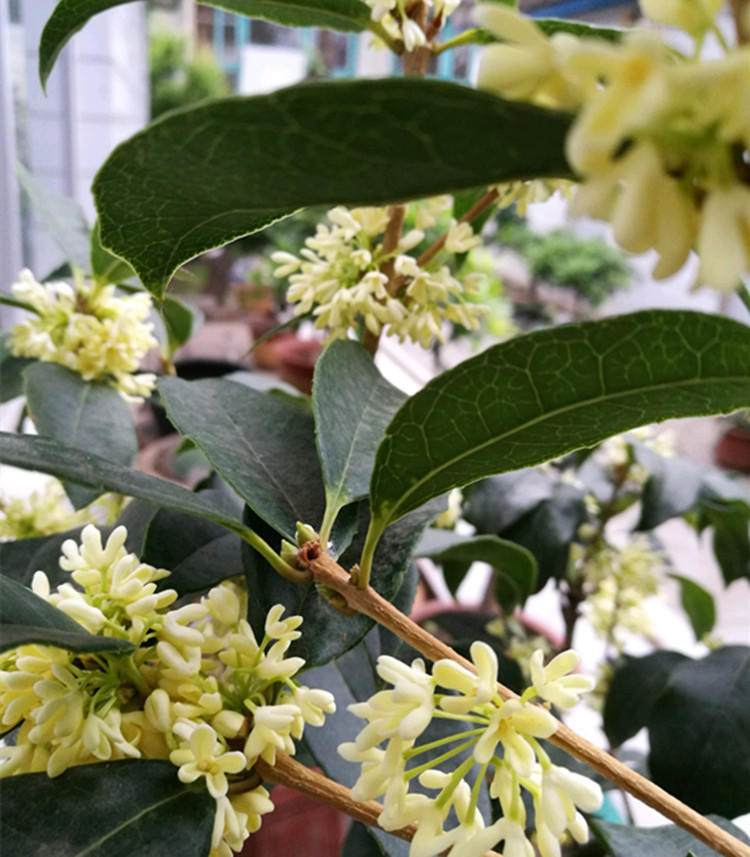
Osmanthus is richly fragrant and has high ornamental value. It stays evergreen all year round, and when it blooms, the little yellow flowers look like golden millet, spilling their rich fragrance on the breeze and refreshing the heart. So gardeners, take advantage of July and cleverly use a few "tricks", and in August the osmanthus will bloom and fill the tree with fragrance.
Osmanthus likes warmth and sunlight, and is cold-tolerant. It thrives in a microclimate with fresh air and nearby trees, flowers and grass, and in loose, fertile, well-drained, slightly acidic sandy soil. It dislikes alkaline and clayey soil, coal smoke and dust, and waterlogging.
In the Jiangnan region, its growth and development pattern is as follows: in early spring, between February and March, it sprouts and grows new shoots; in June the new branches are half-lignified; in August the flower buds differentiate; generally, current-year branches bear the most flowers; in October the flowers fade and it enters dormancy. Except for the four-season osmanthus, it only begins to bloom 5 years after planting. Trees aged 50-100 years bloom most profusely.
Therefore, to care for osmanthus, gardeners need to learn the following tricks:
1. Planting
If planting osmanthus in the ground, gardeners should choose a sunny courtyard or a spot in front of or behind a rural house with group-planted trees nearby and good drainage. The planting time is March to April or after the flowers fade in autumn; the root ball must be kept intact with soil, and decomposed fertilizer should be added as a base fertilizer. When planting, keep a certain space around the trunk, and the branches and leaves must not overlap or press against each other, so as to allow good ventilation and light, otherwise growth and flowering will be affected.
For potted planting, gardeners can use vegetable garden soil, or mix vegetable garden soil, river sand and composted manure in equal thirds as the potting soil. After potting, water thoroughly and place outdoors in semi-shade. You can mist the leaves to increase environmental humidity, which helps the plant settle in and survive. Once it has settled in and survived, it can be placed in full sun or semi-shade.
2. Fertilizer and water
In winter, apply sufficient base fertilizer. For ground-planted osmanthus, dig a trench around the base of the roots and fill it with plenty of organic fertilizer, such as decomposed cake fertilizer plus animal matter or bone meal, superphosphate, etc.
For potted plants, after the start of winter in November to December, once a week, use a general-purpose organic liquid fertilizer for flowers, diluted 500 times, to water the roots once, or scrape back the topsoil, add a small amount of soybean cake crumbs or bone meal, and then cover with soil again. When growing branches and leaves, use a general-purpose liquid fertilizer for flowers as a top dressing 1-2 times.
In midsummer during July, apply a light fertilizer mainly of phosphorus and potassium 1-2 times to promote flower bud differentiation and bud formation. At this time, watering should also be appropriately controlled to benefit flower bud differentiation. When applying organic fertilizer, it must be diluted to 500-800 times. Throughout the growing period, pay attention to loosening the soil and weeding. Normally, keep the soil generally moist, and prevent excessive moisture and waterlogging, so as to avoid root rot, bud drop and flower drop.
3. Pruning
Osmanthus flower buds mostly grow on new branches of the current year, so normally pay attention to cutting off dead branches, diseased branches and overly dense branches. After flowering in autumn, the leggy branches should be cut back to encourage side branch growth and more flower buds, and to keep the plant shape attractive.
4. Pest and disease control
The main pest of osmanthus is the "leaf-cutting worm", also known as the "cutworm", which nibbles the leaves of osmanthus. Once found, it can be prevented by spraying chlorpyrifos diluted 1000 times.
Image from gardener: s Song Yang