Comprehensive Analysis of Key Turkey Breeding Techniques
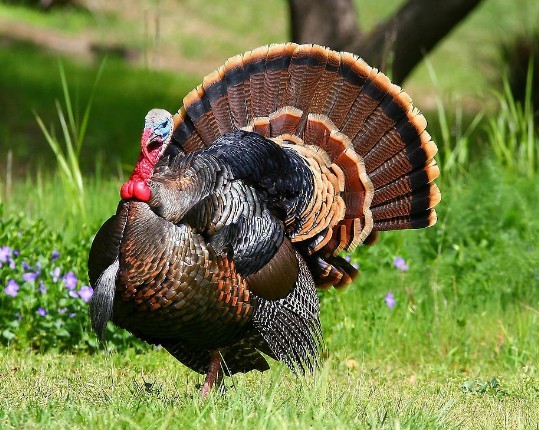
Because Nicholas large turkeys vary greatly in body weight, artificial insemination must be used to ensure a high fertilization rate of breeding eggs.
I. Preparation of the Turkey Flock
First, preparation of male turkeys: after male turkeys have been selected and retained twice, at 16-18 weeks of age and 29-30 weeks of age, semen collection training is carried out 1-2 weeks before the breeding season. If male turkeys are found to have an indistinct reproductive papilla, abnormal semen color, abnormal semen color, or a semen volume of less than 0.1 ml, they should be marked so that they can be observed again during the next semen collection, and a decision to retain or cull them can be made according to the specific situation. When male turkeys show a good sexual response during the 1st and 2nd semen collections, with good semen density, a milky white color, and a semen output of 0.2-0.4 ml, a semen examination should be carried out on that turkey.
Second, preparation of female turkeys: female turkeys are transferred to the breeding turkey house at 28 weeks of age, and the lighting time is increased by 0.5-1 hour per week on the basis of the original 8 hours, until it reaches 16 hours, and the protein and calcium content in the feed is correspondingly increased to 16% and 2.25%. Because of the increase in lighting time, female turkeys show the beginning of squatting behavior, and some female turkeys have already started laying, so preparations for artificial insemination should be made in time at this point.
II. Semen Collection from Male Turkeys
The massage method is the most commonly used semen collection method, and it is safe, simple, and easy to master. Massage-method semen collection requires 3 people to cooperate to complete. 1 person is the main semen collector, and the other 2 are assistants, responsible for restraining the male turkey and holding the semen collection cup to collect the semen. The semen collector sits on a long wooden bench (the bench is about 1.2 m long, 0.35 m wide, and 0.4 m high), with both legs straddling the two sides of the wooden bench. The bench surface is tightly wrapped with a soft material such as soft cloth or burlap to prevent abrasion of the turkey's chest skin. The semen collector and the restrainer each grasp the male turkey's waist and both legs respectively and place its chest on the wooden bench, with both legs hanging naturally. After the male turkey is fixed in place, the semen collector uses the left hand to support the base of the male turkey's tail, and the right hand to gently massage the tail, with both hands working together 3-4 times, then the right hand pushes and massages from the back toward the base of the tail several times; at this time, the male turkey's reproductive papilla protrudes outward rhythmically and with force. At this point, the semen collector separates the right thumb from the other 4 fingers and wedges them on both sides of the anal ring, forming a squeezing action, while the left hand is placed on the male turkey's abdomen to induce a reflexive erection, and the semen is discharged along the longitudinal groove between the two reproductive folds on both sides; at this time, the semen should be quickly collected into the semen collection cup.
III. Insemination of Female Turkeys
1. Preparation for insemination of female turkeys: before insemination, a certain amount of semen is divided and placed into each insemination tube, containing 0.025-0.03 ml of semen, or the semen is directly injected into the female turkey's vagina with a glass pipette, which can also achieve the same effect. If insemination is carried out with a graduated glass pipette, two people are needed to cooperate. The person everting the cloaca holds the female turkey's both feet (shanks) upside down with the right hand, with the head downward, the tail upward, and the chest clamped inward between the knees of the person everting the cloaca, and applies a certain pressure to the female turkey's left abdomen with the left leg, so that the cloaca opens and the oviduct opening on the upper left side is everted.
2. Insemination depth: the vaginal part of the female turkey has a "V"-shaped bend about 8-10 cm long, and the junction of the uterus and vagina also has a relatively strong sphincter. Therefore, in production, the shallow oviduct insemination method should be used, with a depth of 2 cm being appropriate, which can achieve very good results.
3. Insemination dose and insemination frequency: the insemination dose and insemination frequency should be determined according to semen quality. If sperm motility is high and density is great, the insemination dose can be smaller, and insemination can be carried out after dilution. If raw semen is used for insemination, the dose is 0.025 ml, but in production the actual insemination dose generally exceeds 0.025 ml. The sperm density of turkey semen is relatively high, generally reaching 7 billion to 8 billion sperm per ml, so the number of effective sperm inseminated each time is about 70 million to 90 million or 100 million. When the egg production rate of the turkey flock reaches 5%, the 1st insemination begins, followed by the 2nd insemination on the 4th day, and thereafter insemination once a week. As turkeys age, egg production and fertilization rate both decline; therefore, in the later stage of laying of female turkeys (after 18 weeks of laying), the number of inseminations should be increased to maintain a relatively high fertilization rate.
4. Insemination time: the insemination time for female turkeys should be after laying, that is, 3-4 p.m. Experiments have shown that inseminating female turkeys that have a hard-shelled egg in the oviduct results in a low fertilization rate.
IV. Feeding and Management During the Brooding Period
1. Drinking water: after the poults are brought to the brooding room, clean and hygienic drinking water should be given immediately. At 1-3 days of age, penicillin and streptomycin can be added to cooled boiled water, with a dosage of 2,000 units of penicillin per bird per day, and drinking twice a day; this is very effective in preventing staphylococcosis and pullorum disease in poults. The number of drinkers or water troughs should be sufficient, evenly distributed, and at a moderate height, for easy use by the poults.