A Detailed Guide to Scorpion Farming Techniques and Rearing Management Methods
The scorpion is also known as quanxie, quanchong, or qianxie. Its body contains scorpion venom, which has high medicinal value, with effects of calming wind and relieving spasms, dispelling wind and unblocking collaterals, and counteracting toxins.
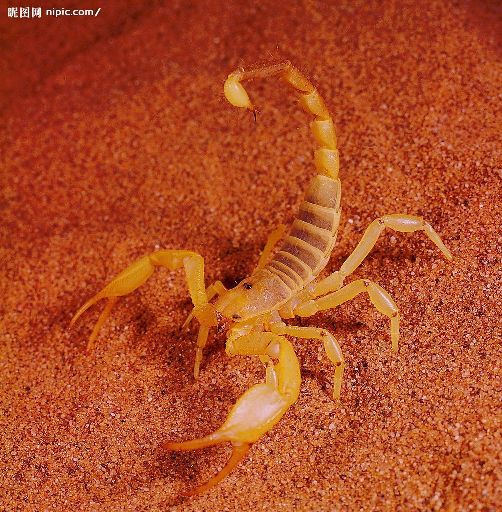
Scorpion Farming Techniques and Rearing Management
I. Build the Pools Well
It is best to build the pools in a house that is not lived in or in an empty shed. The scorpion pool is built of bricks, with no limit on length and width, and a height of 80 cm. After the pool is built, smooth it with cement. It is best to also line the inner walls around the scorpion pool with plastic sheeting or glass to prevent the scorpions from escaping. The bottom of the pool should be covered with about 6 cm of sandy soil, tamped firm. Place tiles in the pool, laying the tiles one horizontal and one vertical, to provide habitat for the scorpions.
II. Scorpion Feed and Feeding
Scorpions like to eat juicy, soft-bodied insects, such as mosquitoes, flies, mantises, grasshoppers, and animals such as spiders and earthworms; they also like to eat alkaline soil and wheat bran. Animal feed for scorpions can be caught by light trapping: dig a hole 25 cm in diameter in the roof of the scorpion house, hang a fluorescent lamp or black light above the opening, and fit a funnel below the lamp; turn on the light in the evening to lure insects into falling into the scorpion house for the scorpions to prey on. In addition, you can also raise ground beetles and crickets and culture maggots to feed the scorpions. If the trapped and raised insects cannot meet the scorpions' food needs, you may appropriately feed them some fresh, uncontaminated animal meat. Mince the meat into filling, then wrap the filling into many small packets with small pieces of plastic sheeting, and put them into the pool fairly evenly. The number of feedings depends on the temperature. Generally, when the temperature is below 15°C, feed once every 6 to 7 days; when the temperature is 20°C to 30°C, feed once every 3 to 5 days. Do not put in too much feed each time, as too much easily spoils and causes contamination and produces pathogens; too little easily causes the scorpions to not get enough to eat and kill each other. The best feeding time is from 5 pm to 6 pm.
III. Rearing Management
1. Maintain proper temperature. Below 15°C, scorpions enter hibernation, stopping or slowing their growth; above 40°C, scorpions desperately try to escape and may even die. Therefore, keeping the temperature at 25°C to 30°C is the optimal temperature for scorpion growth and development.
2. Control humidity well. Scorpions like dryness and fear dampness. The optimal relative air humidity is 45% to 50%. The moisture content of the sandy soil should be between 15% and 20%, so that the sandy soil is neither dry nor wet and people do not feel the scorpion room is stuffy. Pay special attention that the sandy soil should not be too damp, otherwise the scorpions will develop powdery mite disease and die.
3. Supply enough drinking water. Whether scorpion farming succeeds or not depends on drinking water. If the water supply is lacking, the scorpions will become too dry and kill each other to death. Therefore, every day you can soak sponges with clean water or cold water and put them into the scorpion pool. Every 3 to 5 days, you can add an antibiotic-type drug (oxytetracycline, sulfonamides, etc.) to the scorpions' drinking water; dissolve each tablet in about 4 kg of cold boiled water, mix well, soak it onto the sponge, and put it into the scorpion pool.
4. Female-to-male ratio. Generally the female-to-male ratio is 2:1; after mating, they should immediately be separated and raised separately. Pregnant scorpions can be raised in groups to maintain a quiet living environment. About 40 days after mating, pregnant scorpions begin to give birth; at the time of giving birth, they should be placed in a glass bottle or box and raised separately. Forty days after birth, the young scorpions should all be separated from the mother scorpion.
IV. Prevention and Treatment of Scorpion Diseases
1. Black belly disease. It appears as a blackened, swollen belly; in severe cases, pressing with the hand causes black mucus to flow out. Prevention and treatment: keep food and drinking water clean; mix 1 g of dried yeast and 0.5 g of erythromycin into 500 g of sugary food and feed until the disease is cured.
2. Scorpion lice disease. The symptom is the appearance of yellow-brown or red-brown small dot-like mold spots on the scorpion's body, which gradually spread outward and enlarge and become raised, and the scorpion's growth stagnates. Treatment: mix 0.5 g of oxytetracycline into 500 g of food and feed until the disease is cured. You can also mix 1.5 g of long-acting sulfonamide into 1000 g of food and feed continuously for about one week.
3. Tail-dragging disease. The symptoms are a glossy, bright body, reduced or lost limb function, the tail dragging downward, slow movement, difficulty crawling, or lying motionless on the ground. Treatment: stop feeding for 3 to 5 days, then mix 3 g of rhubarb soda and 50 g of bran with 60 g of water and feed until cured.
V. Harvesting and Processing Scorpions
For artificially raised scorpions, harvest once a year, preferably catching and harvesting in autumn. Before catching, simply spray some baijiu into the scorpion house; after the scorpions smell the alcohol, they will flee outward. At this time, pick them up with chopsticks, put them into a porcelain bottle or a smooth basin, and then pour them into a vat.
Soak them in clean water for 4 hours; after the scorpions spit out mud, take them out and put them into a pot, add a small amount of table salt, and boil for 1 hour. When the scorpions' backs turn yellow-brown, take them out, dry them in the shade, and they are ready for sale.
As for specific companies that supply breeding stock and buy back the harvest, please carefully investigate the company's authenticity and invest prudently.