What preparatory work needs to be done before raising peafowl?
1. Site preparation: The selection requirements for a peafowl site are basically the same as for domestic chickens. If conditions allow, the farm is best chosen on a semi-sloping hillside with plenty of trees and shade, slightly sloped terrain, and half sand, half soil, in a quiet environment. Plant shrubs and sow forage grass so that the activity area is covered with green grass, simulating the wild environment as much as possible to facilitate the taming and raising of peafowl. Peafowl can be raised in pairs or with 1 male and 2-3 females in the same pen, or free-ranged over a large area, but a fixed feeding site is needed. Enclose with wire mesh or nylon netting, with a shed that is rainproof and provides perches. The poultry house is generally 5×5×5M. The exercise yard should be somewhat larger, enclosed with wire mesh or nylon netting (mesh openings 1.5-2.0CM), with trees for shade. The poultry house should face south with its back to the north, be on high ground, face the sun, keep warm in winter and cool in summer. The floor of the poultry house should be hard-bottomed, covered with fine sand, and a perch bar installed at a height of 2-2.5M.
2. Facility preparation: Peafowl facilities are similar to those for domestic chickens, except that heat preservation and incubation equipment need to be provided.
3. Technical preparation: Peafowl breeding techniques are mainly learned on your own from newspapers and magazines, or you can study in columns such as the Peafowl Technology Article Collection in this website's electronic publication. By combining theory with practice, continuously improve and enrich your breeding techniques.
4. Feed preparation: Peafowl feed is basically similar to that of domestic chickens. Feed formulation mainly consists of combining grain feed, animal-based feed and green feed. Grain feed such as sorghum, corn, rice, hemp seed, perilla seed, etc. is mixed and fed. Animal-based feed is made by mixing minced meat with egg mixed feed and feeding it together. Green feed is chopped and fed mixed into the animal-based feed or fed separately.
5. Disease prevention preparation: Peafowl are prone to coccidiosis and white diarrhea, so pen hygiene must be maintained, prevention must be carried out early, and when necessary, Newcastle disease vaccination should be given.
6. Preparation for introducing breeding stock: Before introducing stock, you must comprehensively and from multiple sources understand the supply sources of peafowl breeding stock and master the basic knowledge of selecting peafowl, because you should choose peafowl with smooth, neat feathers, lively spirits, strong legs, straight toes, good appetite, quick responses and bright eyes.
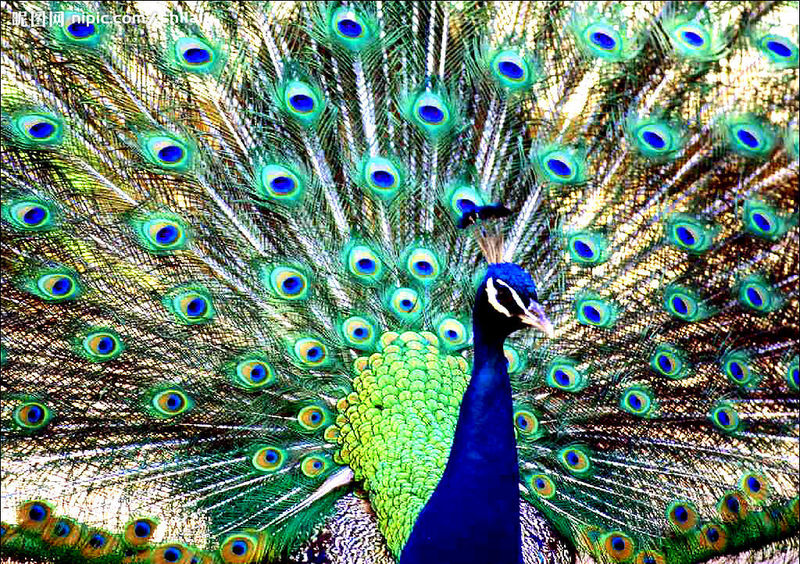
II. Basic Knowledge of Peafowl Feeding and Management
1. Feeding and management of blue peafowl brooding
The brooding period is from 0 to 60 days of age. Peafowl are precocial birds and can peck for food after hatching. They can first drink a 1/5000 concentration potassium permanganate aqueous solution on their own. The brooding temperature for 0-3 days of age is 34°C, then lowered by 0.3°C each day until the temperature is withdrawn at about 20-30 days of age. For warmth, infrared lamps or electric brooders can be used. The specific time to withdraw heat can be determined by the weather and the condition of the young peafowl. The relative humidity during brooding can be controlled at 60%-70%. The raising scale per group should preferably be 40-50 birds, and the density should be gradually reduced as age in days increases. They can feed freely, and some green tender grass, vegetables or fresh forage grass should be fed every day. Pay attention to providing enough clean drinking water, cleaning the environment every day, and doing regular disinfection, regular deworming, and work to prevent predators and rats. After 20 days of age, the peafowl can gradually be allowed to move outdoors. The growth and development of young peafowl enters a rapid growth stage starting from 7 days of age, so animal-based feed and various trace elements should be increased to promote their growth.
2. Feeding and management of blue peafowl growing stage
The growing period is from 61 days of age to before adulthood. Feed twice a day, while also providing green feed twice. As commercial peafowl, when raised to 8 months of age, body weight can reach 3-4 kg, and they can then be marketed. 4) Feeding and management during the adult period (over 2 years old). During the laying period, attention should be paid to a quiet environment and reducing various stresses, so as not to affect peafowl egg laying and male peafowl mating. The male-to-female ratio in the breeding flock should preferably be 1:3-1:4. Strong sunlight will affect peafowl activity, so plants can be planted inside and outside the exercise yard for shade. During the laying period, animal-based feed as well as insects, trace elements (especially calcium and phosphorus), and vitamins should be increased to meet the production needs of breeding peafowl. During the autumn molting period, feeding hemp seed (about 10% of the diet) and the like can be increased, which is beneficial for molting. Build nests in the corners inside the house and place soft grass there to facilitate egg laying. Be careful to collect eggs promptly between 5 and 7 pm. Pay attention to doing a good job of cold protection and warmth in winter.