A Detailed Guide to Meat Pigeon Farming Techniques and Feeding Management Methods
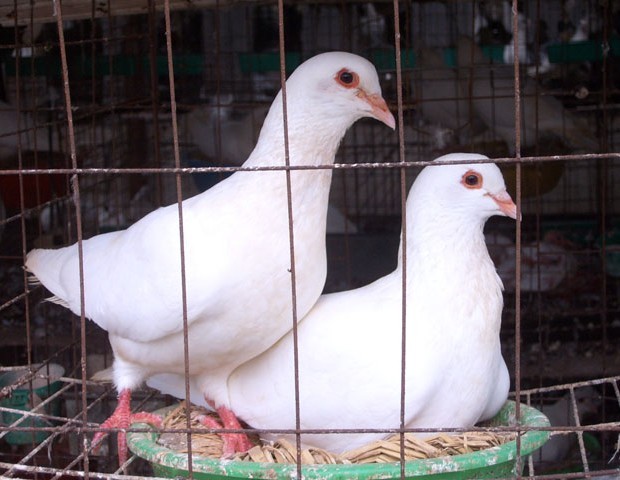
I. Rearing Techniques for Squab:
Pigeons from hatching to 28 days of age are collectively called squab (in some regions, from birth to 10 days of age they are called newly hatched squab, and from 10 to 20 days of age they are called squab).
Two hours after the squab hatches, the parent pigeon begins to blow air onto the squab with its beak and secrete pigeon milk; after another 2 hours, the parent pigeon begins to feed pigeon milk. At this time the squab is small and weak and prone to death, so management must be strengthened. First, observe carefully and take care to prevent it from being trampled or frozen to death by the breeding pigeons. If the newly hatched squab still cannot get pigeon milk after 5 to 6 hours, promptly investigate the cause (if necessary, feed the squab artificial pigeon milk). If the parent pigeon is found not to nurse, it can be fostered by breeding pigeons of the same period, and this can also avoid some parent pigeons feeding only a single squab, thereby improving production capacity.
After 3 to 4 days of age, the squab's eyes slowly open, its body gradually becomes stronger, feathers begin to grow on its body, its food intake gradually increases, and its digestive power strengthens. At this time the parent pigeon must frequently nurse the squab, sometimes as many as more than ten times a day, so the feed supplied to the parent pigeons must be sufficient and nutritionally rich to meet the need. At this time the squab's droppings increase, easily contaminating the nest, so the padding cloth and bedding straw should be replaced in time every day to prevent disease.
When the squab is 10 days old, many new feathers have grown and it can move about on its own. The parent pigeon shortens the time spent keeping the squab warm, and the food fed to the squab also changes from pigeon milk to semi-granular feed. A small number of squab fail to adapt completely and often develop indigestion and ingluvitis. When this occurs, promptly supplement by feeding some yeast tablets or stomachic medicine to help digestion.
When the squab is 15 days old, its whole body is basically fully feathered and it moves freely. It can be taken out of the nest, and a piece of cloth 20 cm × 20 cm should be spread inside the cage to let it gradually adapt without spraining its feet. At this time the feed fed by the parent pigeon is granular, the same as the feed they eat, and most parent pigeons begin laying eggs again and have no interest in feeding the squab, so during this period artificial feeding should be used.
After the squab reaches 20 days of age, its feathers are full and it can move around everywhere in the cage, but it still cannot completely peck for food on its own and still relies on the parent pigeons, though it can actively beg food from them. At this time the parent pigeons will force it to feed independently. Management should be strengthened now, and the supply of some high-protein feed should be increased to meet the squab's needs. When the squab grows to 25 to 28 days of age, its body weight can reach 500 to 750 grams and it can be sold (at this time the squab is called a milk pigeon).
II. Rearing Techniques for Young Pigeons:
From 28 days of age when they leave the nest until they are transferred to another group, where conditions permit it is best to achieve the "three unchanged": feeding in the original place, feeding by the original keepers, and the original feed unchanged. This can promote normal growth and development of the squab. Young pigeons within 2 months of age are difficult to raise because they go from being fed by the parent pigeons to living independently, so feeding management must be strengthened, attention must be paid to warmth retention and ventilation, and the supply of health sand and nutrients in the feed must be strengthened to increase disease resistance and enable normal growth and development. At this time, carry out the "three looks and three checks": the "three looks" are looking at activity, looking at appetite, and looking at droppings; the "three checks" are checking whether they have eaten feed, checking whether they are too crowded, and checking whether they have been bitten and injured. Those that cannot get feed can be fed separately, those bitten and injured should be cared for promptly, the aggressive ones should be raised separately, and if crowded the group can be expanded. At 2 months of age the squab begins molting, and protein feed in the diet should be appropriately increased to promote feather renewal. Add 5% hemp seed to the feed, add Chinese herbal medicines such as Andrographis paniculata or gentian to the health sand, and add a small amount of antibiotics to the drinking water on a planned basis to prevent respiratory diseases and paratyphoid. During this period, special attention should be paid to the hygiene of the cages, houses, and feeding and drinking utensils, and they should be washed and disinfected on time. At 3 to 4 months of age, secondary sexual characteristics begin to appear and activity ability becomes stronger and stronger. At this time, selection of the superior and elimination of the inferior should be carried out, males and females should be raised separately, or they should be forcibly caged and paired, and the pigeon flock should be dewormed to ensure normal growth and development.
III. Breeding Pigeon Rearing Techniques: Young pigeons gradually begin pairing at 5 months of age, and by 6 months of age they have reached sexual maturity. Most of the primary flight feathers of the pigeon have been replaced down to the last one, and at this time they have basically entered the breeding pigeon stage.
(1) Do the preparatory work before laying eggs: Egg laying begins 8 to 10 days after pairing. At this time, where conditions permit, they should be caged for rearing (or moved to a pigeon house with egg nests for rearing), and an egg-laying nest should be prepared with a layer of linen cloth laid inside to prevent the eggs from breaking. Check the cages and houses for holes to prevent disturbance by cats, dogs, snakes, and rats or invasion by drafts and rain leaks, which could cause unnecessary losses.
(2) Do the management work from egg laying to before hatching: ① After egg laying, promptly check for deformed eggs and broken eggs and remove them in time when found. For first-time laying pigeons, often observe whether the egg nest is fixed and whether the 2 eggs are concentrated in the central bottom of the egg nest. ② For newly paired birds, observe whether they are harmonious and whether they often jump around and peck and fight each other, causing the eggs to be trampled and broken. For large-bodied pigeons, take special care in nursing them to prevent crushing the eggs, and even more to prevent pigeons with incomplete nutrition or egg-eating vices from pecking and eating the breeding eggs. ③ Carry out egg candling on time, promptly deal with bad eggs, and promptly remove infertile eggs, dead sperm eggs, and dead embryo eggs to prevent the eggs from becoming rotten and affecting normally developing eggs and the health of the laying pigeons. If infertile eggs and dead embryos are found, identify the cause and improve the management system.