Key Points and Methods of Scorpion Farming at Ambient Temperature Explained
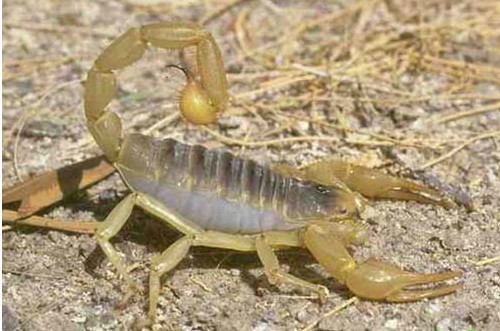
Ambient conditions mean that, at natural temperatures, the scorpion's living environment in the wild is imitated by building facilities or sites that both suit the scorpion's living habits, growth, development and breeding requirements and are convenient for rearing and management. According to the size of the rearing facility or site, it can broadly be divided into 3 rearing scales: large, medium and small. Although the various scales of rearing facilities (rearing rooms, sites) differ in site construction, they are much the same in structure and layout. Several common ambient-temperature rearing facilities are introduced below:
1. Basin (vat, jar) rearing This is a method of small-scale, simple rearing using small containers. Its greatest features are small size, light weight and easy transport, making it suitable for indoor rearing.
You may choose tile basins, plastic basins, ordinary water vats and the like with smooth inner walls (to prevent scorpions from escaping), with no limit on volume. Spread a layer of 5-10 cm thick weathered soil or loam on the bottom of the container and tamp it firm, cover it with sand, then stack some tiles, hollow bricks or small wooden boards on the sand layer as the mound body for the scorpions to inhabit and move about on. The tiles and so on used to build the mound body should be stacked one by one, preferably in a pagoda shape, and the four corners between the pieces can be bonded with cement slurry or yellow mud to increase the gaps where the scorpions inhabit. The mound body should be about 6 cm from the inner wall of the container, and sponge for water supply is placed on the mound body (Figure 12).
For basin (vat, jar) rearing, it is best not to adjust humidity by sprinkling water into the container. Because when the temperature is high, if too much water is sprinkled, it will cause stuffy, damp heat inside the container, which is unfavorable to the scorpions' life; while if too little water is sprinkled, when there is not enough water to evaporate, it will instead lead to stuffy dryness inside the container, which is also harmful to the scorpions' life. At present, the better way to regulate humidity is to put some water-rich green grass with thick roots or large leaves with tender twigs into the container; these grasses or leaves will evaporate water as the outside temperature changes, so as to meet the scorpions' humidity requirements; when the temperature is too high, they can also serve as a place for the scorpions to climb onto and cool down. The green grass or leaves should be added as much as possible, while also taking care to leave a certain amount of space, to prevent the scorpions from using the green grass or leaves as a ladder to escape. When the temperature is high, replace withered or moldy green grass and leaves promptly. To prevent the scorpions from escaping, it is best to cover the mouth of the basin (vat, jar) with iron gauze or a nylon cover.
Generally, each ordinary washbasin can raise 60-100 scorpions; a shallow vat with a mouth diameter of about 60 cm can raise more than 300 scorpions; each tin can can raise 1 breeding scorpion, or 10-50 young scorpions or 2-5 medium scorpions. This not only keeps the density reasonable, but can also solve the problem of mutual killing. Basin (vat, jar) rearing is relatively suitable for a small number of beginners or for specially raising young scorpions, breeding scorpions or pregnant scorpions, and can also be used for small scientific experiments.
2. Box rearing You may choose waste packing boxes that have not held chemicals, with no limit on size. Build nests against one side of the wooden box, surround the inner wall of the box mouth with a ring of escape-preventing glass strips or plastic film, and cover with a gauze lid or a movable wooden lid with holes. The scorpion nests inside the box can be built by stacking adobe into a honeycomb shape for the scorpions to inhabit; a certain gap should be left between the stacked adobe and the surrounding box boards for the scorpions to move about and catch food.
You can also make a wooden box about 100 cm×60 cm×80 cm in length, width and height, spread 3-5 cm thick sandy soil on the bottom of the box, and stack two mud-board mounds each 72 cm×12 cm×60 cm in length, width and height on each side of the wooden box, with the mound bodies 3-5 cm from the box wall; between the two rows of mounds is the activity area for the scorpions. Surround the inner wall of the box mouth with a ring of glass strips or plastic film to prevent the scorpions from escaping.
In addition, some people have designed a relatively standard scorpion-rearing box, but its cost is relatively high. The structure of such a scorpion-rearing box is similar to a beehive: wooden boards are nailed on the box lid, box bottom and both sides, while the front and back are left empty. On the inner walls of both sides of the wooden box, small wooden strips are nailed horizontally, with about 5 cm between the upper and lower small wooden strips; the height of the box body can be determined by how many scorpions are raised. Using the small wooden strips as supports, insert plywood or fiberboard into the box; the front-to-back length of the shelf boards should be greater than the front-to-back length of the box. In this way, one box can hold multiple layers of shelf boards, and each layer of board can be used to raise scorpions, improving the utilization rate of space. Placing the wooden box inside a low wall made of glass strips 20-25 cm high can prevent scorpions that fall to the ground from escaping. The four sides of the box body should be no less than 20 cm from the glass enclosure wall, to prevent scorpions from high places from falling outside the wall (Figure 13).
3. House rearing You can choose a certain area of outdoor site and build a simple scorpion house for scorpion rearing. House rearing has a relatively good heat-preservation effect and is relatively suitable for rearing in northern regions.