Detailed Explanation of Key Points for Free-Range Mountain Native Chicken Rearing
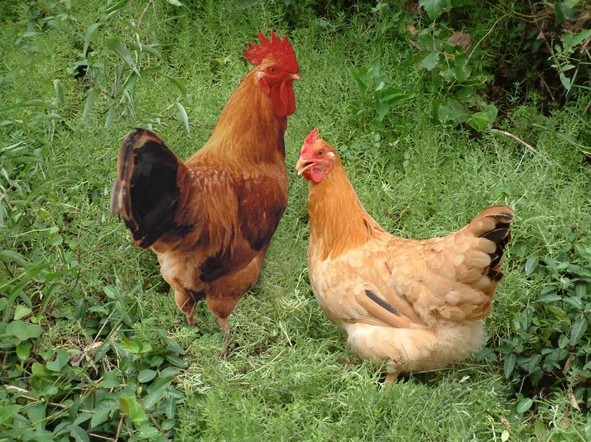
Chicks are afraid of cold. Before farmers purchase chicks that have been weaned off heat in spring, they should make preparations in advance.
During the transition period, a small house should be prepared, and hygiene and cleaning should be done well in advance. At the same time, the doors and windows should be relatively sealed yet allow light in, to prevent drafts from entering. The transition coop should not be too open or too wide; 5 sq m is enough for 100 chicks. If the room is too large, it can be divided with wooden boards.
Spring temperatures fluctuate high and low, so heat preservation measures must be taken. In rural areas, some bedding straw, coal ash, or cardboard can be placed in the transition coop. If a late spring cold snap occurs and there are many chicks, electric bulbs, heaters, or coal stoves can be considered for heating the coop.
In addition, drinking water trays and feed troughs should be prepared.
Chicks should not be directly released into mountain forests. They should be raised in the transition coop for a period of time, and only released once they can fully adapt to the outside climate. At the same time, the following points should also be noted——
Feed should be varied and properly combined. If complete-price broiler feed is available, at the beginning it can be mixed and fed at a ratio of 60% complete-price feed and 40% cornmeal, wheat bran, rice bran, etc. Later, gradually reduce the proportion of complete-price broiler feed. As the proportion of complete-price feed decreases, soybean meal or beans should be added to the feed (broad beans, peas, and soybeans are all acceptable, but they need to be fried and crushed, with an added proportion within 20%).
It is best to let the chicks feed freely. Let the chicks gain weight as quickly as possible and adapt early to the later free-range environment, while also ensuring sufficient clean drinking water.
Properly add some crushed feed every day to exercise gastrointestinal function.
Frequently observe the flock and deal with problems promptly when found. For example, if the chicks huddle together, it indicates they are too cold, so heat preservation should be strengthened. If the chicks pant with their mouths open, it indicates they are too hot, so ventilation should be carried out promptly.
Do a good job in coccidiosis prevention. Chicks are most susceptible to coccidiosis, and the main symptom is red watery droppings. At the initial stage, an anti-coccidial drug should be added to the feed about every 10 days for three consecutive days, then stopped, and afterward the frequency of medication should be reduced.
Control chicken pecking habits promptly. At the chick stage, if nutrition is lacking, pecking habits are most likely to occur, that is, phenomena such as chasing each other and pecking at the cloaca, feathers, and combs. When pecking habits appear, the proportion of complete-price feed or soybean meal and beans should be increased, and more green feed should be added to increase nutrition. Coccidiosis and pecking habits are the main causes of chick death, so special attention should be paid to them.
After the transition period ends and free-range rearing begins, it is best to build the coop and the external environment into a closed free-range enclosure to facilitate management. When the flock is large, shade sheds can be set up within the free-range enclosure, and drinking water points can be reasonably distributed.
When the chicks' body weight approaches about 2 jin, they should be transferred to a simple coop for rearing. At this stage, cornmeal, wheat bran, rice bran, plus soybean meal (or beans), etc. should be mixed in a varied way for feeding, so as to achieve good weight-gain results.
Supplemental feeding should be done at least twice a day, once in the morning and once in the evening, and in between the flock should be allowed to forage freely in the wild. Supplemental feed is best placed in the feeding troughs of the simple coop to ensure cleanliness and hygiene and reduce waste, and sufficient clean drinking water should be provided.
When the chickens' body weight reaches about 4 jin, they should be sold to lay a good foundation for the next rearing cycle.