Detailed Explanation of Pheasant Rearing Techniques and Management Methods
The pheasant, also known as the common pheasant or mountain pheasant, is extremely beautiful and is the prototype of the phoenix. Its greatest features are: good looks and good taste. The pheasant is not only a globally recognized mountain delicacy and game meat, with extremely high economic value, but is also hailed as the “king of game” and “animal ginseng.” In recent years, with the improvement of people's living standards, game meat has become an indispensable delicacy on dining tables and banquet tables. However, wild pheasants are protected by national law, and hunting and illegal trading are strictly prohibited. In addition, the natural stock is extremely small, so artificially raising pheasants offers unlimited business opportunities.
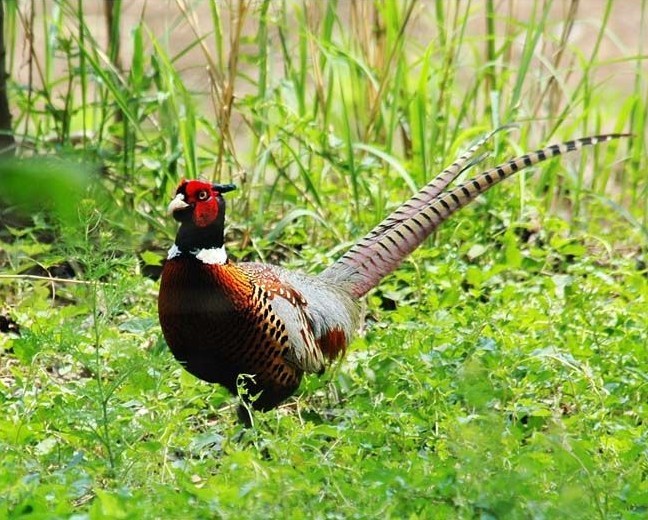
I. Development:
1. Food value: Pheasant meat is tender and delicious, with a strong game flavor. Its protein content is as high as 30%, twice that of ordinary chicken and pork, while its fat content is only 0.9%, which is 1/39 that of pork, 1/8 that of beef, and 1/10 that of chicken. It basically contains no cholesterol, making it a high-protein, low-fat game food. Because of this, pheasant became a royal tribute in successive dynasties. After eating it, Emperor Qianlong of the Qing Dynasty was full of praise and wrote the famous line: “Its fame shakes the north for three thousand li, its flavor surpasses the twelve towers of Jiangnan.” After eating it, Ye Xuanping, then Vice Chairman of the National Committee of the Chinese People's Political Consultative Conference, commented: “Good-looking, good-tasting, with a game flavor”; the famous nutritionist Yu Ruomu also gave high praise to the nutritional components of pheasant. Giving mountain pheasant as a gift is a high-grade present, serving it to guests is a rare game delicacy, and it is also a regular dish served at the White House in the United States when entertaining heads of state. Precisely because of this, every year around the Spring Festival, a wave of giving mountain pheasant sweeps the market.
2. Medicinal use: According to the Compendium of Materia Medica, pheasant supplements qi and blood, and eating it makes people intelligent, brave, strong, and plump; it stops diarrhea and dysentery, and eliminates chronic illness and panting of the five zang organs. According to tests by Guangzhou Sun Yat-sen Medical University, it contains as many as 21 kinds of amino acids essential to the human body, many of which cannot be synthesized by the human body itself, conforming to the amino acid pattern stipulated by the World Health Organization. It is also rich in germanium, selenium, zinc, iron, calcium, and many other trace elements essential to the human body, and has very good therapeutic effects on child malnutrition, anemia in women, postpartum weakness, uterine prolapse, stomach pain, neurasthenia, coronary heart disease, cor pulmonale, and so on. Its tonic function for the human body is far higher than that of the long-renowned soft-shelled turtle and eel. The content of strontium and molybdenum in pheasant is 10% higher than in ordinary chicken, and it also has a role in preventing and treating cancer.
3. Ornamental value: Giving mountain pheasant during festivals is a tradition in China since ancient times, expressing good fortune and a bright future. At the same time, it can also be made into beautiful and salable specimens. The specimens made by our farm from pheasant skin and feathers are brightly colored, lifelike, noble, and elegant. Each sells for more than 200 yuan and is still selling well in craft gift shops and tourist attractions in major cities. Pheasant feathers are distinctive and can also be made into feather fans, feather paintings, toys, and other handicrafts.
II. Economic benefit analysis:
1. Income forecast: Taking the introduction of 50 groups (1 male and 5 females per group) of pheasants as an example, if each hen lays 100 eggs per year (the actual egg production is much higher), 250 hens lay 25,000 eggs per year. If the qualified rate of breeding eggs is calculated at 95%, and the fertilization rate, hatching rate, and survival rate are all calculated at 85%, then the annual output of pheasants is: 25,000×95%×85%×85%×85%=14,585 birds. After more than 3 months of rearing, commercial chickens can reach 1.5 kg. At the current selling price of 30-50 yuan per bird, even if sold at the price of local chicken, they can still sell for 24 yuan. Annual income: 14,585 birds×24 yuan per bird=350,000 yuan.
2. Cost analysis: ① 24,000 yuan for breeding stock. ② Feed cost: the cost per commercial chicken is 7-10 yuan, and 14,585 birds require about 140,000 yuan in feed costs; the feed cost for breeding chickens is about 10,000 yuan. The total is 150,000 yuan. ③ Annual water and electricity expenses are about 1,000 yuan. ④ Staff wages: calculated at an average of 6,000 yuan per person per year, 2 people total 12,000 yuan. Total expenditure is 187,000 yuan.
3. Profit: 350,000-187,000=163,000 yuan. In the first year, the entire investment can already be recovered and there is still a profit of 163,000 yuan, (and this is still calculated according to the lowest egg production and selling price; the actual figure will be even higher). The investment is safe.
III. How to raise them:
Pheasants are wild animals with extremely strong vitality, adaptability, and disease resistance. They do not have high environmental requirements and can withstand high temperatures of 46°C and severe cold of -32°C. Their breeding techniques are the same as those for domestic chickens. They mainly eat grains and miscellaneous cereals, and can be fed with ordinary feed plus green grass and vegetable leaves. Old houses, warehouses, and so on can be used for penned rearing or cage rearing.