How to keep scorpions? You must master these techniques to keep scorpions well
Scorpions are both a valuable medicinal material and can be used to make high-grade dishes, and demand for them is growing. Therefore, in recent years scorpion farming has gradually become a popular specialty breeding business, but many scorpion keepers achieve low profits because they have not mastered scorpion-keeping techniques well. To keep scorpions well, you should master the following techniques.
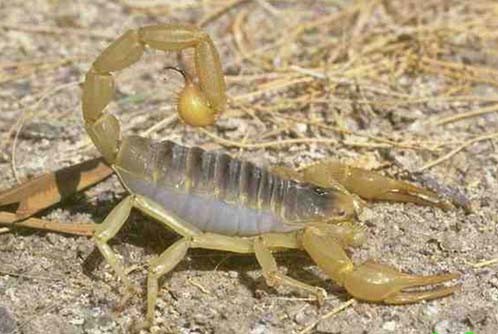
1. Source breeding stock nearby. Long-distance sourcing of breeding stock will cause scorpions to suffer from acclimatization and die because of differences in environment, temperature, humidity and other aspects. Beginner scorpion keepers must go to a nearby scorpion farm to source their breeding stock.
2. Avoid startling them. Scorpions are afraid of movement and recognize their nests. Casually turning over their nests will frighten them, and they will scurry around without returning to the nest, neither eating nor drinking, and will slowly die.
3. Fresh food. Scorpions have the habit of cannibalism, but if enough live insects (such as ground beetles, yellow mealworms, etc.) are supplied, they rarely cannibalize each other. Therefore feed is the key, and the feed problem must be solved first.
4. Care during pregnancy. Scorpions generally give birth between July and August. If male and female scorpions are kept together, the female scorpions will miscarry because they cannot find a quiet place to give birth, and the newborn scorpions will also be eaten by the male scorpions, so a sufficient number of young scorpions cannot be bred. Therefore, when pregnant scorpions give birth, they must be kept separately and kept quiet.
5. Care during the birth period. After pregnant scorpions give birth, the young scorpions must climb onto the mother's back and stay there for 4 to 6 days before they can come down and move on their own. If the young scorpions do not molt for the first time on the mother's back, it is very hard for them to survive for several days. If the mother scorpion and the young scorpions are left together for more than 10 days without feed and water, the mother scorpion, being hungry and thirsty, will mercilessly eat the young scorpions.
6. Raising young scorpions. After the young scorpions molt for the first time on the mother's back, their appetite increases greatly, and they eat one small insect a day. But young scorpions have poor prey-catching ability, and their strength is inferior to that of the large yellow mealworms and other insects used as feed, so they cannot pierce the insects to death, and the young scorpions will then cannibalize each other. If there are not enough small yellow mealworms or other small insects, it is very difficult for young scorpions to grow into adult scorpions, and scorpion farming must pay attention to this point.
7. Escape prevention measures. Scorpions cannot fly, but they are extremely good at crawling. Therefore, whether keeping them in basins, boxes, pools or racks, the surroundings must be enclosed and sealed with wide transparent tape or glass strips or plastic sheeting, so that the scorpions have no chance to escape.
8. A scorpion's respiratory organs and reproductive system are both located on the lower part of its body, so it is most afraid of being soaked in water. There must absolutely be no water ditches or water pockets under the scorpion nest. Usually, add water during the daytime, and do not add too much at one time; it is enough for the soil to be somewhat moist. To provide drinking water for scorpions, just use a small dish holding a few pieces of absorbent sponge or cotton; generally the water must be replaced with fresh water once every 4 to 5 days. If scorpions are left to drink spoiled water for a long time, they will get sick and die.
9. Scorpions are venomous, so they have few enemies. But the most terrible one is the mouse. In summer, mice will compete to eat feed such as yellow mealworms or ground beetles. In winter, scorpions hibernate and have no defensive ability, so they are easily eaten by mice, and it is very difficult to guard against this. Therefore, rodent prevention work must be done well.
To keep scorpions, the following points must be done well.
1. Build a good scorpion nest. Scorpions like damp places, and when resting they like to perch in dry places. The scorpion nest should be built in a damp and dark place, achieving dryness above and dampness below, simulating the living environment of wild animals as much as possible, so that they hide by day and come out at night.
2. Strictly control temperature and humidity. The most suitable temperature for scorpion growth and reproduction is 28 to 30°C. Within this temperature range, scorpions eat more and grow faster. Humidity should be controlled between 75% and 85%.
3. Raising density must be appropriate. Too many male scorpions will disrupt normal birthing by female scorpions, and if young scorpions are too crowded, strength will be uneven, the strong will bully the weak, and they will kill each other. The author's breeding practice shows that female scorpions should not exceed 500 per sq m, second-instar scorpions should not exceed 4000 per sq m, third-instar scorpions should not exceed 3000 per sq m, and adult scorpions of the fourth instar and above should preferably be 2000 per sq m. Only low-density rearing can reduce cannibalism among scorpions.
4. Feed should be diverse. The main feed for scorpions is yellow mealworms, but they cannot be fed only one kind. Insects of many varieties should be collected as feed, such as ground beetles, yellow mealworms, cockroaches and various flying insects mixed together as feed. Each feeding should not provide too much food, otherwise the scorpions will die. Scorpions like to eat live insects, so be careful to promptly remove dead insects from the feed. At the same time, pay more attention to meeting the scorpions' drinking water needs, and also appropriately feed some succulent feed such as watermelon rind and vegetable leaves.
5. Separate scorpions of each instar in time. During the growth of scorpions, the strong and large individuals are the most likely to eat the weak small scorpions, and those that have not molted can eat the weak scorpions that are molting. To reduce the occurrence of this situation, prepare other containers and perching tools in advance, and promptly separate scorpions of different sizes and strengths for rearing, otherwise scorpion farming is likely to fail.