Detailed Explanation of Ostrich Farming Techniques and Key Points of Feeding Management
I. Site Selection and Pen Design
The selection of a site for a new ostrich farm is very important. A location with higher terrain, convenient drainage, sufficient sunlight and good ventilation should be chosen, and sandy soil or sandy loam is best for the soil type. This is because sandy soil or sandy loam has more capillary pores, good air and water permeability, low water retention, does not become excessively muddy after rain, and is easy to keep dry. The farm area must be able to provide sufficient and clean drinking water. The surrounding environment is also an important factor to consider when choosing a site. Ostriches are particularly sensitive to stimulation from the surrounding environment and are easily startled and prone to stress reactions. Therefore, the environment around the ostrich farm should be quiet. It is best to plant greenery around the farm area, so that the ostriches live in an environment close to nature and can thus better realize their production potential.
II. Selection of Ostriches
The selection of good breeding stock of ostriches is the key to establishing a farm and the most important factor determining future economic benefits. The African ostrich was introduced into China relatively recently and is currently in the stage of population expansion. Because the sources of ostrich introduction by various domestic enterprises are complex, the germplasm of introduced ostriches varies greatly. Therefore, farmers must be very careful when purchasing ostriches. Ostriches with pure germplasm and good production performance should be selected to lay a good foundation for future development.
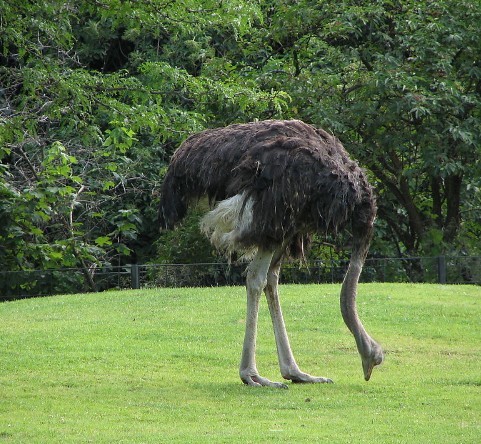
Ostriches are generally divided into three types: the red-necked ostrich, the blue-necked ostrich and the domesticated ostrich (the domesticated ostrich is what is commonly called the African black ostrich). The African black ostrich has the characteristics of a compact body type, a docile temperament, fine feathers, early sexual maturity and high egg production, and is currently the main breed being raised.
When purchasing ostriches, attention should be paid to pedigree records and bloodline matching. Pedigree records document in detail the origin, breed, sex, age, parents and the ostrich's own main production performance. Based on these, the production performance and bloodline of the ostriches can be understood and reasonable bloodline matching can be carried out.
In addition, when purchasing ostriches, their health status should be observed. The observation methods are generally as follows: 1. Behavioral observation: ostriches in good health are full of energy, sensitive in reaction to external stimuli and strongly gregarious;
2. Body surface health observation: healthy ostriches have full muscles, no exposed bones, no injuries or disabilities anywhere on the body, and a steady and normal gait;
3. Feeding observation: healthy ostriches have a strong appetite and will actively come forward to wait for feeding when the keeper enters the pen;
4. Droppings observation: the droppings of healthy ostriches are dark green, fine and well digested, with a large urine output, transparent urine and a small amount of white urate.
III. Feed Supply for Ostriches
The African ostrich is a monogastric herbivorous bird, and its digestive tract is completely different from that of ruminants, and also different from that of non-ruminants or poultry. Ostriches have no teeth and no crop; their saliva contains no digestive enzymes. The esophagus leads directly to the proventriculus, which has a relatively large volume and can store large amounts of ingested food. Digestion in the stomach begins in the proventriculus. Next comes the gizzard, which is spherical in shape. The gizzard contains stones for digestion. In addition, the greatest feature of the ostrich digestive tract is that it contains two large ceca and a very long colon, which are the conditions for fermentative digestion in ostriches. Therefore, the feed absorption and conversion rate of the ostrich is the highest among current livestock species.
In the process of raising ostriches, concentrate feed supply can be divided into seven stages, namely chick ostriches (0-2 months), young ostriches (2-4 months), growing ostriches (4-6 months), fattening ostriches (6-9 months), replacement ostriches (9-14 months), maintenance (14 months to the start of laying and the non-laying period) and laying ostriches. The nutritional requirements differ at each stage, and the feed ratios also differ. However, all are based mainly on grass consumption. Ostriches have a relatively broad feeding habit and can consume various pasture grasses and feeds as well as many kinds of root and tuber crops, vegetables, and so on.
IV. Common Diseases of Ostriches and Their Prevention and Treatment
Because ostriches have not been domesticated for long, their disease resistance is extremely strong. During the breeding process, attention should be paid to diseases caused by improper feeding. First, attention should be paid to the quality of the feed to prevent ostriches from being infected with mold poisoning due to eating moldy food. The feed quality requirements for raising ostriches are very high, and moldy food as well as moldy raw materials are harmful to ostriches. Second, attention should be paid to the lignification of green feed fiber, because serious lignification of green feed can easily cause digestive system diseases in ostriches. Finally, during the breeding process, attention should be paid to avoiding the possibility of external injuries to ostriches.