Detailed Explanation of Practical Key Technical Points for Loach Farming
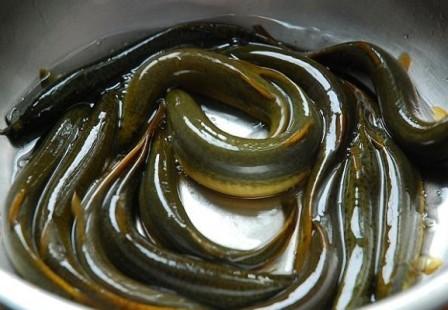
Loach is rich in nutrients and is commonly known as "ginseng of the water." In recent years, loach farming has become increasingly popular, and with the continuous emergence of techniques such as "soilless loach farming in anti-seepage film ponds," "loach farming with soil in cement ponds," "loach farming with biogas residue and biogas slurry," and "co-cultivation of loach with aquatic vegetables and melons in the same pond," loach farming techniques have continued to mature. Recently, affected by the nuclear radiation incident in Japan, many ordinary people are no longer as keen on seafood products as before, and in some coastal cities, seafood sales have already shown a clear decline. As seafood sales decline, sales of freshwater fish, shrimp, and crabs are bound to increase. As one of the most popular specialty aquatic products among ordinary people, loach will certainly see its market price rise accordingly, and there is good money to be made in loach farming.
Loach tastes delicious, has delicate meat, and is rich in nutrients, making it increasingly popular among ordinary people. Also, because of its strong adaptability, high survival rate, and low disease rate, the number of aquaculture farmers raising loach has gradually increased recently. Several farming experiences are summarized as follows:
I. Fry and Fingerling Cultivation
1. Pond Conditions
The fry and fingerling cultivation pond should have an area of about 600 sq m and a depth of about 50 cm. It is best for the cultivation pond to be an earthen pond, and the soil at the pond bottom must be compacted. Around the pond, about 1 cm from the bank, some gramineous plants (such as reeds, ryegrass, etc.) can be planted for shading. Before the fry and fingerlings are stocked into the pond, quicklime (150 kg/mu) should be splashed over the entire pond. When the pond water turns green, the fry and fingerlings can be released.
2. Stocking of Fry and Fingerlings
Select loach fry and fingerlings with a body length of about 7 mm, whose yolk sacs have disappeared and which can swim freely and horizontally, and stock them into the pond at a density of 800-1000 tails/sq m for cultivation.
3. Feeding Management
For loach fry that have just been stocked into the pond, it is enough to feed them an appropriate amount of easily digestible fine feed such as cooked egg yolk, soybean cake, and soybean powder. When the fry grow to 1 cm in length, they are already able to prey on small insects in the water. At this time, feed such as cooked bran, wheat flour, and chopped fish and shrimp can be given 3-4 times a day. At the same time, the water should be fertilized in a timely manner, and some water-fertilizing products can be splashed in appropriate amounts to regulate water quality.
II. Adult Loach Farming
1. Pond Conditions
The pond for cultivating adult loach is best with an area of 1000-1500 sq m and a depth of about 1 m. Both earthen ponds and cement ponds can be used. Because loach likes to burrow, the soil at the bottom of an earthen pond must be compacted to prevent the loach from escaping. At the same time, the water inlet and outlet should also be blocked with fine-mesh nets.
2. Stocking of Adult Loach
Generally, loach fry with healthy constitutions, uninjured body surfaces, and strong activity ability are selected for stocking. Before stocking, the pond should first be disinfected with quicklime. If a large number of pests are found in the pond, trichlorfon should also be used for pest control. Generally, 400-500 kg of loach fry at a size of 100-150 tails/kg are stocked into the pond. The stocking time is from the end of April to the beginning of May, and the water temperature should preferably be 15°C-20°C. If the water temperature is too low or too high, it will affect the survival rate of the loach fry and fingerlings.
3. Feeding Management
Two to three days after stocking, a small amount of animal-based feed such as earthworms, small trash fish, and livestock trimmings can be fed. At the beginning, it only needs to be fed once a day, with the feeding amount being 1/20 of the total body weight of the loach. As the water temperature slowly rises, the feeding amount should also be appropriately and gradually increased. When the water temperature rises to 25°C, it is when loach has the strongest appetite. At this time, they can be fed twice a day, each time at 1/10 of the total body weight of the loach. In summer, when the water temperature exceeds 30°C and on thunderstorm days, feeding can be temporarily suspended. If loach are seen floating to the water surface to breathe, new water should be added in a timely manner to regulate water quality. In winter, when the water temperature is below 10°C, feeding can be stopped. At this time, the pond water depth should be appropriately reduced, or the pond water can first be drained and then a layer of rice straw spread on the pond bottom so that the loach can overwinter safely.
III. Adult Loach Farming in Rice Fields
1. Rice Field Conditions
The rice field selected for loach farming should not be too large, generally about 1000 sq m. The field ridges around the perimeter should be raised and reinforced, and it is best to block them with fine-mesh nets more than 1 m high to prevent escape. The water inlet should be selected at the highest part of the field ridge to facilitate flushing water, while the water outlet should be selected at the lowest part of the field ridge. At the same time, several earthen ponds with an area of 2-3 sq m and a depth of about 50 cm should be dug in the rice field as habitats for the loach during high summer temperatures or when pesticides and chemical fertilizers are applied.
2. Stocking of Adult Loach
Loach fry and fingerlings are generally stocked when the rice field is first plowed for rice transplanting (early June). Before stocking, disinfect with 3%-5% salt water. After 3-4 days, stock 20,000-25,000 loach fry at a size of 50-60 tails/kg.