Detailed Guide to Koi Breeding Techniques: Easily Keep the King of Ornamental Fish
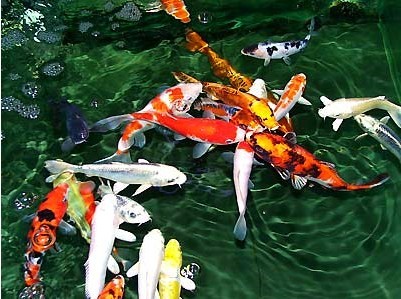
Koi (Brocarded carp), also known as red carp, belongs to the Cyprinidae family in biological taxonomy. It is a freshwater fish of subtropical and temperate regions, an ornamental fish that evolved from the wild edible carp. It is named for its body's vivid, brocade-like colors and ever-changing, varied markings, and is a noble ornamental fish species. With its unique charm, brilliant body colors, graceful and elegant swimming posture, and majestic and distinguished bearing, it has increasingly won the affection of vast numbers of fish-keeping enthusiasts.
I. The Story of Koi
The original variety of koi is the red carp (Cyprinus carpio). As an ornamental fish, the red carp was already very widespread by the Ming Dynasty. It is said that koi originated from the Longzhou koi of Guangxi, China, the Xingguo red carp of Jiangxi, and the Hangzhou golden carp of Zhejiang. In the early period it was introduced from China to Japan, and after long-term artificial selective breeding by the Japanese people, there are now more than 100 varieties. According to documentary records, Japanese nobles were the first to keep koi in ponds for viewing, and common people rarely saw them. In the early period they were called "red carp," "colored carp," and "flower carp," and after World War II they were renamed "koi." In 1973, as envoys of friendship between the peoples of China and Japan, Japanese koi settled in China. Koi originated in China, flourished in Japan, and then returned to China, having undergone a process of "export turned domestic sale." Today, koi, with their unique masculine beauty, are loved by more and more people, so much so that they have been crowned with the reputation of "king of ornamental fish."
II. Biological Characteristics of Koi
Koi are a variant of the common carp. They are gentle in temperament and, unlike tropical fish, do not bully the small or prey on the weak. Koi of different varieties and different ages can all get along harmoniously. They have the characteristics of strong vitality, high reproductive rate, and good adaptability, and their biological characteristics are basically the same as those of the common carp.
1. The suitable water temperature for koi is 5-30°C, with the optimal temperature being 21-27°C, but their ability to adapt to rapid changes in water temperature is not strong. If the temperature rises or falls by more than 3°C, the fish will become ill; if it exceeds 10°C, the fish will die.
2. Koi grow slowly under strong sunlight, so a shaded environment should be created for them, such as building a shade canopy at the pond corner or at the feeding spot.
3. Koi living in water rely on their gills to absorb dissolved oxygen, delivering oxygen into the fish body where it combines with absorbed food nutrients to produce energy to sustain life. Therefore, whether there is sufficient oxygen in the water is the key to keeping fish well, and the stocking density should preferably be on the sparse side.
4. Koi are omnivorous; generally mollusks, aquatic plants, benthic animals, and tiny algae are all delicacies for koi. In summer koi feed more, while in winter they feed less or hardly eat at all. Therefore, when feeding, the amount can be increased or decreased depending on the season. In spring, when the water temperature is above 12°C, bait can be given three times a day; when the water temperature drops below 12°C, feeding once a day is enough.
5. Koi are oviparous animals. Males mature at 2 years of age, females at 3 years of age, and they spawn once a year, with the spawning period generally from April to June each year. At this time, sexually mature females spawn between 4 and 10 a.m. The eggs are adhesive, about 2.5 mm in diameter, white or pale yellow, and are fertilized externally. The fertilized eggs are best collected and hatched separately. Generally after 4-5 days of incubation, the larvae break out of the shell. Newly hatched larvae can be fed rotifers and small cladocerans, and can also be fed crushed egg yolk.
6. Koi are suited to water with a pH of 7.2-7.3, weakly alkaline and of low hardness. If the water hardness is on the high side, there will often be a slight state of congestion on the body surface.
7. Koi have a very long lifespan, generally reaching 70 years. The age determination of koi is the same as that of most fish: counting the annual rings on the scales indicates the koi's age.
III. Variety Classification and Main Characteristics of Koi
Through continuous crossbreeding, improvement, and selective breeding, koi have now been developed into more than 100 varieties. Japanese koi are mainly divided into 13 categories based on color, markings, and the distribution of scales.
1. Kohaku koi: the base color of the body surface is silvery white, inlaid with ever-changing red markings.
2. Taisho Sanke koi: the base color of the fish body is snow white, with crimson and jet-black markings emerging.
3. Utsuri koi: the fish body has black as its base color, with triangular markings that are either white, red, or yellow.
4. Showa Sanke koi: the fish body has black as its base color, with red and white patterns on top.