Four major secrets of eel farming to help farmers get rich
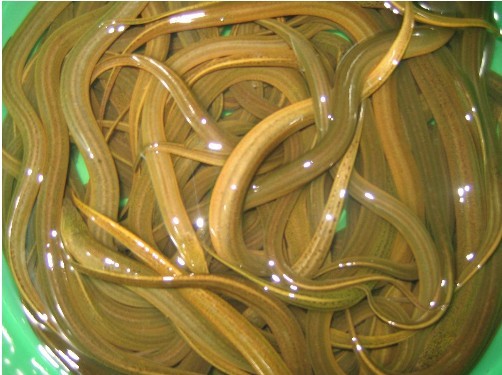
Observe the body surface. If the eel's body surface has red, bloody, rotting patches, it is saprolegniasis (rotten skin disease); if the tail turns white and has cotton-like fuzz, it is water mold disease; if the head is large and the body is thin, or even stiffly curled and trembling, it is an internal parasite disease; if the anus is red, swollen, inflamed and protruding, it is enteritis. In addition, young eels that are weak, have little mucus, and show floating-head behavior are all poor-quality eels and should be removed.
Pond disinfection
Before stocking the fry, the pond must be thoroughly disinfected. For cement ponds, soak them in quicklime water for 3~7 days, then add clear water and soak for 15~30 days, so that moss grows on the bottom of the pond, which is ideal. After disinfection, put loaches into the pond to test the disinfection. If the loaches show floating-head behavior within 1~4 hours, swim frantically in the water, or die, it means the disinfection of the cement pond has not yet achieved its effect. The disinfection soaking time should be extended.
Install nets and plant grass
Cage eel farming cannot do without aquatic plants. Aquatic plants have the function of providing shade and giving the eels something to cling to. The species generally chosen are water hyacinth and Lippia nodiflora. The eel's feces happen to be fertilizer for the aquatic plants. The aquatic plants generally occupy about 70%~80% of the cage or cement pond.
Stocking fry and training them to eat
The trick to stocking fry lies in watching the weather. Pay attention to weather changes 5~7 days in advance to ensure the fry are stocked on a sunny day; the water temperature is stable at around 25°C; the temperature difference between day and night does not exceed 5°C; the maximum water temperature does not exceed 35°C; and avoid the period when the eels are carrying eggs and spawning. If these conditions are met, the fry can be stocked.
Stock large and small fry by grade
Diet training is crucial to the eel's later growth and survival. Within 3~5 days of stocking, promptly deal with young eels that do not open their mouths to eat or eat only a small amount. For diet training, the eel fry can be given no bait for two to three days before being put into the pond, and then bait can be given for feeding later. The bait can be made from maggots, earthworms, snail meat, etc. combined with feed.
During the diet-training process, it is best to achieve three points: first, listen, to hear whether the eels eat evenly; second, look, to see whether many or few eels open their mouths to eat; third, observe, to observe how much bait remains the next morning, whether the eels show any abnormal conditions, and whether the eels leave the aquatic plants to come out and move around during the day.