Partridge Rearing Techniques and Key Points for Daily Management
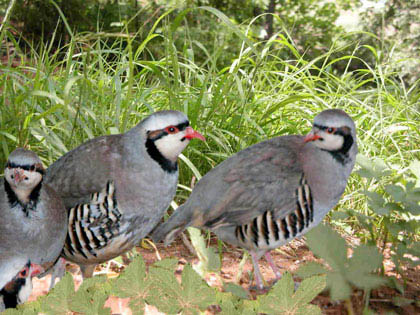
The partridge is a special rare bird with relatively high economic value. In recent years, partridge farming has increased year by year, but some farmers, especially new farmers, still lack experience in the rearing and management of chicks. Our farm's rearing experience is introduced as follows:
1. Feeding for the first 3 days after hatching
The temperature of the hatching room should be kept at 36-38°C, with humidity of 50%-70%. Wait until the down gradually dries and the chicks can stand and walk on both feet, then move them to the brooder room (box). The brooder box can be made 2 m × 1 m × 0.4 m, with a layer of clean waste blanket or burlap laid on the bottom (never use fiber-type materials). The temperature of the brooder room must reach 36°C. On the first day, give 0.01% potassium permanganate water or 0.02% oxytetracycline water (note: they should drink it all day long; preferably boiled cooled water). On the second day, give glucose water. In the afternoon, some chick feed can be scattered on the waste blanket or hard paper for the chicks to peck freely.
2. Temperature
The temperature of the brooder room must not be lower than 36°C. If the chicks in the box do not huddle together, have plenty of space for free activity, seek food and drink on their own, and chase and play with one another, this indicates the temperature is suitable; otherwise, the temperature is too low. At 15 cm from the bottom of the box, hang two 60-watt light bulbs. One purpose is to provide warmth, and the other is to increase the duration of light.
3. Frequent inspection
At this time, because the partridges have hatched not long ago, their functional regulation ability is relatively poor. They are gregarious and like to huddle together to sleep, are timid and easily startled, and are most prone to being crushed to death or injured. Partridges also have the bad habits of pecking at red (blood), pecking at the weak, and pecking at the cloaca. Once an injured bird is found, it should immediately be moved away and kept isolated for separate rearing.
4. Epidemic prevention
Partridges at 7 days of age should receive their first vaccination, using chicken Newcastle disease strain II attenuated freeze-dried vaccine diluted 1:1 with sterile water for intranasal administration. At 30 days of age, carry out the second vaccination with a low-virulence live vaccine. Method: first withdraw water for 2-3 hours, then use chicken Newcastle disease strain I attenuated freeze-dried vaccine mixed with water for drinking (the instructions for use are on the medicine), or it can be injected intramuscularly.
5. Leaving the box
Chicks at 7 days of age can leave the box (be sold) or be transferred to ordinary indoor rearing, with some rice husks placed on the ground. Hang one or two 60-watt light bulbs not far above the ground. When the weather suddenly turns cold, heat-preservation measures should be taken indoors. After 30 days, the partridges' ability to seek food strengthens, and their body weight increases markedly. At this time, their ecology is basically stable, and the survival rate is high. Some sand should be placed in the feed trough to let them eat it naturally. Partridges molt three times from birth to 90 days of age, so high-quality complete feed and green feed are required to ensure comprehensive nutrition.