What are the artificial domestication methods for the Golden Pheasant
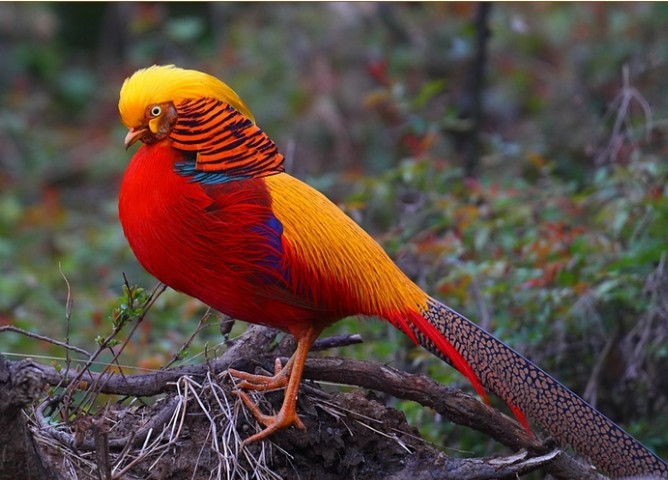
How to artificially domesticate the Golden Pheasant
In the coming years, raising Golden Pheasants will surely hold up a stretch of blue sky for the breeding industry and set off a storm of Golden Pheasant raising. For this reason, the artificial domestication of the Golden Pheasant has become a key issue in the early stage of breeding. In order to hasten the arrival of this breeding storm and bring greater benefits to the breeding industry and breeders, the artificial domestication methods for the Golden Pheasant are introduced as follows:
I. Artificial domestication of adult Golden Pheasants
The artificial domestication of Golden Pheasants generally starts directly with adult Golden Pheasants captured from the wild. Because the Golden Pheasant has long lived in a relatively hidden and quiet natural environment, and is alert by nature and easily startled, captive rearing will make it nervous, causing it to crash against and flap at the cage net, leading to endocrine system disorders and preventing normal feeding and reproduction. Therefore, artificial rearing of the Golden Pheasant should, according to its living habits, be carried out purposefully and systematically, step by step, in order to achieve the goal of rearing and breeding.
1. Adapting to the environment: Place Golden Pheasants captured from the wild in a quiet, spacious cage or house, and keep the indoor environment as secluded as possible. Some obstacles can be set up in the outdoor activity area to prevent them from escaping by flying. If conditions permit, their wild environment can also be simulated by planting some low plants or crops.
2. Adapting to the keeper: The keeper's clothing should be fixed, and no brightly colored or strange clothing should be worn. Every day, through daily management activities such as feeding, providing water and cleaning the house, the keeper should approach the Golden Pheasant until it no longer flees in panic at the sight of the keeper, then gradually increase the light intensity so that it gradually adapts to the artificial rearing environment. Note that the light intensity must be increased gradually, and one must not rush, so as to avoid causing stress in the Golden Pheasant again.
3. Feeding management: Ensure the food is fresh, nutritious, palatable and complete in nutrition, with a moderate particle size. At the beginning, it is best to feed crop seeds directly, then gradually transition to compound pelleted feed. Golden Pheasants often prey on insects in the wild. Therefore, in the early stage of domestication, it is best to feed some insects such as yellow mealworms every day.
II. Domestication of Golden Pheasant chicks
Chicks hatched artificially from Golden Pheasant eggs collected in the wild or produced by farms must be systematically domesticated as soon as they break out of the shell.
1. Mixed rearing: After Golden Pheasant chicks hatch, it is best to rear them together with a small number of domestic chickens from the same batch. On the one hand, this helps eliminate the fear of the Golden Pheasant chicks; on the other hand, it can also make use of the Golden Pheasant's imitative and following nature, causing them to follow the domestic chickens in pecking food and drinking water, which helps improve the speed and effect of domestication and shorten the domestication time.
2. Adapting to the environment: Before feeding and watering the Golden Pheasant chicks, provide rearing environment information such as light and sound, so that they gradually adapt as quickly as possible and form conditioned reflexes, strengthening their habit of flocking activity, so that they adapt to and become accustomed to the artificial rearing environment conditions as soon as they hatch, and establish a certain close and dependent relationship with the keeper, facilitating later feeding management.
3. Minimize stress as much as possible: The keeper should wear fixed clothing and not wear brightly colored or strange clothing; non-keepers must not enter the rearing house; prevent strange sound stimulation; prevent cats and dogs from entering the house and causing fright and disturbance; minimize all chicken-catching activities; and keep the environment relatively quiet.
III. Conclusions on the domestication of the Golden Pheasant
From the analysis of the comparative effects of domesticating adult Golden Pheasants and Golden Pheasant chicks, Golden Pheasant chicks accept artificial domestication more easily than adult Golden Pheasants, and the degree of domestication is higher and the effect is better. However, after a certain period of domestication, adult Golden Pheasants can provide a certain number of breeding eggs; while Golden Pheasant chicks need a longer rearing time before they can lay eggs. Therefore, domesticating adult Golden Pheasants is the foundation of raising Golden Pheasants, and raising Golden Pheasants must grasp the key link of Golden Pheasant domestication.