Detailed Explanation of Key Points on Artificial Breeding Techniques for Bullfrogs
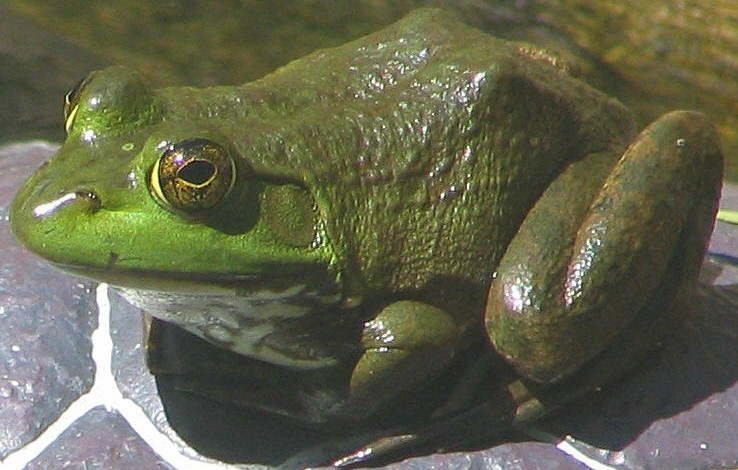
Sexually mature male and female bullfrogs are called brood frogs. After mating, male and female brood frogs lay eggs, and after the eggs hatch they become bullfrog tadpoles, which after a period of rearing, growing legs and absorbing their tails, metamorphose into bullfrogs. The main operating techniques for artificial breeding of commercial bullfrogs are as follows:
1. Selection, stocking and cultivation of brood frogs
Any bullfrog raised for 1 year with a body weight of more than 350 g can reach sexual maturity. Therefore, as long as the frog is robust, sexually mature, and free of disease and injury, it can be selected as a brood frog. The egg-bearing capacity and egg production of brood frogs are positively correlated with body weight; for example, a 1-year-old female bullfrog weighing 350 g can carry 15,400 eggs, a 2-year-old female weighing 385 g can carry 38,500 eggs, a 2-year-old female weighing 500 g can carry 45,000 eggs, and a 2-year-old female weighing 600 g can carry 55,000 eggs. The preferred female-to-male pairing ratio of brood frogs is 1:1. Methods for distinguishing female from male brood frogs: first, look at the skin color of the lower jaw; those that are golden yellow are male, and those that are grayish white are female; second, look at the tympanum; those that are large are male, and those that are small are female; third, look at the first finger of the forelimb; those that are well developed are male, and those that are not well developed are female; fourth, listen to the croaking and observe activity; those with a loud croak and that are active are male, and the opposite are female.
Selected brood frogs should be placed into a spawning pond that has been cleared and disinfected for intensive cultivation before spawning. The methods are:
(1) Supply sufficient high-quality feed, feeding palatable animal feed amounting to more than 10% of the brood frog's body weight every day, with live animal food being best.
(2) Create an environment with fresh water quality, free from external disturbance, and quiet and concealed.
2. Spawning
From late April to mid-September each year, when the water temperature is 24-28°C, is the spawning period of bullfrogs, but when the water temperature is too high in July-August, bullfrogs generally do not spawn. People often call early spawning spring spawning and late spawning autumn spawning. When bullfrogs are about to spawn, the female's abdomen becomes distended, and when sitting or lying down her belly extends beyond the knees, and her food intake drops sharply; the male croaks day and night without stopping, and after selecting a mate and a site, does not allow other males to approach. Subsequently, the male and female brood frogs follow one another front and back and embrace each other. Finally, the male jumps onto the female's back; using the forelimbs that bear nuptial pads, he clasps the female under the armpits, with his abdomen pressed tightly against the female's back, and the two cloacal openings close to each other, and they sink into the water. The female extends her hind limbs, contracts her muscles and lays eggs, while the male releases sperm at the same time, performing external fertilization. The fertilized eggs continuously gather and connect into egg masses, ranging from several thousand to tens of thousands, which upon contact with water float in sheets on the water surface. Bullfrogs generally spawn around dawn on sunny days or when rain turns to clear weather, spawning at the pond edge in a quiet, wind-sheltered place with few passersby, a water depth of about 35 cm, and a little aquatic grass. Shortly after bullfrog eggs are laid, their cell nuclei automatically shift, with the black animal pole all turning upward and the grayish-white vegetal pole all turning downward. Bullfrog eggs gradually soften after absorbing water. To prevent the egg membranes from softening and then sinking to the pond bottom where they may be damaged and eaten by fish or other enemies, they should be promptly removed for hatching.
1. Collecting egg masses
Patrol the pond every dawn and collect egg masses promptly when found. When patrolling the pond, first, step lightly so as not to disturb bullfrogs that are spawning; second, observe carefully so as to discover egg masses and collect them promptly. The collection method is: stand in the water, first use scissors to cut off and pick out all the weeds around the egg mass and connected to it from below, then use a basin, starting from the edge of the egg mass, gently collect the egg mass into the basin and transfer it to a hatching pond or hatching box for incubation.
2. Hatching
Commonly used hatching tools include large wooden basins, cement ponds, earthen ponds and net cages, with net cage hatching having the best effect. The operating method for net cage hatching is:
(1) Clearing the pond and filling with water
Before hatching, first carry out strict pond clearing and disinfection to kill harmful pathogens and enemies, then fill with river, lake or pond water that has fresh water quality, no toxic pollution, few zooplankton, high oxygen content and a neutral pH value. The filling depth is about 1 m, convenient for installing hatching net cages.
(2) Placing eggs
Gently pour the newly collected egg mass into the pre-installed hatching box, then use a smooth small bamboo stick to gently separate the egg grains that overlap into clumps, and then place under the egg mass a thin layer of buoyant aquatic grass that has been washed free of mud and sand, to prevent the egg mass from sinking, becoming densely clumped and dying from lack of oxygen. It is best to cover the hatching box with a shed that protects against rain and sun, and set up bridge boards for walking during inspection and feeding.
(3) Hatching density
It is appropriate to place 6,000 eggs per square meter. A 2 sq m net cage can hold 1-2 clutches of eggs.
3. Daily management
(1) Eggs laid on the same day can be placed in the same hatching box for hatching; egg masses laid on different days must not be placed in the same net cage for hatching. This is because bullfrog tadpoles that hatch first will suck and eat frog eggs that have not yet hatched.
Related Articles
- How to prevent and control rabies in dogs? Timely vaccination of puppies ensures safety
- How to Explore Keelung's Fishing Port Docks? Practical Tips for Picking Fresh Seafood
- The Slow Food movement advocates that how you eat matters more than what you eat, helping you eat your way to health
- How to Identify Inferior Cooking Oil? Key Points for Quality Control from Cultivation to Purchase
- Which agricultural activities require tax payment? The ranch court case clarifies the boundary of tax exemption
- Ractopamine, a lean meat agent, is banned; scientific pig farming to increase lean meat percentage is the right path
- Horizontal Windbreak Nets for Welsh Onion Cultivation in Winter Reduce Losses
- Top Ten Fungicides Ranking Released, a Useful Reference for Farmers Choosing Products