Don't Move These Plants Out Into the Rain in Summer, or Yellow Leaves and Root Rot Will Be Hard to Save
Summer is a rainy season. Friends who often grow flowers know that rainwater contains no salt or alkali and very few metal ions. It also contains a large amount of nitrides, and when these nitrides combine with other substances in the soil, they can become nitrogen fertilizer that is beneficial to flower growth and promotes the growth of flowers. Rainwater also has strong activity, which helps dissolve soil nutrients and prevents soil compaction. Plants such as pothos, jasmine, Aglaia odorata, and some woody flowers and herbaceous flowers grown outdoors are very suitable for being rained on, but when cloudy and rainy weather occurs, the excess water in the flowerpot should be poured out in time to prevent long-term water accumulation and root rot. Although rainwater has many benefits, some flowers cannot be rained on, such as some flowers with fleshy roots, bulbous flowers, succulents, and some woody flowers, etc. Below we have compiled several common flowers that cannot be rained on, hoping to be of some help to everyone.
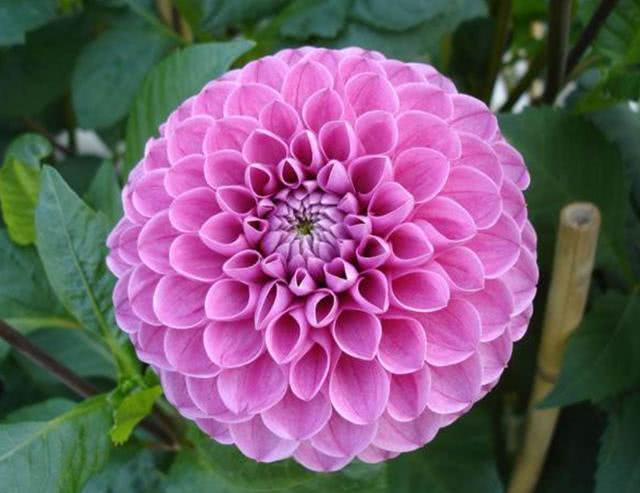
Dahlia
1. Flowers with fleshy roots: Clivia. Clivia can not only not be rained on, but water also cannot be sprinkled on its leaves. Clivia's powerful fleshy roots are especially afraid of water accumulation in the pot. During normal care, if water is sprayed on the plant or it is rained on, the water will flow through the leaves into the leaf core and cannot evaporate for a long time, very easily causing the leaf core to rot. Once the leaf core rots, it will quickly spread to the whole plant, and Clivia will be very difficult to save.
Clivia
Spider plant and orchid types. These plants all share a common point: their fleshy roots have a very strong water-storage function, so when watering normally, generally do not water until the soil has dried through. If they are rained on for a long time or the potting soil cannot dry for a long time, yellow leaves and root rot very easily occur.
Orchid
2. Bulbous flowers: Cyclamen. In summer, Cyclamen can not only not be rained on, but also cannot be watered too much. This is because Cyclamen is a winter and spring blooming plant, and its vigorous growth period is in spring, autumn, and winter. Summer is Cyclamen's dormant period, shown by the whole plant's leaves turning yellow, drying up, and falling off, as if it had died. During this period, Cyclamen must definitely not be given sun exposure or too much water. It does not matter if the potting soil stays slightly moist or a little dry. Rain or too much watering can very easily cause its bulb to rot. After the temperature drops in autumn, Cyclamen will grow new leaves again. At that time, give it sufficient water and fertilizer, and in winter it will bloom beautiful flowers again.
Cyclamen
Rieger begonia. Rieger begonia is similar to Cyclamen and also belongs to the winter and spring blooming plants. With proper growing temperatures, Rieger begonia will also bloom in summer. Its stems and leaves both have a very strong water-storage function. When growing Rieger begonia, one should also follow the principle of not watering until the soil has dried through. Rieger begonia likes a cool air environment. The stuffy, hot, and humid climate of summer can very easily cause its stems and leaves to rot, which then triggers gray mold. Once gray mold occurs, it will quickly spread to the whole plant. Therefore, in summer, try not to let Rieger begonia be rained on.
Rieger begonia
3. Succulents. We all know that for succulents such as cactus balls, normal watering should both dry and wet alternately, and water also cannot be sprinkled on the ball body or leaves, so they are even less able to be rained on. Especially in summer, if they are accidentally rained on, the accumulated water in the pot should be poured out as soon as possible, and the ball body or leaves should be dried as soon as possible to prevent bacterial growth and leaves turning to water. If after heavy rain it suddenly clears up, the succulents should be moved to a cool and ventilated place in time to prevent the sunlight from burning the leaves.
Cactus ball
4. Some woody plants such as rhododendron. Rhododendron originated on high-altitude mountains, and its leaves have many small hairs. These small hairs can provide a certain protective effect for rhododendron, such as preventing too much water loss, absorbing dirty gases in the air, and preventing freezing when the nighttime temperature is lower. In the high-temperature season of summer, excessive rain washing over the leaves will make it difficult for leaf moisture to evaporate, and the hot and humid climate very easily induces black spot disease in rhododendron flowers. Therefore, in summer, try not to let rhododendron flowers be rained on.
Rhododendron
5. In addition to the above flowers, Daphne, dahlia, snake plant, fuchsia, gloxinia, and some other flowers are not suitable for being rained on in summer. The rainwater can be stored, and when watering is needed, it can be used to drench the roots of the plants. In the same way, these substances in rainwater that are beneficial to flower growth can be converted into substances needed by the plants.
Daphne
Fuchsia