A detailed guide to wild roe deer domestication techniques: master scientific breeding methods
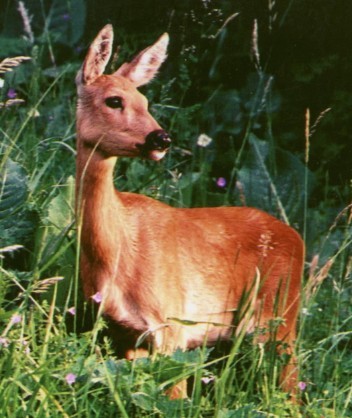
The wild roe deer, commonly known as the roe deer, with the scientific name dwarf deer, belongs to the order Artiodactyla, family Cervidae, and is currently a nationally protected wild animal. Because it has no fat on its body and its meat is purely lean, it enjoys the reputation of "king of lean meat"; its meat is tender and delicious and rich in nutrients, making it a premium wild game delicacy and also a high-efficiency foreign-exchange-earning product. Therefore, mastering the breeding and reproduction techniques for wild roe deer not only helps protect wild resources, but also explores a new path to prosperity for the vast number of farmers in our country.
1 Characteristics and growth traits of wild roe deer
The wild roe deer has a well-proportioned body, a strong physique, extremely strong adaptability and disease resistance, and is easy to tame and manage, with a wide range of food sources. Various broadleaf tree leaves, wild weeds, crop straw, fruit peels, vegetables, and so on are all feed that wild roe deer like to eat. Raising wild roe deer has a short cycle, low feeding cost, and high economic benefit. About 400d after birth, a fawn can grow into an adult roe deer, with body weight reaching 40kg. Upon entering sexual maturity, wild roe deer breed 1 litter per year, with 2-3 fawns per litter. About 1 month after birth, the young fawns begin to learn to feed; at this time, the young fawns can be weaned, and after weaning the young fawns must be raised in separate groups. Breeding roe deer can be used for reproduction for about 10 years. At present, wild roe deer meat is expensive, with a purchase price of 150 yuan/kg; the net income from a commercial roe deer marketed at one and a half years exceeds one thousand yuan. Relevant professionals predict that for the next 10 years or longer, breeding roe deer will be in short supply, and the price of each pair of breeding roe deer is 4000-5000 yuan.
After birth, the young fawn looks similar to a sika deer, with 4 straight lines of white spots in its brown fur. Young fawns generally need one year before reaching sexual maturity. The young male fawn grows two horns at around January. In the 1st year, the two horns have no branches; in the 2nd year, each horn has 1 fork; in the 3rd year, each horn grows 3 forks. This branching of the horns may be related to age. When the roe deer's horns first grow, they are velvet; if the velvet is not sawed off within a certain period, it will automatically ossify and become hard horns. Starting in November, in order to adapt to the cold winter environment, the roe deer begins to grow more hair; on the basis of the original brownish-red hair, it grows a layer of thick, long grayish-white hair that covers the original brown hair. Around the anus and penis, a thick layer of white hair grows. This change in hair is partly to adapt to the cold winter environment, and on the other hand, this color similar to the environment can effectively prevent capture by predators. Around mid-March of the 2nd year, the added hair begins to shed, changing from grayish-white back to brownish-red.
2 Feeding management
2.1 Pens
Roe deer pens are generally built in a sunny, well-ventilated place within the courtyard, ensuring warmth in winter and coolness in summer. The pen consists of an exercise yard and a shed room. The exercise yard is an open-shed structure, and the outer wall is more than 2m high; to prevent escape, the top of the wall can be covered with firewood and grass. The shed room is a tightly sealed structure. The overall requirement is that the pen area for each roe deer is not less than 5 sq m, and feeding troughs and drinking troughs are set up inside the pen. Wild roe deer are not afraid of cold in winter, but the room temperature is best kept above 0°C; they are afraid of heat in summer, so shade facilities are needed in summer. The activity area is best with a concrete floor and a drainage system. The pens for young fawns should be enclosed with iron netting to prevent the young fawns from being injured or killed by collisions when stimulated.
2.2 Feeding and feed
The daily ration formula for adult roe deer is: grass meal 400g, bran 150g, cornmeal 150g, soybean cake 50g. Feed salt once every 7-10d (about 10g), mixed into the feed. In summer, wild roe deer like to eat green feed such as dandelion, alfalfa grass, bitter lettuce, and elm leaves; a wide variety is required, and it must not be moldy. They must drink water every day, and salt should be supplemented about once a week, about 2g per animal each time. In addition, according to different periods, such as the mating period, gestation period, and lactation period, appropriately increase some concentrated feed. In winter, fruit tree leaves and alfalfa grass are the main crude fiber feed, with radish, carrot, and fruit as green feed, adding concentrated feed as well as trace elements and minerals such as selenium-containing growth hormone, bone meal, and fish meal. In winter, supplement salt once about every 10d, about 2g per animal each time, and provide water every day, but the amount of drinking water is small in winter. Wild roe deer do not drink at fixed times, so clean water should be kept in the drinking trough every day and changed every day. Feeding must be done at fixed times; generally feed 4 times a day in summer and 3 times a day in winter, with the feeding amount based on stopping when they no longer eat.
Male and female roe deer must be raised in separate pens. If raised together, the male roe deer generally does not let the female roe deer eat when feeding. Adult roe deer and young fawns must also be raised in separate pens. The pens must be cleaned every day, and it is best to spread sawdust on the activity area, as this can both prevent cold and make cleaning easier. Roe deer are animals with a very strong stress response, so it is best to feed them at fixed times every day by a dedicated person.