How to raise Muscovy ducks? Mastering the breeding method is the key to raising them well
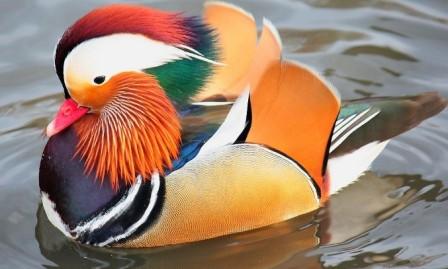
The Muscovy duck originally lived in the wild in South America. It belongs to the class Aves and the muscovy duck family, and is also known as the muscovy duck. It is a lucky creature that combines food, medicinal, nourishing and ornamental uses. Muscovy duck has a distinctive gamey flavor and is rich in nutrients, fragrant but not greasy, and can be steamed, braised, or cooked in other ways. The protein content of its meat, liver and eggs is 27%, 28.4% and 18.4% respectively, and the fat content is 2.4%, 2.6% and 1.5% respectively, and it contains a variety of amino acids. It has a particularly special therapeutic effect on stomach disease and gastric ulcers. The characteristics and breeding methods are introduced below.
I. Characteristics and habits
The Muscovy duck has a comb like a chicken's comb, a body like a goose's body, a beak like an eagle's beak, and claws like an eagle's claws. It can walk on land, swim in water, and has a certain ability to fly. The Muscovy duck was developed from wild selection and breeding. Its ancestors lived in mountainous areas at an altitude of 500-3000 m, foraging at the edge of woodland during the day and roosting on tree branches at night, and spending the night in rain or on snow was also perfectly safe. The Muscovy duck has strong adaptability and strong resistance, and is not prone to illness. It can be fed on either fine or coarse feed; rice bran, green grass, green vegetables, miscellaneous grains, earthworms, field snails, mussel meat, mosquitoes and flies are all eaten. Its cold tolerance can reach -25°C, and its heat tolerance can reach 42°C.
After domestication, the Muscovy duck has a robust constitution, a body that is wide at the front and narrow at the back, and a body carriage horizontal to the ground; the wings reach the tail; the head is large and the neck is thick, and the head has irregular red and black fleshy lumps; the legs and breast muscles are well developed, accounting for about 50% of the total muscle of the carcass; the body plumage is pure black, pure white, or a mixture of black and white. The Muscovy duck is gentle and quiet, does not like noise, has a mild temperament, likes to live in groups, tolerates coarse feed, and has strong vitality. During the breeding season, the male duck gives off a fragrant odor that can drive away mosquitoes and flies, and it can also catch and eat mosquitoes and flies. The female duck lays 150-180 eggs, with a maximum of 238, and the eggs weigh 70-80 grams with white shells. Adult male ducks are about 5 kg, and female ducks are 2.5-3.2 kg. The male-to-female ratio is 1:2.5-3. The feed cost is close to that of complete feed for broiler chickens.
II. Selection of breeding site
Muscovy ducks can be raised in flat-ground pens, ponds, or cages, with about 5 birds per square meter, and the female-to-male ratio can be 1:4-5. The site and housing should be built in a place with flat terrain and abundant water. In plain areas, the site should be built on sloping ground on the south or east side of a hill. Soil with little clay is best, to make use of post-rain drainage and avoid water accumulation. A superior terrain can provide good ventilation, lighting and drainage conditions for the Muscovy duck house and can avoid the northwest wind, making the house easy to keep warm in winter and not stuffy and hot in summer.
III. Hatching of Muscovy ducks
1. Natural incubation
Generally, female Muscovy ducks can lay eggs from about 5 months after hatching. After laying 20-30 eggs each time, the female duck naturally becomes broody and sits on the nest, and the chicks hatch in 35 days. The female duck resumes laying after stopping for 10-15 days. This cycle repeats, repeating 2-3 cycles each year, and 50-60 chicks can be raised in a year, with high-yielding ones reaching 80.
2. Artificial incubation ① Temperature and humidity: In the early incubation period (1-15 days), the temperature inside the incubator is controlled at 38.5-38°C; in the middle period (16-30 days), it is controlled at 38-37.5°C; and during the hatching period it is controlled at 37.5°C. In the early incubation period, the humidity requirement is 60%, in the middle period 50%, and in the late period and at hatching 60%-70%. ② Turning eggs: the frequency should be high, turning the eggs once every 2-3 hours; the turning angle should be large, and manual 180-degree turning should be done 1-2 times a day. ③ Cooling eggs: in the early incubation period, the eggs may not be cooled, but in the middle period the eggs should be cooled once a day, and in the late period 3-4 times a day. ④ Spraying water: from the middle incubation period to hatching, spray the eggs once a day with 35°C warm water during cooling, and put them back into the machine to continue incubating only after the eggs have dried. ⑤ Ventilation: the incubator should have an electric fan with ventilation holes to make the temperature inside even and the air circulate, especially important in the middle and late incubation periods; if necessary, the door of the machine can be opened slightly. ⑥ Assisting hatching: after 35 days of incubation, the Muscovy ducklings break out of the shell. However, for those that do not break the shell and have difficulty hatching, manual shell removal should be carried out to increase the hatching rate.
IV. Raising young Muscovy ducks
1. Nutritional requirements Young Muscovy ducks grow very fast and have relatively weak digestive capacity, so they require compound feed with relatively high nutritional value. The feed can use 551, 511, etc. used for feeding chicks. It can also be mixed by oneself.
2. Environmental conditions for brooding. Young Muscovy ducks are sensitive to temperature within 1-3 days after hatching, like warmth and sleep a lot, and the temperature should be kept no lower than 20°C. After 3 days, gradually lower the temperature.
⟧3. Feeding
They can start eating 18-24 hours after hatching. Put the feed in a large shallow dish or on a hemp sack and let them eat freely. Feed 5 times a day, 4 times during the day and 1 time at night. 16 hours after hatching, first give the young Muscovy ducks 0.02% potassium permanganate water to drink for 1-2 days, then use clean water as drinking water.