Detailed Guide to Layering Propagation Techniques for Flowering Plants and Trees, Master All Methods and Steps
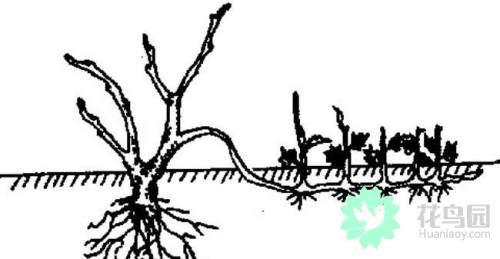
Layering propagation of flowering plants and trees involves bending or wrapping a plant's branch into soil, using the mother plant's nutrients to stimulate new root growth, then separating it from the mother plant and planting it to become a new plant. Its characteristic is that it promotes rooting without detaching from the mother plant, giving a high survival rate and easy formation; however, it is troublesome to perform and yields few propagated plants, so it is mostly suited to home flower growing. Layering propagation is generally divided into methods such as simple layering, horizontal layering, mound layering and air layering, and can be carried out according to the different types of flowering plants and trees.
Simple Layering
Suitable for clump-forming flowering plants and trees, such as wintersweet, winter jasmine, gardenia, jasmine and so on. Select a 1-2 year old branch near the ground at the base, first make several cuts with a knife below a node at the point closest to the ground, or carry out ring barking; then open a trench along the root zone or the edge of the pot, 10-15 cm deep, bend the branch downward and press it into the soil, use metal wire bent into a U shape to pin it down and prevent it from springing back; then cover with soil, leaving the shoot tip exposed outside, and tie it to a main stick so it does not break. This method is mostly carried out in early spring or late autumn; layer in spring and separate in autumn; layer in autumn and separate and plant in the following spring.
Horizontal Layering
Suitable for flowering plants and trees with long or trailing branches, such as chrysanthemum, climbing rose, ivy, Chinese trumpet creeper and so on. Bend the stem to lie flat on the soil surface or in a shallow trench, cover it with soil on top, and after it roots, cut it off and plant it. With this method you can also make a cut with a knife below each node, obtaining multiple young plants in 1 round. Mound Layering Suitable for flowering plants and trees with many tiller buds, a clump-forming habit and branches that are not easy to bend, such as winter jasmine, Lycium chinense, Caragana, hydrangea, Serissa, Forsythia and Chaenomeles speciosa. Before layering, first cut the bark at the base of the branch, then earth up to a height of 30-40 cm, and afterwards keep the mound of soil moist regularly. After the branch has rooted, dig away the mound of soil, separate it from the mother plant and use it for replanting to become a new plant.
Air Layering
Suitable for flowering plants and trees that do not produce tiller buds at the base, are difficult to root from cuttings and have branches that are not easy to bend, such as rose, osmanthus, Aglaia odorata, Michelia alba, magnolia, Dracaena, Schefflera, Dracaena and rubber plant. Air layering is usually carried out in late spring and early summer, and generally a robust 2 year old branch is chosen. First carry out ring barking or cutting below a node of the branch, reaching down to the bark layer. After treatment with rooting hormone, tie plastic film 3-5 cm below the wound, then fold it upward, filling it inside with damp moss, peat soil or fine sandy soil. Seal the top opening, leaving a small gap so that water can be added and rainwater caught. Keep the medium moist; it must neither dry out midway nor become too wet. After several months of care, by autumn the root system has grown abundantly, and after autumn or in the following spring it is separated from the mother plant and planted in a flower pot or in the open ground, then cultivated for another 1-2 years before it can flower and be enjoyed.