Is Anthurium poisonous? Keep these four points in mind and you can grow it indoors with peace of mind
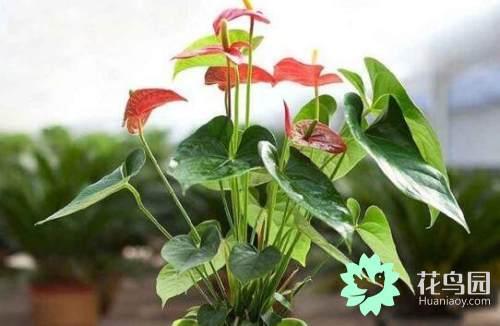
Because the flowering period of Anthurium lasts a very long time, it has become a very popular flowering ornamental plant, but some people are also worried about whether Anthurium is poisonous, so is Anthurium poisonous? Can Anthurium be kept indoors? Let us look for the answers to these questions together.
Is Anthurium poisonous?
Anthurium belongs to the genus Anthurium in the Araceae family, and most plants in the Araceae family are somewhat toxic, such as Philodendron bipinnatifidum and Monstera deliciosa, so is Anthurium poisonous? The answer is yes, Anthurium is also mildly toxic.
The scent and secretions given off by the flowers, branches and leaves of Anthurium are not toxic; its slight toxicity comes from its sap. If you accidentally eat it or come into contact with the sap and show symptoms of poisoning, licorice and flaxseed can be used to relieve the symptoms.
Can Anthurium be kept indoors?
Although the sap of Anthurium is somewhat toxic, it can be grown indoors, because there are many benefits to keeping Anthurium at home, such as beautifying the environment, purifying the air, and adjusting the atmosphere. As long as you take protective measures, poisoning will not occur.
When growing Anthurium indoors, be sure that when pruning, you do not let the sap touch your skin, and do not accidentally eat its flowers and leaves. If there are children in the home, it should be placed somewhere children cannot reach.
How to grow Anthurium indoors
1. Place it in a bright spot to grow
The difference between indoors and outdoors is that the light is weaker than outdoors, so in the methods for growing Anthurium, indoor cultivation should place it in a bright or semi-shady spot. If the light is relatively dim, a fluorescent lamp can be used to supplement the light.
2. Place it in a ventilated spot to grow
Some places indoors are relatively enclosed environments, and Anthurium should be placed in these places as little as possible. Instead, it should be kept in a well-ventilated place, which can avoid the appearance of pests and diseases and also make it grow better.
3. Appropriately increase the humidity around Anthurium
In summer, because the temperature is high, air conditioning is often turned on indoors, and the humidity at this time is relatively low, while Anthurium likes a relatively humid environment, so humidity should be increased in summer; for example, spraying water on the leaf surface is one method.
4. Indoor hydroponic Anthurium
The main purpose of growing it indoors is for viewing, and hydroponic cultivation can fully bring out the ornamental value of Anthurium. However, before doing hydroponics, you must understand the hydroponic method for Anthurium to avoid the situation where improper methods cause the Anthurium to die.
Conclusion: The sap of Anthurium is somewhat toxic, but if you do not come into contact with the sap, it can be grown indoors with peace of mind. However, you need to understand a few tips for growing it indoors, because the environment is completely different from outdoors, so the methods will also differ slightly.