How to divide irises? Master the technique and grow a whole large patch in a year
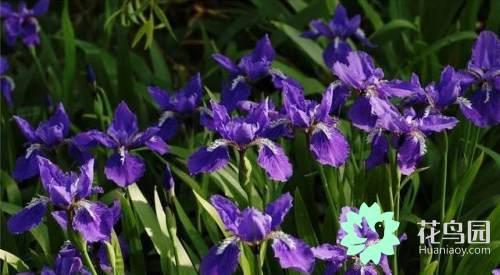
The iris also has a lovely name, Alice, and it has a very wide range of uses; for example, it plays an important role in landscaping, decoration and construction, which is why it has become so popular in recent years. Since there are extremely many iris varieties, different varieties are used in different settings. So today I will explain how to grow irises by division propagation; if you are thinking of planting irises, this is definitely worth a look.
When choosing the division propagation method to grow irises, it is usually best to do it in early spring; if you divide and propagate at other times, the irises will grow poorly and tend to cluster together, which in turn makes it difficult for them to bloom. Secondly, for most households, growing them in pots may be more common, and in that case they can be transplanted and divided once every 1-2 years or so; the reason for doing this is that it makes the irises bloom more easily.
When dividing the plant, choose the rhizomes of robust, strong-growing irises to cut. Generally speaking, the rhizome pieces you cut are best kept with 2-4 buds attached, and the leaves on the cut-off portion need to be trimmed away. The reason for this is that it reduces the nutrient consumption of the rhizome, so the plant grows faster during division propagation. In addition, division should be done after the iris flowering period, because by then the buds have already undergone relatively mature differentiation.
The next thing to note is that the cut tubers must have a certain thickness and should not be too thin; if the tubers are planted too deep, it will affect the irises' flowering and may even prevent them from blooming normally. So when dividing and planting them into pots, the part buried in the soil should be about one third of the tuber. Also, keep a certain distance between each tuber, about 25-35 cm is suitable. After the division and planting are complete, you can add an appropriate amount of compound fertilizer, or well-rotted manure or cake fertilizer. Spread a suitable layer of sandy soil over the fertilizer and it is done.
The last part is daily management. The ambient temperature is an important factor in whether irises can successfully sprout; before emergence it is best to grow them indoors, as the temperature is easier to control there, and at 15-20°C the success rate of iris emergence is relatively high. After certain true leaves have grown, they can be placed outdoors for growing, and at this time the temperature must not be too high either; once it is above 28°C, shading measures should be taken for the irises, and the air should be humidified, and they should be placed in a well-ventilated spot.
The other aspect is adding water. At every stage you must keep the potting soil moist; suitable humidity has a great influence on irises' flowering. By no means wait until the potting soil is dry before watering, as by then it may well be too late. The result may be that the flowers wilt or wither prematurely when blooming.
If the irises are grown in the ground, certain weeds may appear in the field. If there are only a few weeds, you can weed by hand; if the weeds are fairly dense, you can choose to spray an appropriate amount of herbicide to remove them. The number of applications must not exceed 2 times at most, and after spraying, the plants need to be rinsed to some extent.