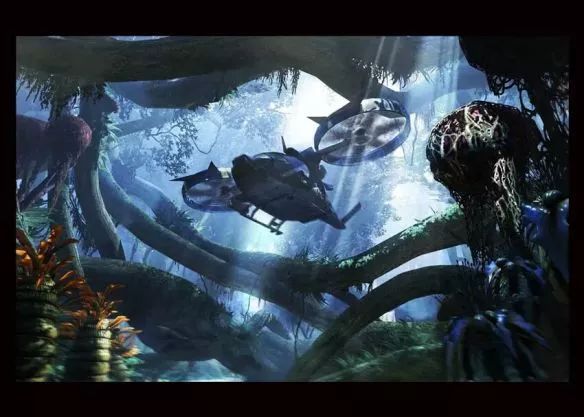
Nature aquarium aquascaping: a gamer perfectly recreates a game scene
A brief introduction to the equipment
Tank: 40×25×30cm ultra-clear
Light: LED 30W
Filtration: HW602B canister filter
Materials: Seiryu stone, azalea root, driftwood
CO2: generator
Aquatic plants: Taiwan moss, mini Taiwan moss, flame moss, willow moss. Because only mosses are used, the aquascape fills in quite quickly.
Livestock: harlequin rasbora, Neocaridina davidi, otocinclus
Source of inspiration
Since I have always enjoyed aquascaping, I wanted to set up a fish tank and create a scape in my dorm, so I collected some game scenes and concept art online, borrowed some of the composition and elements from them, and had a rough idea.
Drawing a sketch
Draw the scape you want in your mind. Drawing a sketch is very important for aquascaping. Whenever you see something that inspires you, quickly record it. Over time, when you aquascape next time, you will not be scratching your head and unable to make anything.
Placing the hardscape skeleton
I roughly arranged it according to the sketch. Azalea root needs to be tied to stones to secure it, and small pieces of azalea root are glued with aquatic plant glue. When placing the hardscape skeleton, think about which aquatic plants need to be planted, and plan out the negative space of the whole scape.
Planting aquatic plants
If conditions allow, try to tie moss with thread. One reason is that trimming later will be more convenient, and another is that it will look more natural after it grows. Because most of the materials here were already fixed, I just glued them directly with aquatic plant glue.
Aquatic plant growth and trimming
After setting up the tank, because I could not resist, I kept changing the scape. Everyone should try not to easily change the hardscape after setting up a tank. It is best to confirm the positions when the tank is first set up. Fiddling around may cause the aquatic plants to remain in an unsatisfactory state. Here it is basically close to the final version, with banyan roots added to increase detail.
After about a month and a half, the aquatic plants had already grown quite lushly. The moss had grown somewhat thick and blocked part of the hardscape that should have been shown. At this point it needed trimming. Moss can just be thinned directly, but do not pull up the whole patch of moss too forcefully, because the aquatic plant glue underneath is not very firm, and if it is all lifted up, it will have to be glued again. Fish can be added later, because sometimes once they are put in, you really cannot catch them out again.
Photographing the finished scape
At that time, the holidays were coming soon, so I started preparing to take photos.
If you want to capture the effect of fish schooling, either the fish themselves are schooling fish, such as cardinal tetra and rummy-nose tetra, or, like a fellow hobbyist, you take 200 to 300 photos before you can find one that is relatively satisfactory.
That is the full account from setting up the tank to photographing the finished scape. Although there are still many shortcomings and flaws when I look at it now, no matter where you are or how small the space is, as long as you love aquascaping, everyone will have their own aquascape tank!