Using yellow mealworms to feed turtles is very effective. Turtles have high protein requirements for bait, and the generally optimal feed protein content is between 40% and 50%. From the yellow mealworm nutritional composition table above, it can be seen that yellow mealworms have a very high protein content, making them quite suitable as turtle feed, and the essential amino acid ratio in dried yellow mealworm powder is also suitable for absorption and conversion by the animal body. The turtle's demand for fat and calories in feed is also comparable to the content in yellow mealworms. Feeding live yellow mealworms to turtles can supplement various vitamins, trace elements, and nutrients lacking in plant-based feed, and improve the turtle's vitality and disease resistance. Therefore, yellow mealworms are a relatively ideal feed for artificial turtle farming.
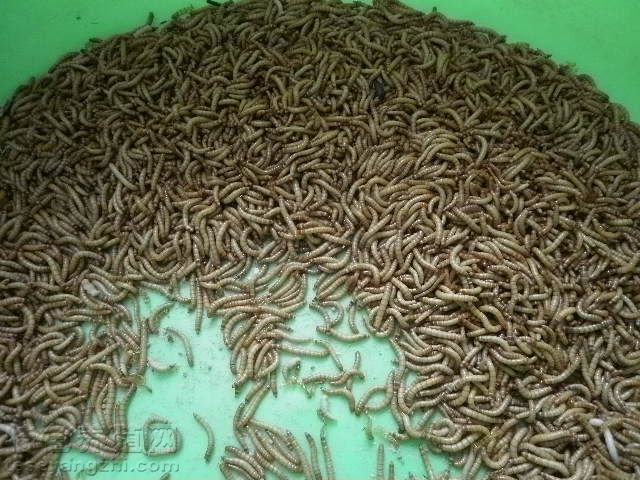
Yellow Mealworms
Using yellow mealworms to raise turtles is different from raising birds and scorpions, because turtles feed in water, and the survival time of yellow mealworms in water must be considered. After live yellow mealworms are put into water, because water enters the spiracles on the insect's abdomen, the insects will suffocate and die within 10 minutes. Above 20 °C water temperature, they begin to rot after 2 hours, the insect bodies turn black and soft, and then gradually become foul-smelling. Once the insect bodies begin to soften and turn black, they can no longer be used as feed. If the turtles continue to eat the rotting yellow mealworms at this point, it will cause disease. Therefore, when feeding turtles with yellow mealworms, the first thing is to grasp the turtle's food intake, and the feeding amount should be finished within 2 hours. In spring and summer when the water temperature is above 25 °C, turtles have a larger food intake, and they can be fed 2 – 3 times a day. When feeding the insects, place them on the feeding platform. At the second feeding, observe whether the insects put in the previous feeding have been completely eaten by the turtles. If they have not been finished, do not continue feeding. In autumn and winter when the water temperature is between 16 -20 °C, turtles have a smaller food intake, and feeding yellow mealworms once a day is sufficient. If there are artificial heating conditions and the water temperature is around 25 °C, the feeding frequency can be increased, and it is best to "eat small meals more often" to ensure the insects are fresh. During the turtle's growing season, a daily feeding amount of live insects at about 10% of the turtle's body weight is more suitable.