What to do when succulents are dry and thin? Build a little tent and they'll plump up in 3 days
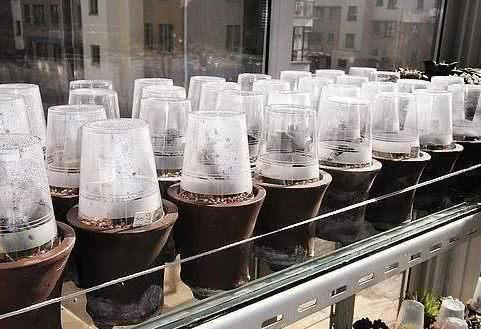
Many people may have heard of enclosed growing of succulents; it's a rather risky technique, and one wrong move can cost your succulent its life. So how do you grow succulents in an enclosed environment to achieve the results you want without harming them?
What should you pay attention to when growing succulents in an enclosed environment?
First, we need to stress one thing: enclosed growing of succulents is actually a wrong care method. The reason many flower lovers keep doing it is that enclosed growing can make succulents reach their best condition in a short time, essentially acting as a "stimulant" for succulents.
This is a compromise care method, suitable for small succulents, and only for short-term use, otherwise it will backfire.
Why can't enclosed growing be used long-term?
Anyone who grows succulents will notice that succulents grown in well-aerated potting soil mostly have taproots, while succulents grown in an enclosed environment have very fine, small roots. Moreover, plants that are frequently grown enclosed, after suddenly leaving this warm and humid environment, will slowly shrivel, including the leaves and the whole plant, just like a smoker suddenly being denied cigarettes, or a drinker suddenly being denied alcohol.
Because a normal succulent's roots are meant to store water, an instinct for survival in a dry environment, but enclosed growing is a protective method of cultivation, like a greenhouse, with no lack of water, no lack of light, and suitable temperature. Over time it becomes very comfortable, and if the protective cover is suddenly removed, it will lose its ability to resist.
Which succulents are suitable for enclosed growing?
The succulent often used by flower lovers for enclosed growing is Haworthia. Enclosed growing can keep Haworthia in very good condition, but it is not suitable for long-term use.
What's the difference between enclosed growing and a greenhouse?
Some flower lovers question this, saying isn't a greenhouse similar to growing plants enclosed, so why doesn't it cause problems?
That's right, a greenhouse is indeed a relatively sealed environment, very similar in principle to enclosed growing, but one thing to note is the difference between a large environment and a small environment. A greenhouse won't cause the potting soil surface to stay wet long-term with water condensing for long periods, whereas in a small environment, enclosed growing with a cup will do exactly that. The air at the potting soil surface cannot fully exchange with the outside air, it stays excessively wet long-term, and at the same time serious problems like root reversal are more likely to occur.
So enclosed growing itself is a relatively hard thing to control, not suitable for beginners. As mentioned earlier, enclosed growing isn't all bad; it does have a reason to exist, but it cannot be done as a long-term method, and even less should it be vaguely summed up with the two words "enclosed growing" when teaching beginners how to care for plants, as that is instead misleading.