New High-Yield Techniques for Selenium-Enriched Black Corn, with a Detailed Explanation of Cultivation Methods
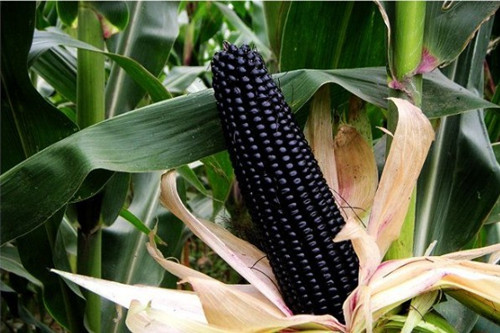
Because of market demand for healthy foods and functional foods, black corn has become popular in the market. In recent years, its planting area has gradually expanded, and its development prospects look promising. Several new high-yield cultivation techniques are specially recommended:
I. Early-Focused Cultivation Technology for Black Corn
Practice has proven that the critical line for high-yield fertilizer demand in black corn is "not the ear stage, but the seedling stage," so the focus of work should be moved forward to the seedling stage.
1. Deep soil loosening. Change annual plowing once a year to deep loosening once every three years, and promote the application of all-directional mole-plow-type deep loosening implements, with deep loosening reaching 50 cm, increasing soil water storage capacity by more than two times.
2. Firmly grasp the planting foundation
(1) Seed coating. It is advisable to select seed dressings of the type that serve both plant protection and nutrition.
(2) Vigorously promote and apply various precision and semi-precision seeders. When sowing, seed fertilizer should be sown uniformly in layers, with the fertilizer more than 5 cm below the seeds.
3. Improve the overall level of fertilization. At present, the key points of fertilization technology for black corn are: balance, early-heavy application, and side-deep placement.
(1) Continuously adjust the proportional structure of fertilizer elements and correct the critical values of soil element content. At present, in our province, a nitrogen, phosphorus, and potassium ratio of 1:0.7:0.6-07 is generally appropriate.
(2) Early-heavy fertilization is the core part of early-focused cultivation technology, and base fertilizer and seedling fertilizer should be applied heavily. For spring-sown black corn and summer-sown corn with a longer growth period, apply all of the required phosphorus and potassium fertilizer and 70% of the nitrogen fertilizer in the early stage, and topdress the remaining 30% of the nitrogen fertilizer at the ear stage. For summer-sown black corn with a short growth period, it is recommended to apply all fertilizer at once as a base application or all at once early in the seedling stage.
(3) Root-seeking side-deep fertilization. Its purpose is to apply fertilizer in the area where roots are more concentrated and to increase the local fertilizer concentration in the soil. Therefore, topdressing should adopt the practices of twisted application, surface application, and close application, and root-seeking side-deep topdressing is recommended, that is, topdressing 15 cm to one side of the black corn plant.
4. Seedling stage management
At the seedling stage, carry out one intertillage close to the black corn to a depth of more than 20 cm, and only one intertillage is done during the entire growth period of black corn.
(2) Timely final thinning and uniform spacing of retained seedlings. For black corn, final thinning at the five-leaf stage is appropriate. Under high-density planting conditions, seedlings should be evenly thinned to ensure uniform plant spacing, uniform seedlings, uniform seedling age and vigor, and a uniform population.
(3) Promote the use of the corn-specific herbicide "Du'a," which is suitable for both pre-emergence (closed) and post-emergence application.
5. Improve the overall level of black corn. Density should include three aspects: quantity, quality, and population distribution. Only when these three aspects are reasonable can the overall level of density be improved.
II. Technology for Inhibiting Late-Stage Premature Senescence in Black Corn
The phenomenon of late-stage premature senescence in black corn is a prominent production problem affecting its yield-increasing potential. According to researchers at our institute, treating corn seeds with folic acid can enhance the late-stage premature senescence resistance of corn. Field trials on varieties such as Shendan 7 and Yedan 13 showed that this technical measure can increase corn yield by more than 10%.