What are the fast breeding methods for yellow mealworms?
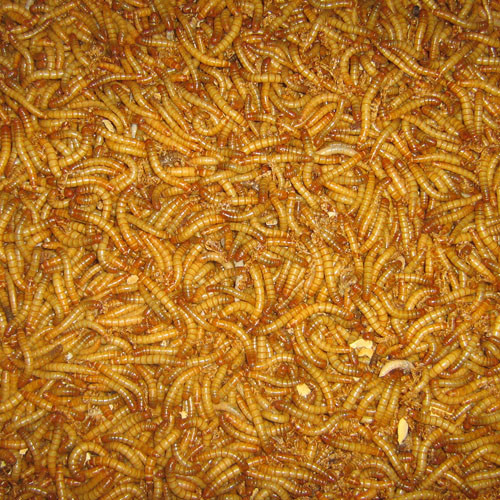
The larvae grow quickly and can reach the marketable commercial worm stage in a relatively short time, which is the key to reducing the cost of yellow mealworm breeding and achieving the expected economic benefits. To achieve this goal, efforts must be made in the following areas:
(1) Create a suitable growth environment for each life stage of the yellow mealworm. According to the growth habits of each life stage of the yellow mealworm, place the adults, eggs, larvae and pupae in different environments separately. The specific method is to divide the breeding room into several sections: adults and mature larvae used for breeding are placed in one section; a room that can maintain a relatively high constant temperature is set up as an independent incubation room specifically for hatching eggs; a well-ventilated place serves as the pupal emergence area; the rest serves as the larval breeding area;
(2) When collecting eggs, it is best to use egg-collecting paper. Place one sheet of egg-collecting paper in each egg-laying box. When collecting eggs, combine the egg-collecting papers from 8 egg-laying boxes into one hatching box. This not only ensures the temperature inside the hatching box so that the eggs hatch into small larvae in as short a time as possible, but also saves a large amount of wheat bran and breeding boxes.
(3) The wheat bran used for egg collection and the wheat bran fed to larvae should preferably be large-flake wheat bran. This ensures that after the eggs hatch, there is enough oxygen supply inside the box so that the larvae can grow quickly. The purchased bran can be sifted once with a 12-mesh sieve. This ensures that the eggs, from the time of collection to about 40 days, can grow into larvae of about 1.5 cm.
(4) The feeding method is the key factor determining how fast the larvae grow. Under normal circumstances, the following should be grasped according to time: within 35-40 days after egg collection, there is enough wheat bran in the hatching box. At this time, observe the newly hatched small larvae frequently. When cast skins appear on the surface of the box, add some vegetables every two days. Cabbage hearts and leaves are best for the vegetables. Be sure not to feed chopped vegetable bits, and the amount should be appropriately small. There is no need to pick out what is not eaten; once the larvae grow larger, they will eat it all. When a large number of cast skins appear on the surface of the box, ensure that vegetables are fed every day. When the original wheat bran in the box is eaten up, sift out the frass and add new wheat bran. At around 60 days, the small larvae have begun their fifth molt. After molting is complete, they can be divided into boxes. After box division, feed the larvae wheat bran about once every 4 days and vegetables once every day. In hot seasons, vegetables can be fed once in the morning and once in the evening each day to regulate the temperature and humidity inside the box. However, note that the amount of vegetables fed each time should be limited to what can be eaten within three hours. From half a month to twenty days after box division, observe the growth of the larvae and divide them into boxes at the appropriate time, so as to promptly obtain commercial worms that meet the sale standard.