Detailed Explanation of High-Quality and Efficient Cultivation Techniques for Yam Using Plastic Sleeves
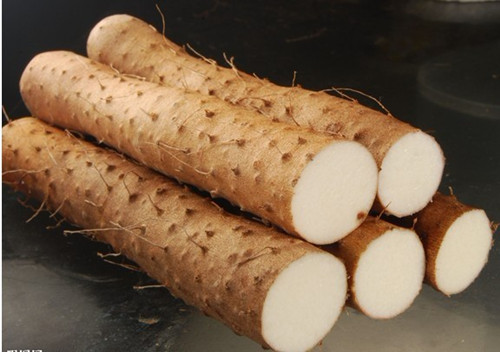
Growing yam in the ordinary way is prone to problems such as excessive hairiness, rough skin, curving, and branching, which seriously affect the yield and marketability of yam. However, using plastic sleeve cultivation for yam not only solves the above problems and improves the marketability of yam, but also greatly reduces the number of damaged yams, while offering advantages such as high yield, good quality, labor and time savings, easy harvesting, and one-time investment for multiple uses. The main cultivation techniques are as follows:
I. Variety Selection
Choose long-cylindrical yam varieties with high yield, disease resistance, and excellent shape and skin characteristics, with tubers longer than 1 m. Commonly used varieties include: Fine-Haired Long Yam, Jiaxiang Long Yam, Peixian Long Yam, etc.
II. Preparation Before Planting
⟦7
1. Site selection: Choose sandy loam plots with deep, fertile soil and a groundwater table below 1 m for yam cultivation.
1. Site selection: choose plots of sandy loam soil with deep, fertile soil layers and a groundwater table below 1 m for cultivating yam.
2. Processing plastic sleeves: Select hard plastic pipes with an inner diameter of 6-7 cm, saw them into 1 m sections with a hand saw, and cut a slit lengthwise (splitting the pipe into two halves). Then, at one end of the plastic pipe, 20 cm from the opening, cut diagonally toward the opening to shape the end into a horseshoe shape. Then, from the other end of the plastic pipe to the middle section, drill holes with a hand drill or electric drill, with a hole diameter of 1 cm and a spacing of 3 cm, drilling 6 holes per row for a total of 4 rows. The processed plastic sleeves can be used for 6-8 a.
3. Digging trenches and arranging sleeves: Generally in April, after the soil thaws, dig yam trenches 30-40 cm wide, 50-60 cm deep, with a spacing of 60 cm. When digging, remove soil in layers to facilitate backfilling. Level the trench bottom, place the plastic sleeves evenly at 30 cm spacing with the cut end facing upward, then backfill 15 cm of soil, tamping while arranging the plastic sleeves in a row at a 60° angle with the upper ends flush. Then backfill another 10-15 cm of soil, tamp it down, and fill in half-cultivated soil (do not trample). After that, apply 4000 kg of fully decomposed high-quality organic fertilizer per 667 sq m, mix the applied organic fertilizer with the soil evenly, and then fill the yam trench level with cultivated soil.
4. Making beds and marking: Make one flat bed for every 2 rows of yam, with a bed width of 1.4-1.5 m. Before making the beds, apply 2000 kg of fully decomposed high-quality organic fertilizer per 667 sq m, then deep plow and level the bed surface. Make marks at both ends of the bed along the rows of plastic sleeves so that the plastic sleeves can be located during sowing.
III. Seed Yam Preparation
For seed yam preparation, first use yam beans to produce seed yams once, then use yam sections as seed yams continuously for about 3 a, which can effectively prevent the degeneration of seed yams.
1. Use yam beans (aerial stems) harvested in autumn, sow at a plant spacing of 3 cm, and in the following autumn harvest yam tubers 20-30 cm long, using the whole tuber as seed yam.
2. Yam sections are obtained at harvest by cutting from the tuber the part with buds at the upper end, 20 cm long and about 50 g in mass. Before sowing, sun-dry them so the wounds heal, then store them in layers, taking care to protect them from freezing during storage.
IV. Timely Sowing
1. Seed selection: Seed yams prepared from yam beans should have bright color, plump terminal buds, thick tubers, sparse tumors, few roots, no pests or diseases, no rot, no frost damage, and a weight of about 150 g. When sowing with yam sections, the diameter should be more than 3 cm and the length 15-20 cm.
2. Sprout promotion: 15-20 d before sowing, take out the layered stored yam sections and place them in a 25-28°C environment with 3-5 cm of sand to promote sprouting. A sun-facing bed or small arch shed can be used for sprout promotion, and the sun-facing bed or small arch shed should always be kept closed and warm. Sowing can begin when the young yam sprouts emerge from the sand.
3. Sowing period: Yam is not tolerant of frost, so the sowing period should be after the last frost; in the Shandong region, sowing is generally done in mid-to-late April.
4. Sowing: First use a hoe to open a furrow along the marked rows, 8-10 cm deep, locate the plastic sleeve, and then water. After the water seeps away, insert the seed yam into the pipe, leaving about 3-5 cm exposed above the pipe opening. First cover the seed yam with wet soil, then cover with a layer of dry soil. After the water soaks through the dry soil, use dry soil to level the planting furrow.
V. Post-Planting Management
1. Cultivation: Cultivation not only preserves soil moisture but also raises soil temperature and promotes the emergence of yam. After sowing, cultivate 1-2 times in time. After emergence, to prevent weeds, still carry out 2-3 shallow cultivations. When cultivating, make it shallow near the yam and deep farther from the yam. As the yam grows, cultivation should be done farther away from the yam.
2. Trellising: When the yam vines grow to 30 cm long, build an “A”-shaped trellis, 1.5-2.0 m high, and make it sturdy to prevent being blown down by wind. Guide the vines onto the trellis in time. Generally, do not remove side branches, but promptly remove aerial stems not intended for seed use, as too many aerial stems will affect the expansion of yam tubers.