What are the early-stage rearing and management methods for broiler chickens?
With the continuous improvement of genetic breeding and feed nutrition formulation technology, broiler rearing standards are also constantly rising. Based on practical work experience, new viewpoints on early-stage broiler rearing and management are proposed:
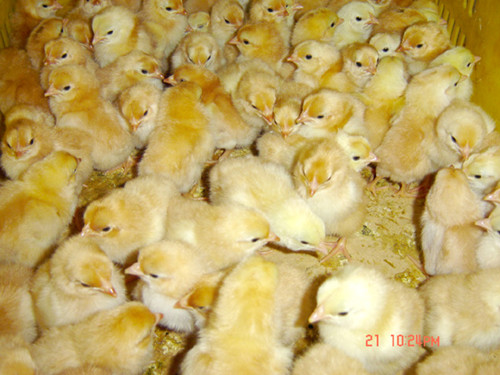
1 Do a good job of early feeding for chicks so that the chicks achieve uniform and good development in the first week. Starting from 1 day of age, while ensuring the survival rate, work on uniformity must also be carried out. The body weight and uniformity of chicks in the first week are very important and must meet the standard, otherwise the slaughter weight will be affected. Therefore, after entering the house, carefully pick out those that eat poorly or are in poor condition, including smaller chicks, and they can be fed separately with careful attention. This work has no obvious time requirement.
2 Change the previous method of giving chicks water for a period of time after they enter the house before giving feed, and instead have both water and feed fully prepared before the chicks arrive. This is especially the case when introducing Ross 308; based on experts' suggestions, the requirement of providing water and feed simultaneously was put forward for early-stage management work. However, up to now some farms still do not dare to do this, always thinking that “chicks should be given water first before feed, for fear of causing severe dehydration.” From practice in recent years, this is completely an old concept. In our work we have found that when feed and drinking water are set out, the chicks will choose according to their needs. If dehydration is relatively severe, they will scramble to drink water and will only go to eat feed after drinking. Conversely, if there is no dehydration, they will not be very active in drinking water and will run back and forth in front of the feed trough.
3 Change the previous practice of allocating drinkers according to the number of chickens, and correspondingly increase the number of drinkers so that chicks can easily find water in the pen just after entering the house. It is best to place the vacuum drinkers on bricks when the chicks enter the house, to prevent the chicks from “bathing” after dehydration caused by long-distance transport. From the second round of adding water, then place them on the netting and gradually lead the chickens toward automatic drinking equipment. Where possible, it is convenient for chicks to use automatic drinking equipment as early as possible. From the fifth day onward, remove one quarter of the drinkers every day. Do remember that automatic drinking equipment must not be used directly when the chicks enter the house.
4 If, during the first day after the chicks arrive, feed trays are not used, but instead clean plastic sheeting is laid on the netting or clean, somewhat stiff paper is laid out, and feed is scattered on it for the chicks to eat, the effect is far better than using feed trays alone. This is especially true under extreme weather conditions, when the chicks are in poor condition after long-distance transport; this feeding method works even better. In theory, this method is prone to problems such as manure contamination and feed waste, but in practice these can all be overcome through good management.