Remember one word when caring for camellias, and the leaves will be emerald green and the flowers bigger than your palm
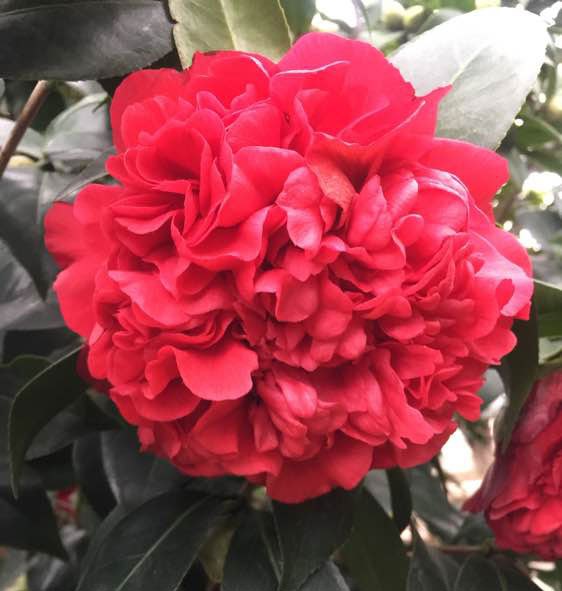
Camellia is one of the four famous flowers of our country. Though it has a rich and noble bearing, it is not a flashy look. With good care, the same camellia plant can bloom in several colors, and from a distance it looks especially delicate and charming. What should you pay attention to when caring for camellias?
Camellia care methods have been passed down since ancient times, and there is already a great deal of care experience. A gardening proverb says "shade for camellias, sun for peonies," which shows that if you want to grow camellias well, you must make good use of this word "shade." First, let us understand the habits of the camellia: it likes a warm, humid and semi-shaded environment, and fears high temperatures and strong direct sun. Remember, it dislikes dryness and waterlogging. So how do you grow camellias in shade?
1. Control the light. All plants need photosynthesis. Camellias like shade and have a relatively low demand for light. Generally, just let the camellia get sunlight before 10 a.m. If you are growing it on a balcony, you can choose a north-facing balcony or a southwest-facing balcony to avoid the camellia being in the sun all day. If you are growing it outdoors, it absolutely must not be exposed to blazing sun at noon, so you can pull up a shade net to shield the camellia.
2. Choose the soil.
The soil camellias like best is fertile, loose, slightly acidic soil. You can choose garden soil and leaf mold mixed evenly with an appropriate amount of river sand. If the soil is on the alkaline side or compacted, camellias will easily drop leaves or buds. Friends in the north often run into this problem.
Camellias like fertilizer. About two to three months after planting, they will basically have used up the nutrients in the soil, so you must topdress in time. Camellias mainly have three fertilizing times. The first is around April, a post-bloom topdressing to promote new shoot growth; the second is in June, topdressing to improve drought resistance and promote the sprouting of secondary branches; the third is in September, topdressing to improve cold resistance.
Fertilize according to the principle of light fertilizer applied frequently. You can choose Huadongde acid-loving organic nutrient solution, use it about once every 15 days, dilute the nutrient solution with water at 1000 times, and pour it onto the soil. While supplementing nutrients for the camellia, it can also improve the soil, making the soil acidic, and can raise soil fertility and promote flowering.
3. Watering. The last point in growing camellias in shade is watering, creating a humid growing environment for the camellia. Camellias hate dryness but cannot tolerate waterlogging, so watering is a technical job. When the camellia's potting soil is "dry without cracking, wet without turning to mud," that is when you should water the camellia.
If you do not know how to judge whether the potting soil is dry or wet, you can use a flower and plant detector to help. Just insert it into the soil and you can see the changes in soil water and fertilizer data caused by environmental changes, and temperature changes can also be monitored. It is very simple and convenient.
In daily camellia care, you can also use a spray bottle to mist the air around the camellia from time to time to keep it humid, or place a basin of water near the camellia to increase air humidity, keeping the camellia's growing environment in a humid state. The camellia will grow even better!