How to Increase Yield in Crayfish Farming? An Analysis of Practical Technical Points
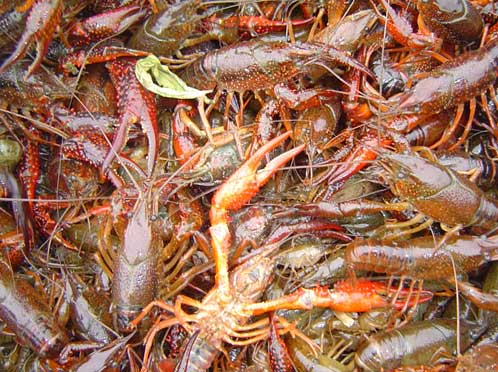
In recent years, artificial crayfish farming has begun in many regions of China, but yields vary widely, with high yields reaching 400-500 kg per mu and low yields of only a few dozen kg. To improve the survival rate of farming and achieve high quality and high yield, the following main technical measures must be mastered.
1. Reasonable farming density
Maintaining a reasonable farming density is conducive to fully tapping the pond's productivity and can also improve the yield, size and economic benefits of the crayfish. If farming density is increased by one-sidedly pursuing yield, it will increase the difficulty of farming management, and crayfish will also kill each other while competing for living space. The large amount of leftover bait and excrement produced by high-density farming will also deteriorate water quality, further shrinking the living space for crayfish. The pond environment has a relatively large impact on crayfish burrowing. Under conditions of relatively fertile water, more bottom sludge and abundant organic matter, burrows decrease, which can also lead to crayfish killing each other. Generally speaking, the reasonable farming density for monoculture of crayfish in ponds is: in spring (February to March), stock 30,000-40,000 juvenile shrimp of 2-4 cm per mu of water surface; in summer (July to August), generally do not stock juvenile shrimp, but stock high-quality crayfish broodstock, 20-25 kg per mu of water surface, with a male-to-female ratio of 3:1; in autumn (September to October), stock 30,000-50,000 juvenile shrimp that have just left their mother (body length 10-12 mm) per mu of water surface.
2. Stocking size should be basically consistent
When stocking crayfish, note that the stocking sizes should not differ too much; otherwise, large, medium and small sizes must be stocked separately in three ponds. During the grow-out process, also pay attention to the size of the crayfish. If sizes are uneven, large shrimp will eat small shrimp, greatly reducing the survival rate and affecting the improvement of farming yield.
3. Correct feeding
Feeding is key in crayfish farming. When feeding, attention should be paid to five aspects: the type of bait, the palatability of the bait, determination of the feeding amount, the feeding method and the feeding time. Crayfish are omnivorous animals and can consume both animal-based and plant-based baits. In farming production, some plant-based baits such as grains and grasses and animal-based feeds such as live snails are usually fed. Crayfish are rather greedy feeders. Insufficient feeding not only affects the normal growth of crayfish but also causes cannibalism, so it must be ensured that crayfish can consume enough bait, and the bait must be fresh. Excessive feeding or improper feeding methods will cause bait waste and deteriorate water quality. Generally, the feeding amount is calculated according to the body weight of the shrimp in the pond. In the peak growth season (April to September), the feeding amount is 7%-8% of the shrimp body weight, and in other seasons it is 1%-3% of the shrimp body weight. In actual feeding, the feeding amount should be flexibly adjusted according to specific conditions, such as weather conditions, water quality, the amount of aquatic animals and plants in the pond, and the amount of leftover bait. Crayfish have the habit of hiding by day and coming out at night, often coming out at night to move and feed, and generally hiding and resting among aquatic plants during the day. Therefore, generally around 9:00 feed 20%-30% of the total bait amount, and around 17:00 feed 70%-80%.