How can turkey egg-laying efficiency be improved? Sharing practical methods
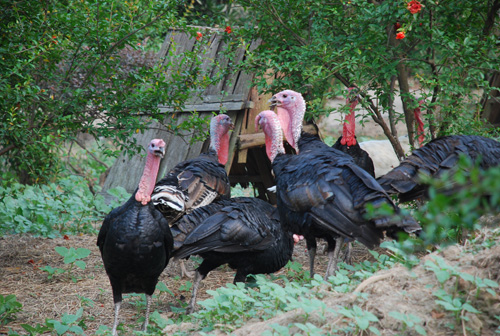
1. Comprehensive nutritional formulation. During the laying period, turkey feed can have a crude protein content of 23%-28%, with metabolizable energy of 12.1 megajoules per kg, ensuring the laying turkey's requirements for vitamins and trace elements.
2. Adjusting broodiness. Turkeys have a very strong nesting instinct, naturally sitting on eggs once every 15-20 eggs laid, regardless of season and unrelated to external conditions. To increase the turkey egg-laying rate, the "combine two into one" method can be used for natural incubation or artificial incubation can be adopted, allowing broody hens to be awakened from brooding in time so they can enter the laying period promptly. This can increase a hen turkey from the original annual output of 80-120 eggs to 150-190 eggs.
3. Light stimulation. During the growth stage, turkeys should have restricted lighting. At 5-6 months of age, provide 10 hours of light per day; at 6-9 months of age, up to 14 hours; after 9 months of age, it can be increased to 16-18 hours of light per day. If sunlight is insufficient, artificial supplementary lighting should be used, with an intensity of 15-20 lux (i.e., 3-4 watts per sq m). Light stimulation can prolong the laying period and increase the egg-laying rate by 10%, and the eggs are large, uniform in size, and have strong shells. 4. Sufficient drinking water and scientific feeding. During the laying period, turkeys should have increased clean drinking water, following the principle of "change the water often, never run out of water." The key feeding times each day for turkeys are 9 a.m. and 3 p.m., which directly affect the turkey's egg production.
5. Set up more nest boxes early. Turkeys reach sexual maturity at 6-7 months of age and begin laying. Generally, by 5 months of age, one nest box should be provided for every 3-4 hens, to prevent turkeys from being unable to find a suitable place to lay and delaying the laying period.
6. Regular deworming and more supplementation. Laying hens at 3-4 months of age should be dewormed once with 0.04% furazolidone or Jichongjing tablets; hens at 5-6 months of age should be dewormed once with levamisole or Jichongjing tablets before laying begins, to achieve the goal of tidying up the flock. After 4 months of age, feed rice-grain-sized grit once every 2 weeks, accounting for 1%-2% of the daily ration.
7. Various other auxiliary methods. Adding a small amount of manganese to chicken feed can enable hens to produce hard-shelled eggs without increasing shell thickness, improving the effective egg production rate; adding methionine and 0.05% choline can save 50% of feed and increase the egg-laying rate by 5%-8%. Certain amounts of Chinese herbal additives such as mugwort leaf, bupleurum, skullcap, Sichuan pepper, and licorice can also be added, which not only increase the egg-laying rate but also have disease-prevention benefits.