Hedgehog Farming Prospects Analysis and Key Breeding Techniques
The economic value of hedgehogs:
Hedgehog skin, also known as yixiang or xianrenyi, is a traditionally renowned and precious Chinese medicinal material; it is used to treat bedwetting in children, impotence, spermatorrhea, stomachache, uterine bleeding, bloody stool, hemorrhoids, enuresis, and cervical lymph node tuberculosis, among other conditions. The heart, brain, liver, gallbladder, kidneys, and fat of the hedgehog can also be used as medicine, and its meat is a rare wild-game delicacy.
Hedgehog breeding techniques:
I. Introduction of hedgehogs:
(1) When introducing stock from the wild, domestication must be carried out to make the hedgehog a domestic animal. The number of wild hedgehogs is declining every year. Therefore, artificial breeding can not only meet people's medicinal and dietary needs but also help protect the natural resources of hedgehogs. In addition, artificial breeding requires simple equipment, and the feeding and management are easy and convenient, with relatively good economic returns, making it a very promising breeding project.
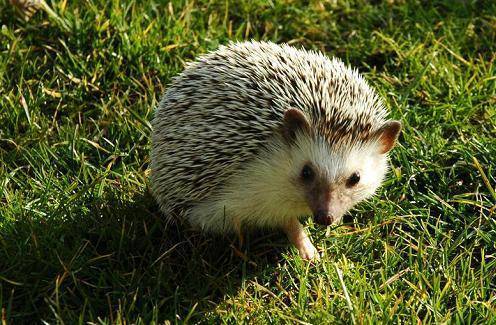
(2) Domesticated hedgehogs should be kept one male and one female in the same nest. They generally come into estrus and mate naturally in April to May, producing 1 to 2 litters per year, and hedgehogs aged 2 to 4 years all have reproductive capacity. During estrus, the female hedgehog is restless and agitated, with secretions from the genital area. The gestation period is about 60 days, with 4 to 6 young per litter, and at most 8. After 35 days of fertilization, the hedgehog's body weight increases; after 45 days, it moves sluggishly, with mild swelling of the perineum, and before giving birth it seeks grass to build a nest. Newborn hedgehogs have soft spines and no hair; after about 20 hours the soft spines stand up, and they make a "zhizhi" squeaking sound. The birth weight is 13 to 15 g. Three days after birth, the soft spines of the young hedgehogs harden and gradually increase in number. The eyes open at 10 days of age, teeth grow and they can walk at 20 days of age, and they can eat food at about 30 days of age. The lactation period is 40 to 50 days. At 3 months, the average body weight of a young hedgehog can reach 320 to 350 g, with an average monthly weight gain of about 100 g. The period from the lactation period to 100 days after weaning is the fastest growth stage for hedgehogs, and careful management is required to ensure and improve the quality and size of the skin.
(3) When introducing stock, attention should be paid to eliminating internal and external parasites. External parasites mainly include hard ticks, itch mites, and scabies mites. Hard ticks are dark brown and can be removed by hand; itch mites cause powdery white spots and dander on the body surface skin; scabies mites cause yellow scabs to form on the skin. For treatment, a 0.05% "Kemante" bath can be used, for 3 to 5 minutes each time, at 7-day intervals, for 3 consecutive times; or ivermectin injection can be given regularly by intramuscular injection at a dosage of 0.2 mL per kg of body weight, which, in addition to killing mites, is also effective against ticks and Physaloptera nematodes. Internal parasites mainly include Physaloptera nematodes and sparganum larvae. Physaloptera nematodes parasitize the duodenum of hedgehogs, causing vomiting, sometimes with blood in the vomit, and black, loose feces. Treatment uses pyrantel pamoate, with an oral dosage of 5 to 10 mg per kg of body weight. Thereafter, deworming should be carried out regularly 1 to 2 times per year. Sparganum larvae parasitize the small intestine of hedgehogs. Mild infections generally show no clinical symptoms; in severe infections, the animal has poor appetite, with diarrhea and constipation occurring alternately. Treatment uses praziquantel at 5 to 10 mg per kg of body weight, or arecoline hydrobromide at 2 to 5 mg per kg of body weight, orally once, and thereafter given 1 to 2 times per year as preventive deworming.
II. Construction and preparation of hedgehog breeding pens and housing
Based on the hedgehog's habit of preferring to live alone, pair housing is suitable for artificial breeding; if possible, an attempt should be made to breed them in a one-male, multiple-female manner. The following housing conditions are based on pair housing as the standard.
The enclosure is of the closed type, preferably facing south with its back to the north. Build brick walls, with a door on the south side leading to the exercise yard, and a window on the east side. Cement floor, area 2 sq m, wall height 1.8 m. The roof is sealed with the same iron mesh as the fence. Plant some trees on the west side of the exercise yard. Place a wooden box both inside the enclosure and in the exercise yard for the hedgehogs to rest in.
The above plan takes into account the keeper entering inside to manage the animals, so the height is 1.8 m. Another plan is for the keeper to work outside the enclosure, so the enclosure does not need to be so tall. Specifically: enclosure area 2 sq m, cement floor, brick walls, no window. Height 80 cm, with a wooden board ceiling. Cut a 30 cm x 30 cm movable lid in the ceiling board for cleaning and feeding. There is a 25 cm x 20 cm opening in the enclosure leading to the exercise yard. The exercise yard area is 4 sq m, height 80 cm, and the fence roof and iron mesh are the same as in the above plan. The only difference is that a 30 cm x 30 cm movable lid is opened in the middle of the ceiling for cleaning, feeding, and other management tasks.
III. Hedgehog feeding management and breeding techniques
In the wild, hedgehogs are omnivorous, mainly feeding on animal-based foods such as insects. Under artificial breeding conditions, they can be fed both animal-based and plant-based foods, depending on what they like and dislike eating. It is also necessary to observe the results, whether the hedgehog is healthy and alert, and whether its feces are normal. If everything is good and they can reproduce, it indicates that the feed meets their needs. At this point, a rough feed table can be formulated. Under artificial breeding conditions, animal-based feeds can be tried, such as minced beef, minced mutton, minced camel meat, silkworm pupae, locusts, and mealworms, and some milk, vitamins, calcium, salt, and other trace elements can be added. The key is to adapt to local conditions and decide according to the specific situation. Plant-based feeds can include steamed wowotou made from various melons, vegetables, grains, and mixed flour, or pelleted feed and raw mixed flour. The feeding amount likewise requires a period of experimentation to determine. In addition, hedgehogs are typically nocturnal animals, sleeping soundly during the day and coming out at night to forage. Therefore, feeding time should be after dusk, and after they become accustomed to artificial breeding, the time can be gradually moved earlier to 3 to 4 pm.
In winter, the temperature inside the enclosure must be kept above 10 to 15°C, so that the hedgehogs do not enter hibernation. If there are no conditions for keeping warm, then before winter arrives, spread some clay or straw in the enclosure, and the hedgehogs will dig burrows themselves and enter hibernation, so that they need not be tended throughout the winter. When spring comes, after the hedgehogs wake up and emerge from their burrows, the mounds of soil and so on should be cleared away, a disinfection should be carried out, and some fresh straw should be replaced. In summer, when the temperature exceeds 32°C and it is rather hot and stuffy, water should be sprayed around the enclosure to cool it down, or a temporary shade awning should be added on top of their small house.
After the beginning of spring is the time for hedgehogs to come into estrus and mate, so more observation should be made. If the female hedgehog is found to have mated and become pregnant, she should temporarily be kept separately, and the male hedgehog moved elsewhere, which both makes it convenient to increase nutrition for the female hedgehog and prevents disturbance from the male hedgehog. Two months after birth, the young hedgehogs can be separated and kept individually.
As for natural enemies, the main precaution is against weasels. The mesh fencing of the exercise yard must be able to block weasels from entering.
The hedgehog is an animal of the family Erinaceidae, order Mammalia, with a body length of 22 cm, tail length of 2 cm, a broad head, a pointed snout, and short ears (not exceeding the length of the spines). Hedgehog skin can be used as medicine, with the effects of directing qi downward and relieving pain, and cooling blood and stopping bleeding. It mainly treats counterflow vomiting of food, abdominal pain and hernia, and intestinal-wind hemorrhoids and fistula, among other conditions. Its heart, liver, and kidneys can also be used medicinally.
Hedgehogs inhabit shrub thickets and are also found near suburban villages. They prefer quiet, fear light and noise, are active by night and hide by day, and have a keen sense of smell. The hibernation period lasts as long as half a year, and they eat large amounts in spring, summer, and autumn, gaining weight quickly. Their food is mainly insects, and they also eat young birds, bird eggs, frogs, lizards, and melons and vegetables.
When raising hedgehogs, the wild living environment can be simulated by building an indoor-outdoor connected enclosure area. Indoors, take measures against heat and cooling in summer and against snow, frost, and freezing in winter, and set up nests indoors for the hedgehogs to rest quietly. Outdoors, provide light-blocking cover, and plant shrubs and weeds on the ground, and pile up earth mounds or rockeries, to let the hedgehogs feed and move about. The rearing room is about 4 sq m, and the outdoor area is about 10 sq m.
The above content is for reference only.