What are the key techniques for rabbit farming?
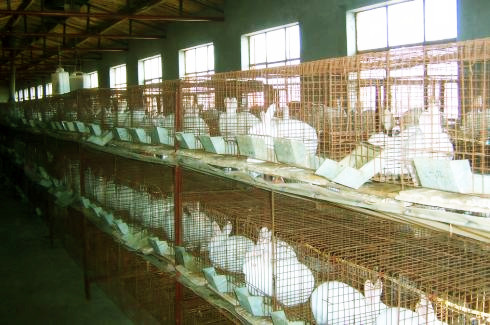
1. Vaccinate in a timely manner.
At present, many diseases endanger the rabbit industry, but the main one is rabbit plague. Because there is still no specific drug to treat rabbit plague, once the disease occurs in a rabbit herd, the entire herd will be wiped out. Therefore, timely vaccination against rabbit plague is the reliable measure to prevent this disease.
However, three points should be noted when vaccinating:
(1) At 2 months after birth, each young rabbit must be given a subcutaneous injection of 1 milliliter of rabbit plague vaccine; immunity develops in about 7 days, and the immunity period is 6 months. Adult rabbits must be vaccinated in both spring and autumn each year to ensure immunity.
(2) When vaccinating, it is essential to ensure the vaccine is effective.
(3) Make sure the vaccination site is accurate, the dose is sufficient, and the liquid medicine must not leak out.
2. Persist in regular selenium supplementation.
Selenium is a trace element, and most areas of our country are selenium-poor or selenium-deficient zones. Long-term selenium deficiency in rabbits can cause disease. Selenium deficiency causes anemia in rabbits, poor development, reduced disease resistance, infertility in female rabbits, miscarriage, stillbirth, and in severe cases, myocardial degeneration can cause sudden death. In particular, young rabbits born in winter and spring, which lack green fodder and sunlight for a long time, frequently develop this disease. Therefore, in selenium-deficient areas, selenium supplementation for rabbits should be regarded as equally important as rabbit plague prevention. Selenium should be supplemented regularly in normal times; for pregnant rabbits, inject 0.1 milliliter of 0.1% sodium selenite per rabbit 10 days before giving birth. After weaning, young and juvenile rabbits are given a one-time sodium selenite supplement, that is, take 0.1 milliliter of 0.1% sodium selenite and mix it into the drinking water for 50 young and juvenile rabbits to drink at one time. This can effectively prevent selenium deficiency.
3. Deworm regularly.
Regular deworming has the dual significance of eliminating sources of infection, preventing the spread of pathogens, and treating diseased rabbits. Therefore, whole-herd deworming should be carried out in spring and autumn. Albendazole has the characteristics of high efficiency, low toxicity, and broad spectrum, and is the first-choice drug for spring and autumn deworming; it can expel nematodes, tapeworms, tapeworm larvae, and trematodes. At the same time, young rabbits are most prone to outbreaks of rabbit coccidiosis, with a high mortality rate, so prevention should be emphasized to improve the survival rate of young rabbits. From weaning to 3 months of age, young rabbits should be given 1 tablet of chlorphenamidine daily, which can achieve a good preventive effect. In addition, rabbit mange is a serious parasitic disease that harms the rabbit industry, and preventing and curing this disease is relatively difficult because rabbits cannot tolerate medicated baths; only through regular comprehensive surveys and timely treatment of diseased rabbits can the occurrence of this disease be effectively prevented.
However, three points should be noted during whole-herd deworming:
(1) The dosage of deworming drugs must be accurate.
(2) After medication, strictly observe the rabbit herd and promptly rescue diseased rabbits that show side effects.
(3) While deworming, strengthen the harmless treatment of feces to prevent the spread of pathogens.
4. Persist in self-breeding and self-raising.
Adhering to the principle of “self-breeding and self-raising” is an effective way to control infectious diseases. Therefore, rabbit farms or specialized rabbit-raising households are required to select and raise healthy improved-breed male and female rabbits and breed young rabbits themselves, to prevent the introduction of rabbit sources that bring in rabbit diseases and cause the spread of epidemics. The heterosis of first-generation hybrids can also be used to improve the quality of breeding rabbits and the survival rate of young rabbits, thereby reducing the cost of rabbit farming.
5. Strengthen feeding management.
Strengthening feeding management is an important part of raising rabbits well, and the following points should be done well:
(1) Feed at fixed times and in fixed amounts.
(2) A complete compound feed must be ensured.
(3) The feed must not be changed abruptly.
(4) Persist in supplementing multiple vitamins and mineral trace elements.
(5) Keep the cages and sheds hygienic and clean, ventilated and dry, and frequently scrub and disinfect the utensils. Heating equipment is needed in winter.
(6) Frequently observe the mental state of the rabbit herd. When abnormal rabbits are found, isolate and treat them promptly, and dead rabbits should be deeply buried.