Detailed explanation of the technical method for raising earthworms with cow dung
There are many different methods for raising earthworms, which is inseparable from the large number of digestion-aiding symbiotic microorganisms in the earthworm's digestive tract. Earthworms have a powerful digestive system and extremely strong digestive capacity, so many kinds of feed can be used, and earthworms can fully digest and utilize them after eating. Earthworms mainly feed on decaying organic matter. As long as it is non-toxic, not too high or too low in pH, not too high in salinity, and can be decomposed by microorganisms, organic matter can be used as earthworm feed. For example, livestock and poultry manure, food, paper, wood, brewing waste, and so on; even garbage, domestic organic matter, larvae, eggs, and animal carcasses are all good feed for earthworms.
Different feeds contain different nutrients, so the formula proportions also differ. Here, we introduce the techniques for raising earthworms with cow dung.
Cow dung is the most suitable type of manure for use as feed in manure-based earthworm farming. It is commonly seen in rural areas and on cattle farms, so in rural areas it can generally be obtained locally, reducing transport and saving costs. In terms of feed, it can also be appropriately diversified with a reasonable nutritional mix. To raise earthworms well, we must carry out the ratio scientifically.
Formula examples:
① Cow dung 50%, paper pulp sludge 50%;
② Cow dung 100% or a mixture of all kinds of poultry and livestock manure 100%;
③ Cow dung, pig manure, and chicken manure 20% each, rice straw scraps 40%; (Note: chicken manure must first be used to raise maggots or left to stand for more than 1 year before it can be used to raise earthworms, otherwise all the earthworms will escape or die.)
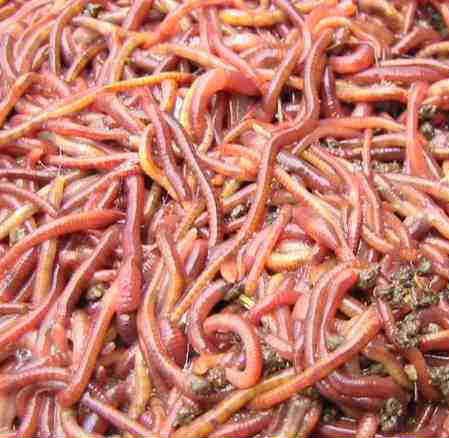
Preparation of feed:
Fermentation: First spread a layer of dry material 10--15 cm thick using rice straw and stalks, then spread 4—6 cm of manure material on the dry material, repeating 3—5 layers. Spray water with a watering can after each layer is spread, until the water seeps out; if garbage is used, pile one layer of garbage and one layer of manure. There is no limit on length and width, and cover tightly with plastic film. In seasons with higher temperatures, turn it once every 7 days thereafter; generally turning 3—5 times completes the feed fermentation work.
After the feed is well fermented, test the pH value. Earthworm feed generally requires a suitable pH value of 6—7.5, but the pH value of many animal and plant wastes is often higher or lower than this value. When the pH exceeds 9, acetic acid, table salt, or citric acid can be used as a buffer;
The scientific proportioning of feed is the most effective way to increase earthworm production.