How to make money and profit from turtle farming? Master these three keys
Turtles, which combine medicinal, food and ornamental uses, are increasingly favored by farmers, and how to raise turtles profitably has always been a concern for farmers. The key points for profiting from turtle farming are set out below for farmers' reference.
1. Choosing the right species
Whether the species is chosen correctly directly affects economic returns. There are 257 species of turtles in the world, divided by use into ornamental, medicinal and food types. Before introducing stock, it is necessary to survey the turtle market (locally and in surrounding areas) to confirm which type of turtle can be profitable, and then introduce stock appropriately according to one's own conditions (including site, funds, feed sources, water sources, etc.). At present, the ornamental red-eared slider still has a market in the domestic market, especially hatchlings (turtles hatched that year); it occupies the market with the advantage of low price and good quality, but most hatchlings on the domestic market still rely on imports. The food-type snapping turtle has the characteristics of fast growth, strong adaptability and a high meat yield, and is a new hotspot in turtle farming. Medicinal turtles such as the three-striped box turtle (Cuora trifasciata) all have good development prospects.
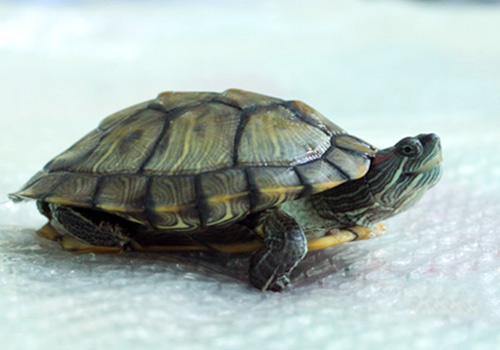
Three keys to making money and profit from turtle farming
2. Ensuring the quality of seedlings and breeding stock
Turtle juveniles are divided into hatchlings and young turtles. Hatchlings refer to turtles bred that year. Young turtles refer to turtles raised for more than one year and weighing less than 250 grams. When selecting turtle juveniles, observe their mental state, appearance, weight and other aspects. A turtle with no external injuries, complete claws and quick reactions is considered healthy. Breeding turtles refer to turtles with reproductive capacity. Breeding turtles are divided into heated and unheated types. It is generally believed that turtles raised with heating have lower reproductive capacity and lay fewer eggs, and are not suitable as breeding turtles. Stock should be introduced from farms or related professional units with a good reputation and good after-sales service. Before introducing stock, learn about the supplying farm or unit, including the source of the turtles, rearing methods, food types, water quality, transport methods and other circumstances, so as to prepare for future rearing.
3. Mastering rearing techniques
Rearing techniques include rearing density, feed, water temperature, disease prevention and control, and daily management.
1. Rearing density: The level of rearing density directly affects the growth rate and survival rate of turtles. High rearing density restricts turtle growth and easily causes disease; conversely, with appropriate turtle growth, the disease rate is low. Therefore, only with appropriate rearing density can the pond be fully utilized and the turtles raised well. Generally speaking, the rearing density for hatchlings is 60-80 per sq m, and the rearing density for adult turtles (weighing 300-750 grams) is 5-8.
2. Feed: Feed plays a leading role in the growth rate, physique and resistance of turtles. For example, feeding feed lacking certain nutrients often leads to malnutrition in turtles, which in turn causes disease. This is because turtles at different developmental stages have different needs for nutritional components and quantities. At the hatchling stage, it is suitable to feed fresh live bait, such as water fleas, bloodworms, tubifex and young worms of Daping No. 2. Young turtles and commercial turtles are suitable for feeding artificial mixed soft-shelled turtle feed, fresh poultry and cattle and pig offal and trimmings, and nutritional substances such as vitamins and trace elements should be mixed into the feed regularly.
The feed for adult turtles is basically the same as that for young turtles, except that different substances need to be added to the feed in different seasons. In spring, nutritional substances such as vitamin E need to be added, which is beneficial for turtles laying eggs. In autumn, drugs such as antibiotics need to be added, which is beneficial for preventing disease and helping turtles overwinter safely.
3. Water temperature: Turtles are ectothermic animals, and their activity level and food intake are completely controlled by water temperature. The suitable water temperature differs among different species of turtles. The suitable temperature range for the growth and development of most turtles is 25°C-30°C.
4. Disease prevention and control: In the turtle farming industry, disease prevention and control work cannot be ignored. Illness in turtles is difficult to detect from external symptoms alone; once symptoms such as stopping eating, slow reactions and weak limbs are found, the condition has already reached a critical stage. Therefore, disease should be addressed starting from prevention, adhering to the principle of prevention first and treatment as supplementary.