Green Plant Time: A Record of My Daily Green Plant Care
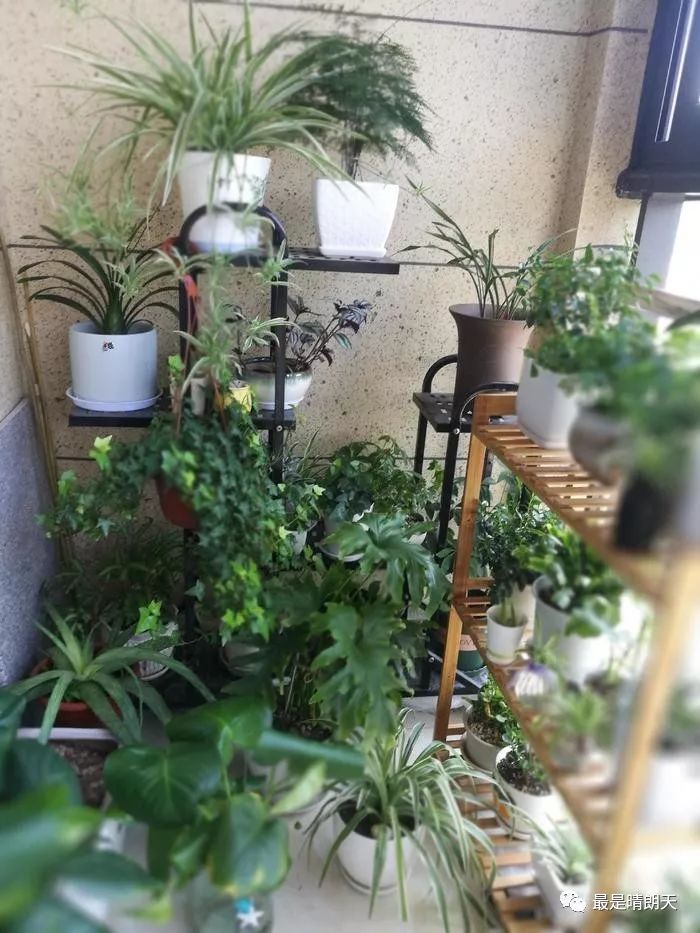
Before I knew it, it had been over a year since I stepped into the world of green plants, gradually advancing from a clueless beginner to a novice with a smattering of knowledge. From only knowing pothos to being able to name many varieties upon walking into a flower shop; from only growing pothos at first to now collecting different green plants to decorate my home. Ever since I opened this door, my legs seem to instinctively carry me into flower shops to look around, to see what new varieties have arrived, and before I know it, I can't resist bringing some home. Perhaps there lives a green paradise dream within my soul.
A Corner of the Balcony
When I bought my first pot of pothos, the original intention was simply to purify the air in my new home. In reality, a single plant can make a negligible difference, but psychologically, the concept of green plants purifying the air is still very powerful. So after the first pot came the second, then the third, and from then on there was no stopping. Pothos, spider plant, English ivy, Monstera deliciosa, Chinese evergreen, snake plant and so on all moved in one by one, guarding and keeping the home clean before the owner moved in.
Gradually, as more and more green appeared in my sight, I suddenly realized how much I loved these lively beings, radiating endless vitality in a still-unoccupied house. So last summer, my happiest activity was getting up at 6 in the morning, listening to music through my earphones as I walked to the new home to water these lovely plants, watching them thrive with contentment. Their health meant that the formaldehyde and benzene levels in the house were not serious, and it also meant I was taking good care of them.
Fittonia
But not all green plants grew without problems. The first to go was the snake plant. Its demise taught me that the worst thing for plants is someone like me who is too diligent. I love watering too much, and the snake plant is not a water-loving type. Because it doesn't like water, I felt somewhat at a loss, not knowing when exactly I should water it. The so-called "alternate wet and dry" method simply doesn't apply to snake plants.
The second to kick the bucket was the white spathe lily. At first it was tender and lush, but then it slowly wilted. Because I loved it so much, I later bought several more pots, some soil-cultured and some water-cultured, but the ending was the same. I have always been puzzled about what exactly caused them to not make it. Every time I see white spathe lilies in flower shops, I still can't help but look at them a few more times, but I never dare to buy another pot, afraid of wasting yet another living life.
After surviving last summer, I was quite pleased with myself for being able to keep over 95% of my green plants alive, and so my enthusiasm could no longer be contained. Online shopping, flower shops, flower and bird markets - I found varieties to bring home from all of them. Looking back at my experience buying green plants, what I like most is still buying from a flower shop near my new home. Although it may be slightly more expensive than the flower and bird market, the same green plants bought from the flower shop are in better overall condition than those from the flower and bird market.
Fittonia
As for online shopping, there are risks. First, there is a difference in size and shape between the actual plant and the pictures. Second, after going through not-so-gentle logistics and shipping, they are more or less weakened. But regardless of which method I used to buy them, every plant goes through an adaptation period. Those with strong vitality can grow healthily after adapting to their new pot and environment, while those with weak vitality tend to have the seeds of future decline planted during the adaptation period.
Now, I have over 20 different varieties of green plants in my small home, some of which exist in multiple pots, such as fiddle-leaf fig, Monstera deliciosa, maidenhair fern, spider plant... Among them, the fiddle-leaf fig is my absolute favorite. Its distinctive cello-shaped leaves and its growth habit of striving upward without branching out sideways have deeply won my heart. Its only fatal flaw is that it fears the cold. Last year's severe winter was several degrees colder than usual, and since no one was living there at the time, the air in the house was icy cold. Not a single one of my poor fiddle-leaf figs survived, all becoming bare single stalks. This truly broke my heart for a long time. As soon as spring came this year, I couldn't wait to search for fiddle-leaf figs and bring them back home again.
Fiddle-leaf Fig
What makes me proudest is the maidenhair fern. Also last winter, its vitality had completely withered. On a whim, I gave it a buzz cut with one snip, but couldn't bear to throw it away. So I watered it as usual, and unexpectedly, after spring warmed up, the silence that had lasted all winter was quietly broken one morning, as it put out hopeful new shoots. Now the desolation of that time is long gone, replaced by flourishing vitality.
Maidenhair Fern
As for the Monstera deliciosa, I am endlessly amazed by their vigorous vitality, and they also taught me that you need to shape them earlier, otherwise they are likely to develop into a sprawling, clawing mess - though of course, if that's what you like, that's another matter. At first I rather appreciated their tendency to grow freely, but one day I discovered that their growth had far exceeded my expectations, and at that point I had to use a bamboo stick and string to reshape them, and it seemed a bit late.
After more than a year of growing green plants, I have gradually figured out some experience. First, no matter where you buy a green plant from, the roots must be good, otherwise there is a high chance it will die after you take it home. Judging whether the roots are good requires slowly accumulated experience. Also, pay attention to whether it was just repotted - if it was just repotted, don't buy it, as the roots haven't stabilized yet.
Second, repotting: better late than never doesn't apply here - better early than late. You can repot it at the flower shop when you buy it, or repot it yourself after taking it home. There's no need to wait a while before repotting. Plants have an adaptation period - adapting to the environment and adapting to repotting. In my experience, it's better to get it all done in one go.
Third, the care environment. The key points are water, sunlight and air circulation. So-called indoor green plants actually cannot be kept indoors all the time without light or ventilation. The vast majority of green plants love ventilation and indirect light. If kept indoors for a long time, they are prone to yellowing leaves, soft leaves and other poor growth conditions.
Fourth, flowering plants love light. If you have an enclosed balcony, it's not very suitable for growing flowers. Flowering plants that go without sunlight for a long time will only grow leaves and are unlikely to bloom. Only sufficient sunlight can produce flower buds and beautiful blooms. This is the law of nature.
Fifth, plants with thin roots and stems are harder to grow, while those with thick branches and large leaves are easier.
Sixth, for plants that can be grown in either soil or water, choose water culture - it's cleaner and less trouble.
Calathea
Now, the first thing I do every morning when I wake up is observe the condition of each pot of green plants - whether they need watering, whether they are growing well. They have become like another child to me. When I have to go out of town for a few days, I genuinely worry about them. They have opened up another world for me, a world of peace and serenity.
I love the grandeur of the fiddle-leaf fig, the elegance of the maidenhair fern, the flair of English ivy, and the unrestrained freedom of the Monstera deliciosa.